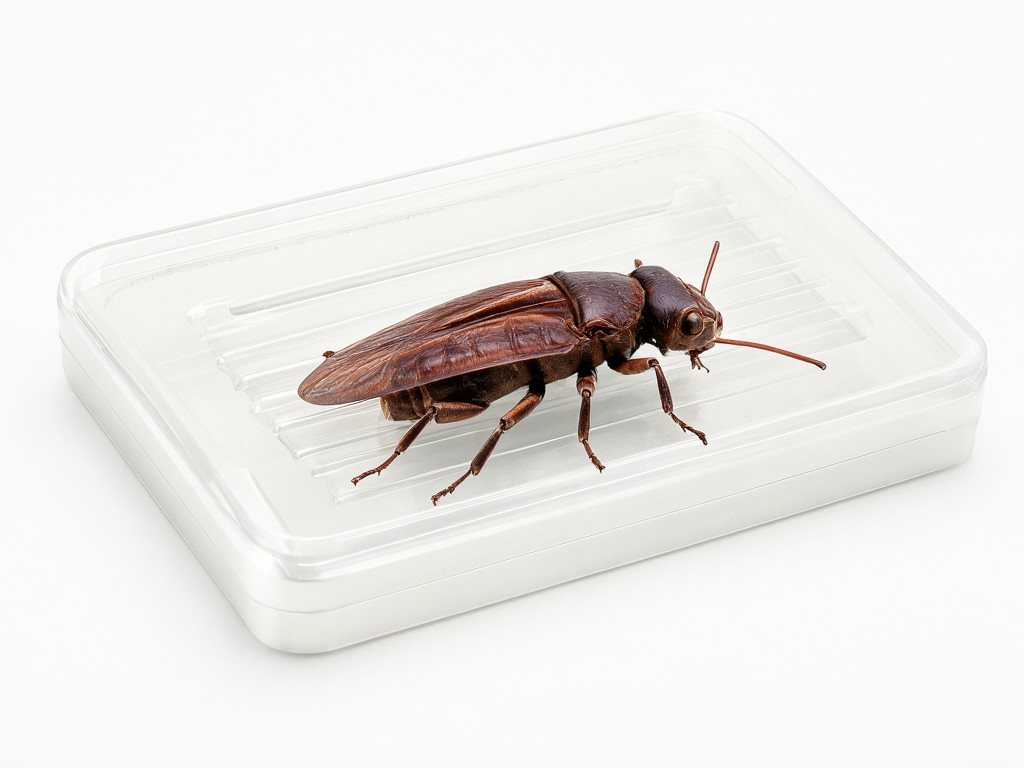
china eco friendly cockroach control trap supplier: Specification, Ordering and Quality Notes
Core Selection Trade-off
The primary decision point for bulk buyers is the tension between structural integrity under humidity and biodegradability. Standard recycled paperboard (850-1000 gsm) offers lower unit costs but fails after 14-21 days in environments with 75% relative humidity (RH). Food-grade laminated boards or plant-fibre composites resist warping and delamination for 90+ days but increase material costs by 18-25%. The specification must dictate the moisture barrier method (wax coating, poly-laminate, or resin) to ensure the trap remains functional until the end of the warranty period, not just at the point of shipment.
What the Design Has to Balance
Cost and durability pull in opposite directions once the trap enters high-moisture storage or kitchen environments. A trap that fails structurally before capturing the target pest renders the "eco-friendly" label irrelevant to the end-user, leading to chargebacks and brand damage. The design must therefore prioritize the die-cutting precision of the entry mechanism and the tensile strength of the base over aesthetic surface finishes. If the base substrate absorbs moisture from the pheromone bait or ambient air, the fold lines weaken, the trap collapses, and the escape routes open. This is the primary complaint pattern reported by distributors: "the trap fell apart in the warehouse before it reached the shelf."
To mitigate this, the tooling file must define the exact board thickness and the radius of the fold lines. A 1.5 mm radius on a 2 mm board prevents cracking at the stress points during the folding process. The entry funnel geometry must be calculated to allow ingress for the target species (typically *Blattella germanica* or *Periplaneta americana*) while maintaining a physical barrier against egress. This requires a tolerance of ±0.2 mm on the die-cut edges; anything wider allows cockroaches to squeeze out through the gaps. The specification sheet must explicitly state these tolerances to avoid disputes during the pre-production sample phase.
Material Options and Their Trade-offs
Material choice starts with the conditions the product will meet in the final market. "Eco-friendly" is a marketing term, not a technical specification. The actual performance driver is the moisture resistance of the substrate and the adhesion strength of the trapping surface. Buyers must specify the exact paper grade and finishing treatment to match the expected service life. A trap sold in a dry climate (e.g., Middle East) can use a lower-grade board than one sold in Southeast Asia or the UK.
Option A: Recycled Paperboard + Wax Coating
Cost: Low (Base index 1.0x)
Durability: 14-21 days in 70% RH. The wax coating provides a temporary hydrophobic layer but scratches off easily during die-cutting and folding. If the wax is abraded on the entry edges, moisture ingress begins immediately.
Best For: Short-cycle promotions, dry climates, retail environments with low humidity control.
Option B: Food-Grade Laminated Board + Silicone Adhesive
Cost: Moderate (Base index 1.25x - 1.4x)
Durability: 90+ days in 75% RH. The poly-laminate or resin barrier prevents water absorption into the paper fibers. Silicone-based adhesive remains sticky under higher temperatures and does not dry out as quickly as standard rubber-based glues.
Best For: Long-term distribution, humid climates, private-label brands requiring a 6-month shelf life guarantee.
Construction options diverge as soon as weight matters for shipping. Heavier boards reduce unit volume and lower freight costs per square meter, but they increase the risk of tearing during the folding process if the tooling is not calibrated correctly. A 1.5 mm board requires a heavier die set than a 1.2 mm board to achieve a clean cut without crushing the fibers. The buyer must confirm the board weight (gsm) in the initial RFQ to ensure the factory allocates the correct die set. Mismatched board weight and die set result in jagged edges, which compromise the structural integrity of the trap's base.
Measured Performance in Real Use
Performance is not judged by the number of cockroaches captured in a lab, but by the trap's ability to maintain its geometry and adhesive integrity in the field. A common failure mode is "adhesive fatigue," where the glue loses viscosity after 30 days of exposure to UV light or heat. This is particularly relevant for traps displayed on store shelves near windows or in unheated warehouses. The specification must include a UV resistance rating for the laminate if the product will be exposed to direct sunlight. Without this, the top layer degrades, causing the adhesive to bleed through and stain the user's hands, leading to immediate rejection by the retailer.
| Parameter | Standard Spec | Premium Spec | Failure Mode if Underspecified |
|---|---|---|---|
| Board Weight | 850-900 gsm | 1000-1200 gsm | Base warping; trap fails to stay flat on uneven surfaces. |
| Moisture Barrier | Wax Coating (0.5g/m²) | PE Laminate (20-30 micron) | Fiber saturation in high RH; structural collapse within 2 weeks. |
| Adhesive Type | Rubber-based (Standard) | Silicone-based (Thermo-stable) | Adhesive hardens in >30°C heat; pest escapes. |
| Die-Cut Tolerance | ±0.5 mm | ±0.2 mm | Gaps at entry funnel; pest can squeeze out. |
Weather resistance is a critical variable for export orders. If the final destination has a wet season, the trap must survive at least 60 days in 80% RH without the board becoming soft. This requires a specific type of sizing agent in the paper pulp, not just a surface coating. Buyers should request a humidity chamber test report for the specific board grade proposed. If the factory cannot provide this, the buyer is relying on anecdotal evidence, which is a significant risk for a private-label brand. The specification must define the "wet strength" of the paper in terms of grams per square inch (GSI) after 24 hours of water immersion. A minimum wet strength of 1.5 GSI is typically required for humid market exports.
Capacity, Tooling and Scheduling
Tooling lead times are often underestimated by buyers who assume the design is simple. A custom die set for a cockroach trap takes 10-14 days to manufacture and another 5-7 days for proofing and adjustment. The total tooling lead time is 15-21 days before mass production can begin. This must be added to the material procurement time and the printing/assembly schedule. If the buyer expects a 30-day total lead time, they are likely to miss the target shipment date. The correct timeline is: 21 days (tooling) + 7 days (material) + 10 days (production) + 7 days (packing/QC) = 45 days minimum.
Capacity is determined by the number of die-cutting stations available. A standard station produces 5,000-8,000 traps per hour. For an order of 50,000 units, this requires 6-10 hours of machine time, plus setup and changeover time. Factories typically schedule 2-3 shifts for orders under 100,000 units. For larger orders, the schedule may extend to 3-4 weeks depending on the factory's backlog. The buyer should confirm the factory's monthly capacity for this specific product category. A factory specializing in rigid boxes may have longer lead times for flat-fold traps due to different die types and folding machines. The specification should state the required units per hour to ensure the factory allocates the correct equipment.
Keeping Repeat Orders Supplied
Repeat orders face a different set of risks than initial orders. The primary risk is variation in the paper supply. Paper mills change their formulations, sizing agents, or coating processes without notice. This can result in a trap that looks identical but performs differently. The first batch may have a high wet strength, while the second batch, sourced from a different reel, may fail after 10 days in humidity. To prevent this, the buyer must retain a sealed sample of the approved production run and require the factory to perform a comparative wet-strength test before releasing any repeat order. If the new batch fails the test, the factory must reject the material and source a new reel.
Stock availability is another critical factor for repeat orders. If the specific board weight or laminate type is discontinued by the paper supplier, the factory must re-qualify a substitute. This process takes 2-4 weeks and requires a new sample approval. To mitigate this, buyers with large volume commitments should consider stocking raw materials (board and adhesive) at the factory or agreeing to a minimum order quantity (MOQ) that ensures the factory maintains a dedicated inventory of the specified board. This shifts the risk of material fluctuation from the buyer to the factory, but at a higher unit cost. The trade-off is supply security versus margin. For brands with a strong retail presence, the cost of a stock-out is often higher than the premium paid for material reservation.
Ordering, Tooling and Lead-Time Questions
What is the MOQ for custom tooling?
The MOQ for custom tooling is typically 10,000-20,000 units. Below this quantity, the cost of the die set (approx. $300-$500) cannot be amortized across the order. If the buyer requires a smaller quantity, they can use a standard trap design with custom branding (screen print or offset) on the exterior. This avoids the need for a new die set but limits the customization of the trap's geometry. The tooling cost is usually a one-time fee, but it must be refunded if the order is cancelled before the die is manufactured.
How long does it take to approve a sample?
Sample approval takes 5-7 days after the die is cut. The factory produces 3-5 units for inspection. The buyer must check the dimensions, fold strength, adhesive coverage, and print alignment. If changes are required, the die must be adjusted, which adds 3-5 days. It is critical to approve the sample before mass production begins. Once the order is released, the factory cannot stop the line to make changes without incurring a penalty. The sample approval is the legal contract for the product's specifications. Any deviation from the approved sample is considered a non-conformance.
Can I request a specific board weight for the next order?
Yes, but only if the change is made before the material procurement phase. Once the board is purchased, it cannot be changed without incurring a waste cost. The buyer should specify the board weight in the initial RFQ and confirm it in the Purchase Order. If the buyer wishes to change the weight for a repeat order, they must provide at least 30 days' notice to allow the factory to source the new material. A change in board weight may also require a new die set if the thickness differs by more than 0.2 mm. The factory will provide a quote for the new die and the additional material cost.
What is the lead time for a standard order?
The standard lead time for a 50,000-unit order is 30-45 days. This includes 7 days for material preparation, 10-15 days for production, and 7 days for packing and quality control. The lead time is extended if the order requires custom printing, as the printing plates take 3-5 days to make. For orders over 100,000 units, the lead time may be 60 days due to the need for multiple production shifts. The buyer should confirm the lead time in the contract and include a clause for delay penalties if the factory fails to meet the agreed date.
Request a Sample and Specification Review
To begin the qualification process, submit your technical drawings or a reference sample along with your specific board weight and moisture resistance requirements. Our engineering team will review your specifications and provide a detailed cost breakdown, including tooling fees, material costs, and estimated lead times. We will also provide a sealed sample for your own testing, including a wet-strength report for the proposed board grade. This ensures that the product meets your durability and weather resistance standards before any commitment is made. Contact our sales team to initiate the sample request and start the approval workflow.
Ready to qualify a second source? Request a sample and technical review to verify your specifications against our current production capabilities.



