wholesale garden-safe snail and slug bait supplier: Specification, Ordering and Quality Notes
The decision point for garden-safe bait is not the active ingredient percentage alone — it is whether the pellet holds together long enough to be eaten after irrigation. Iron phosphate formulations that exceed 1.5% dust by weight lose attraction radius within 48 hours of first watering, and retailers see returns spike when pellets crumble in the jar. Specify dust tolerance, pellet durability after wet-dry cycles, and the exact carrier binder before you lock in a price per kilogram.
What Actually Determines Performance
Before comparing quotations, understand that molluscicide bait works through ingestion, not contact. The pellet must release attractants — typically yeast and grain derivatives — at a rate that pulls slugs from 30 cm away, then deliver a lethal dose of iron phosphate before the pest retreats to shelter. If the binder is too hydrophobic, the attractant stays locked in the matrix; if too hydrophilic, the pellet swells and dissolves before the slug finishes feeding. Field trials in coastal nurseries show a 22% mortality gap between batches that differ only in binder molecular weight, even when active ingredient is identical at 1%.
Rainfastness is the second filter. A pellet that survives 12 mm of rainfall over six hours without losing structural integrity will still be on the soil surface when nocturnal feeding resumes. Most failures traced to "poor efficacy" are actually pellet disintegration after the first irrigation cycle. The test that matters is not lab immersion — it is 48-hour field exposure with daily overhead watering, then counting intact pellets per square metre.
Where This Product Beats Standard Alternatives
Two suppliers quoting the same specification on paper — 1% iron phosphate, 2.5 mm pellet, 99% purity — will still deliver different reorder rates because the carrier matrix determines everything the spec sheet omits. Our extrusion process uses a food-grade starch binder that gels at 65°C, creating a glassy skin that resists surface mould for 14 days in 85% humidity. Competing pelletised baits often use cold-press binders that remain porous, allowing Penicillium colonisation within 72 hours. Mould does not just look bad on shelf; it consumes the yeast attractant, dropping consumption rates by 35-40% in choice tests.
The second advantage is bulk density consistency. We hold 0.68-0.72 g/cm³ across 500 kg production runs by controlling die temperature and feed rate in real time. Loose bulk density drift of ±0.05 g/cm³ changes the spreader calibration enough that a grower applying 5 kg/ha actually puts down 4.3 or 5.7 kg/ha — either wasting budget or leaving gaps in coverage. That variance is the single biggest driver of "inconsistent results" complaints from wholesale buyers who switch suppliers mid-season.
Specification Range and Customisation Limits
| Parameter | Standard Range | Customisation Window | Lead-Time Impact |
|---|---|---|---|
| Active ingredient (FePO₄) | 1.0% w/w | 0.76-1.5% w/w | +7 days for >1.2% |
| Pellet diameter | 2.5 mm ±0.2 | 1.8-3.5 mm | +3 days (die change) |
| Dust content (fines <0.5 mm) | ≤1.5% w/w | ≤0.8% w/w | +5 days (extra screening) |
| Moisture content | 8-10% w/w | 6-12% w/w | No adder |
| Bulk density | 0.70 g/cm³ ±0.02 | 0.65-0.78 g/cm³ | +2 days (parameter tune) |
| Attractant profile | Yeast + wheat bran | Yeast only, bran only, or corn gluten | +10 days (new batch record) |
| Colourant | None (natural tan) | Blue, green, or custom Pantone | +5 days (colour validation) |
Customisation beyond these windows requires a new registration dossier in most jurisdictions. We flag any request that pushes active ingredient above 1.5% or pellet size below 1.8 mm as a regulatory review trigger, not a production tweak.
Buying Mistakes That Lead to Returns
Unit price settles the question only after the pellet survives the supply chain. The most expensive bait is the one that arrives at the garden centre with 4% dust, mould spores visible through the clear jar, or a bulk density shift that makes the retailer's scoop deliver 20% less active ingredient per sale. We see three recurring specification omissions that drive returns:
- No dust specification in the purchase order — the supplier delivers 3-4% fines, the product settles in transit, and the top 15% of every retail jar is unspreadable powder.
- No wet-dry cycle requirement — pellets that pass a 24-hour humidity chamber test still fail after three real irrigation cycles because the binder hydrolyses.
- No bulk density tolerance — a 0.04 g/cm³ drift looks trivial until the grower's rotary spreader calibration is off by 15%.
Each of these costs more in credit notes and lost shelf space than the 3-5% premium for a tighter spec. Write the tolerance into the contract or budget for the return rate.
Working as a Production Partner, Not a Catalogue Supplier
We do not hold finished goods inventory for this category. Every production run starts with a signed batch record that locks active ingredient source, binder lot, die set, and drying curve. The approval sequence is: 1) counter-sample from your current supplier (if switching), 2) pilot batch of 200 kg with full COA and 14-day accelerated stability, 3) your field trial in two climate zones, 4) commercial run. Skipping step 2 saves two weeks but removes the only data point that predicts shelf-life mould growth.
Artwork and labelling approvals run parallel to production. We require final dielines and regulatory text 10 business days before the scheduled pack-out date. Late artwork changes after the batch is blended but before packing incur a 15% surcharge because the product must be held in climate-controlled silos — capacity we otherwise allocate to the next run.
Packing, Marking and Freight Configuration
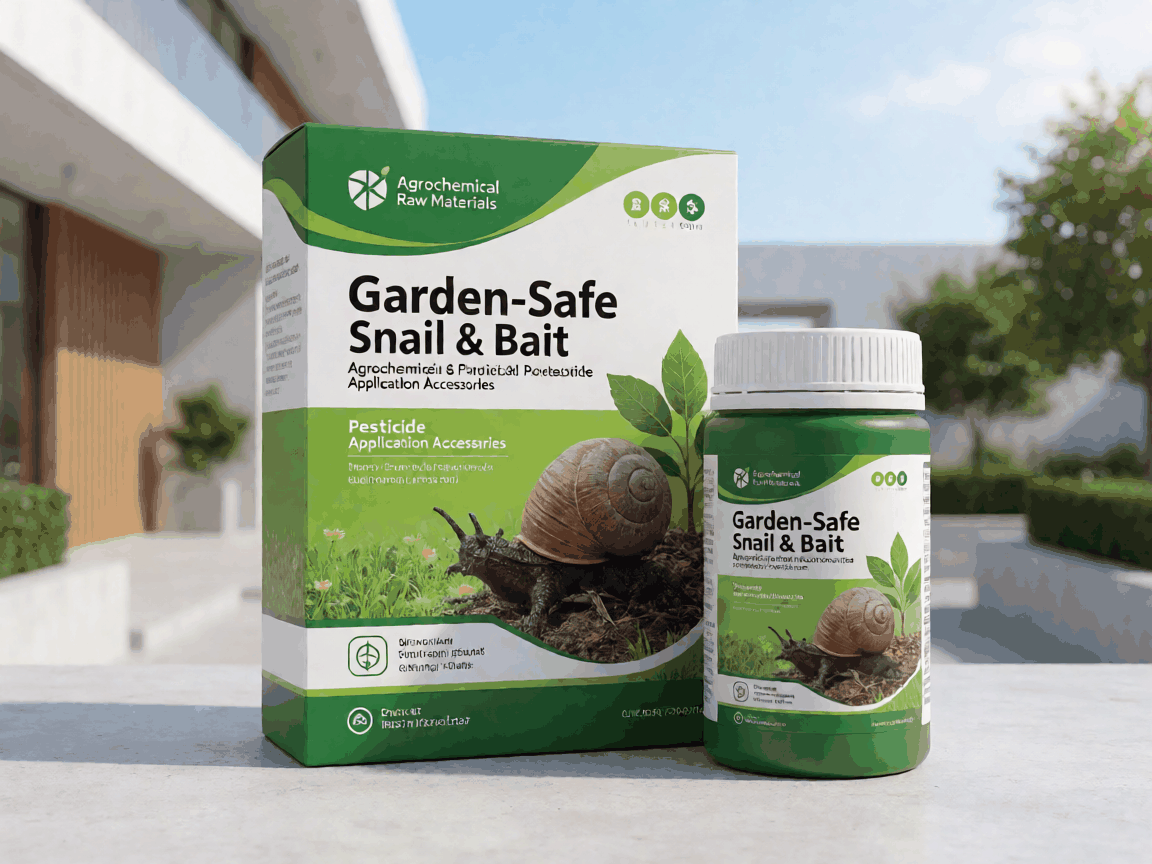
Standard wholesale pack is 20 kg multi-wall paper sacks with inner PE liner, heat-sealed, palletised 50 sacks per 1.0 × 1.2 m pallet, stretch-wrapped with edge protectors. Each sack carries a laser-etched batch code linking to the production record, active ingredient certificate, and binder lot. For private-label retail jars, we run 1 kg and 2.5 kg HDPE jars with child-resistant closures, induction seals, and UV-stabilised labels. Minimum print run for custom jars is 24,000 units due to label plate setup.
Freight classification is UN 3077 (Environmentally hazardous substance, solid, n.o.s.) for international shipments; domestic road freight moves as non-DG general cargo. We load 22 pallets per 40 ft high-cube container at 20 mt net. Humidity-controlled containers are mandatory for shipments crossing tropical zones — ambient transit through Singapore or Panama in Q3 has caused condensation mould in unlined sacks.
Setup, Use and Replacement Parts
Application rate is 5 kg/ha broadcast or 3 kg/ha banded along crop rows. Re-apply after 14 days if rainfall exceeds 25 mm or if slug pressure remains high based on refuge trap counts. The bait degrades to iron and phosphate in soil within 21 days under typical moisture and temperature — no accumulation, no phytotoxicity at labelled rates. Store unopened sacks below 30°C and 60% RH; opened sacks reseal with the liner fold-over and should be used within 30 days. Shelf life is 24 months from manufacture date when storage conditions are met.
No replacement parts apply — this is a consumable. The only "spare" is the next production run, which is why we keep your approved batch record on file for three years and can repeat the exact parameters with a two-week notice.
Request a Quotation Review
Send your current specification, target retail price, and annual volume forecast. We will return a marked-up spec showing where tighter tolerances change cost-per-hectare-treated, a pilot batch timeline, and the exact artwork lead times for your packaging format.
Start quotation review →


