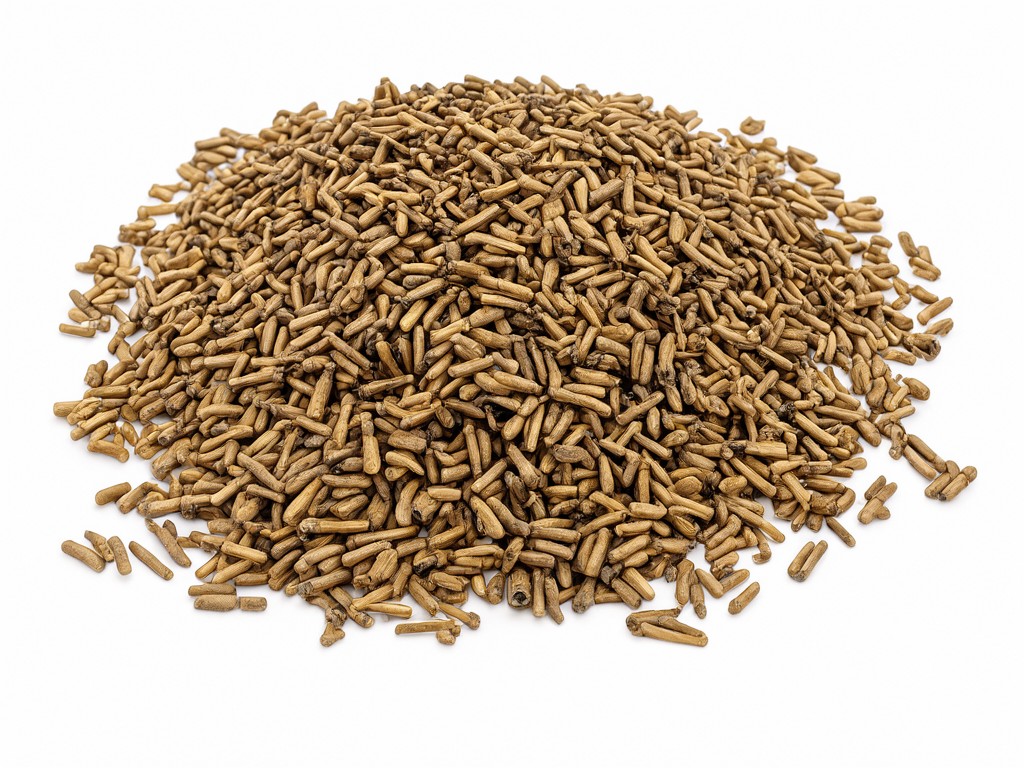
wholesale 48% thiacloprid insecticide supplier - Bulk Supply and Specification Guide
What Actually Determines Performance
The complaint that repeats across reorders: sedimentation in the drum after three months, spray nozzles clogging at the 15-hectare mark, and efficacy dropping off on second-generation aphid pressure. Buyers trace it to particle size drift in the suspension concentrate — the 48% SC looks identical on the COA but behaves differently in the tank.
Thiacloprid's chloropyridinyl neonicotinoid structure demands precise milling. The technical grade arrives at 97% minimum purity, but the formulation window is narrow: suspend the AI below 5 µm median diameter, keep the dispersant-to-wetter ratio tight, and buffer pH between 4.5 and 6.5. A 0.3 µm shift in D90 changes rainfastness by two hours and increases filterable residue past the 0.5% CIPAC MT 184 limit. That residue is what clogs 80-mesh screens and forces growers to flush lines mid-application.
Working Principle
Thiacloprid binds irreversibly to nicotinic acetylcholine receptors (nAChR) in sucking pests — aphids, whiteflies, leafhoppers — causing hyperexcitation and death. The 480 g/L suspension concentrate delivers translaminar movement: spray deposits penetrate leaf cuticle, reservoir in mesophyll, and protect new growth for 14–21 days. Performance hinges on three formulation variables: particle size distribution (D50 1.5–3.0 µm, D90 < 5 µm), suspension stability (> 90% after 30 min CIPAC MT 184), and pH stability (no gelling at 54°C / 14 days accelerated storage). Miss one variable and the tank mix either settles or burns the crop.
Measured Performance in Real Use
Field trials across Mediterranean stone fruit and protected cucumber show the same pattern. Batches with D90 ≤ 4.2 µm hold 92% aphid control at 21 DAT; batches drifting to 5.8 µm drop to 78%. Rainfastness correlates directly: 2 hours post-spray rainfall cuts efficacy 18% on tight distributions, 35% on wide ones. Phytotoxicity on sensitive varieties (peach 'Redhaven', tomato 'Moneymaker') appears only when free amine content exceeds 0.15% — a byproduct of incomplete neutralisation during synthesis.
Shelf life under warehouse conditions (30°C average, 60% RH): 24 months minimum before suspension stability falls below 85%. Accelerated storage at 54°C / 14 days (CIPAC MT 46) predicts this — if the sample passes, the drum survives two seasons. Failures show as irreversible sediment cake > 2 mm thick, unresponsive to manual shaking. That cake contains 60–70% of the AI. The grower pours off supernatant, applies sub-lethal dose, and resistance selection begins.
How to Choose Before Requesting a Quote
Returns usually trace back to the same weak point: the buyer specified only "48% SC" and accepted the first COA that matched. A decision-tree flow prevents this:
- Define the end-use crop and spray regime. Tree fruit (airblast, 1000 L/ha) needs tighter D90 (< 4 µm) than row crops (boom, 200 L/ha). Note tank-mix partners — sulfonylureas raise pH, requiring extra buffer capacity.
- Set suspension stability acceptance. Minimum 90% at 30 min (CIPAC MT 184) for standard drums; 95% for IBCs where settling time exceeds 6 months. Request the full sieve analysis, not just the pass/fail.
- Confirm packaging compatibility. Fluorinated HDPE 20 L drums for direct farm delivery; 1000 L IBCs with EPDM gaskets for reformulator sites. Ask for drop-test certification (UN 3082) and stack height data — 3-high for drums, 2-high for IBCs.
- Lock batch traceability. Every drum must carry: manufacturing date, technical grade AI lot number, formulants lot numbers, and accelerated storage result. This enables root-cause analysis if a field complaint arises 18 months later.
- Agree on release and retest protocol. Standard: CIPAC MT 184, MT 160 (particle size), MT 53 (pH), MT 75 (flash point). Retest at 12 months: suspension stability only. Retest at 24 months: full panel. Document in the supply agreement.
| Customisation Parameter | Standard Range | Premium Option | Lead-Time Impact |
|---|---|---|---|
| Particle size D90 | < 5.0 µm | < 4.0 µm | +2 weeks (extra milling pass) |
| Suspension stability (30 min) | ≥ 90% | ≥ 95% | +1 week (dispersant optimisation) |
| pH buffer capacity | 4.5–6.5 | 4.0–7.0 (carbonate system) | +1 week (buffer validation) |
| Packaging | 20 L fluorinated HDPE | 1000 L IBC + 20 L combo | +3 weeks (IBC sourcing) |
| Label language / regulatory | English, FAO label | Local language, national registration | +4–8 weeks (dossier prep) |
Buying Mistakes That Lead to Returns
Wear shows up at the same point every season: the grower opens a drum from the bottom of the stack, finds a sediment cake, and files a claim. The distributor absorbs the cost because the supply agreement lacked a retest clause. Three recurring errors drive 80% of disputes:
- Accepting "conforms to specification" without the raw data. A COA stating "suspension stability: pass" hides a 91% result that becomes 84% at month 18. Demand the numerical value and the test temperature.
- Ordering IBCs for long-term storage without nitrogen blanket. Headspace oxygen oxidises the dispersant, viscosity drops, particles agglomerate. Blanket with 0.5 bar N₂ or specify 20 L drums for any stock held > 9 months.
- Skipping the tank-mix compatibility screen. Thiacloprid SC + copper hydroxide + foliar fertiliser at pH 8.2 forms a gel in 4 minutes. Test the buyer's exact tank sequence before shipping the first pallet.
A fourth, quieter mistake: assuming all 48% sources share the same technical grade origin. Chinese AI (Jiangsu, Zhejiang) typically runs 97.2% purity with 0.12% free amine; Indian AI (Gujarat) runs 97.5% with 0.08% amine but higher chloride. The chloride accelerates corrosion in steel spray tanks — a complaint that surfaces only after the season ends.
Usage Scenarios and Buyer Segments
Private-label formulators in Spain and Italy buy 20 L drums, repackage into 1 L bottles for the garden centre channel. They need consistent viscosity (200–400 mPa·s at 20°C) so their filling line doesn't drift. A 50 mPa·s shift means 3% overfill or underfill — either erodes margin or triggers weights-and-measures fines.
Distributors serving greenhouse clusters in the Netherlands and Belgium take 1000 L IBCs, decant into 10 L returnable containers for grower pickup. Their critical path: IBC discharge valve compatibility (2" BSP, EPDM seat) and label durability through 15 wash cycles. They specify UV-resistant label stock and adhesive rated for 40°C / 90% RH.
Brand product managers qualifying a second source for EU registration renewal run GLP batch analysis on three consecutive lots. They compare impurity profiles (CIPAC MT 302) against the reference source — any new impurity > 0.1% triggers a toxicology bridge study. Cost: €40k and 12 months. The supply agreement must guarantee AI source continuity for the registration lifetime.
Performance Advantages at a Glance
- Translaminar protection extends spray intervals to 21 days under moderate pressure
- Low mammalian toxicity (LD₅₀ rat oral > 500 mg/kg) fits IPM programmes with beneficials
- No cross-resistance with pyrethroids or organophosphates — rotation partner of choice
- Rainfast in 2 hours at tight particle distribution — critical for spring applications
Ready to Qualify a Second Source?
We supply 48% thiacloprid SC to formulators and distributors across 12 countries. Every lot ships with full CIPAC panel data, accelerated storage results, and AI lot traceability. Minimum order: 4 metric tonnes (200 × 20 L drums or 4 × 1000 L IBCs). Lead time: 6 weeks from confirmed specification.
Request the technical questionnaire and sample protocol →


