Thiamethoxam 73
Thiamethoxam Chemical PropertiesMelting point139.1°Boiling point485.8±55.0 °C(Predicted)Density1.71±0.1 g/cm3(Predicted)Vapor pressure6.6 x 10-9 Pa (25 °C)Storage temperatureInert
Melting point | 139.1° |
Boiling point | 485.8±55.0 °C(Predicted) |
Density | 1.71±0.1 g/cm3(Predicted) |
Vapor pressure | 6.6 x 10⁻⁹ Pa (25 °C) |
Storage temperature | Inert atmosphere,2-8°C |
Solubility | DMSO: 250 mg/mL (857.02 mM) |
Water solubility | 4.1 x 10³ mg l-1 (25 °C) |
Form | Solid |
pKa | 0.99±0.10(Predicted) |
Color | Off-white to yellow |
Hazard codes | |
Risk statements | |
Safety statements | |
RIDADR | UN 3077 9 / PGIII |
WGK Germany | 2 |
HS Code | 29341000 |
Hazardous substances data | |
Toxicity | LD50 in rats (mg/kg): 1563 orally, >2000 dermally; LD50 in bobwhite quail and mallard duck (mg/kg): 1552 and 576 orally. LC50 (96hr) in rainbow trout and bluegill (mg/l): >100 and >114 (Senn). |
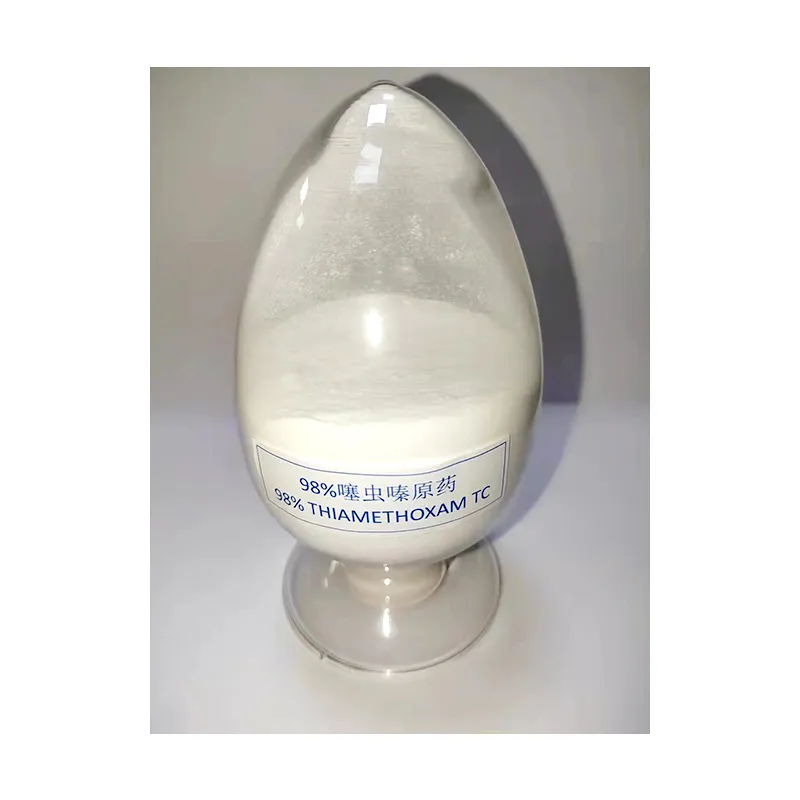
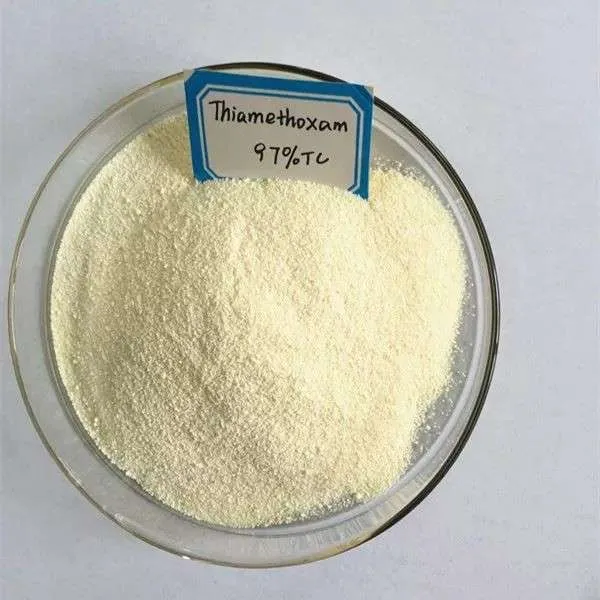
Chemical properties | Off-white to pale yellow solid |
Uses | Thiamethoxam is a broad-spectrum insecticide used against a wide range of sucking and chewing insect pests. It can be applied as a foliar, soil, or seed treatment. |
Definition | ChEBI describes thiamethoxam as an oxadiazane: tetrahydro-N-nitro-4H-1,3,5-oxadiazin-4-imine bearing (2-chloro-1,3-thiazol-5-yl)methyl and methyl substituents at positions 3 and 5, respectively. It has roles as an antifeedant, carcinogenic agent, environmental contaminant, xenobiotic, and neonicotinoid insecticide. It is an oxadiazane, a member of the 1,3-thiazoles, an organochlorine compound, and a 2-nitroguanidine derivative. It derives from a 2-chlorothiazole. |
Application | Thiamethoxam is a widely used neonicotinoid insecticide and the active ingredient in products for controlling sucking and chewing insects that feed on roots, leaves, and other plant tissues. Agricultural applications include soil and seed treatments and foliar spraying on many row and vegetable crops, including corn, soybeans, snap beans, and potatoes. It is also used to control insects in livestock pens, poultry houses, sod farms, golf courses, lawns, household plants, and tree nurseries. The U.S. Environmental Protection Agency first registered it in 1999. Reports indicate that exposure to neonicotinoid pesticides may interfere with honeybees’ ability to return home after foraging; bumblebee colonies have also been reported to grow poorly and produce fewer queens. |
Flammability and explosibility | Flammable |
Metabolic pathway | Information on thiamethoxam metabolism is drawn from a summary of manufacturer-published meeting proceedings. The report does not provide full experimental details or identify the metabolites (Novartis, 1997). |
Degradation | Thiamethoxam is hydrolytically stable at pH 5, with a half-life of about 200–300 days. It is less stable at pH 9, where the half-life is a few days. It undergoes rapid photodegradation, with a half-life of about 1 hour. In aquatic systems, degradation occurs under alkaline conditions; the insecticide is rapidly photodegraded but is not readily biodegraded (Novartis, 1997). |
Mode of action | Thiamethoxam acts on nicotinic acetylcholine receptors in the insect nervous system, which are essential for normal nerve function. After contact or ingestion, insects stop feeding within hours; death usually follows within 24 to 48 hours. |



