OEM snail bait pellets for outdoor use: Specification, Ordering and Quality Notes
Size, Weight and Specification Range
Pellet diameter drives spread uniformity and target encounter rate.
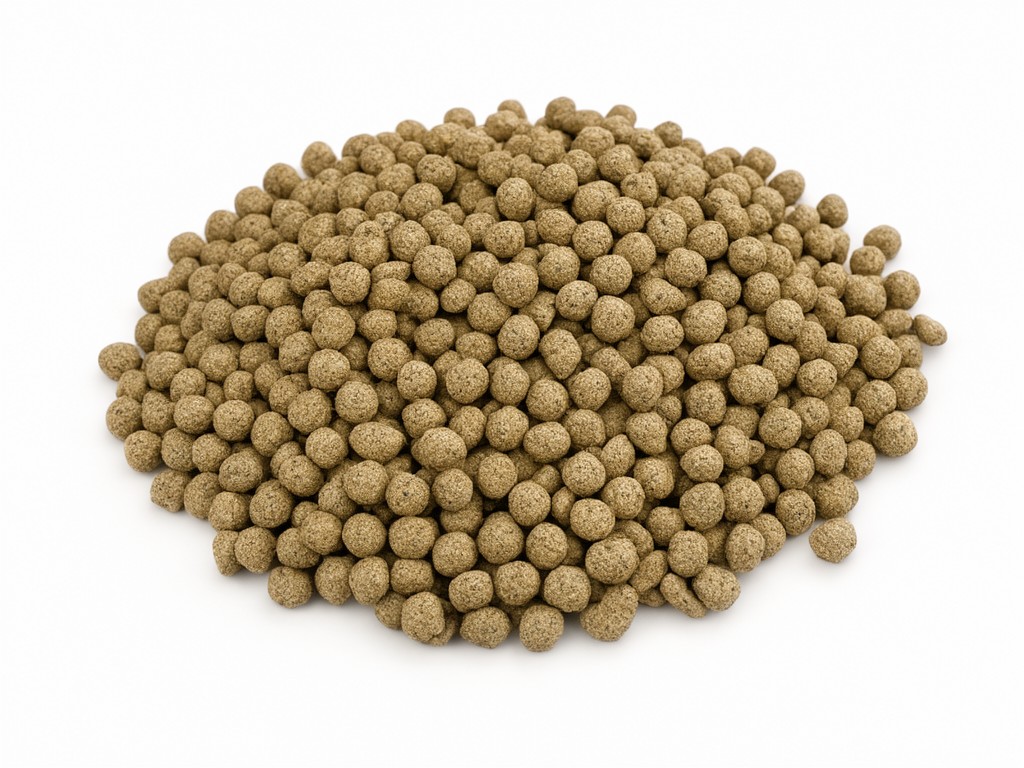
Typical production runs deliver a 2.5–3.5 mm diameter window, 15–30 mg per pellet, and an active‑ingredient load of 2–5 % w/w. Moisture content is held below 10 % to prevent premature softening. Bulk density settles between 0.60 and 0.80 g/cm³, which determines bag fill weight and pallet stacking height.
- Diameter: 2.5 mm, 3.0 mm, 3.5 mm (tolerance ±0.15 mm)
- Weight per pellet: 15–30 mg (depending on formulation density)
- Active ingredient: metaldehyde 3 % or iron phosphate 5 % (custom grades on request)
- Moisture: ≤10 % (Karl Fischer)
- Bulk density: 0.60–0.80 g/cm³
Comparing Two Standard Configurations
Selection follows a decision tree that matches field conditions to formulation.
- Choose active ingredient
- Metaldehyde 3 % – rapid knock‑down, higher non‑target risk
- Iron phosphate 5 % – slower action, lower environmental persistence
- Select pellet size
- 2.5 mm – finer spread, suits broadcast applicators
- 3.5 mm – better handling in windy conditions
- Define coating
- Uncoated – lower cost, quicker moisture uptake
- Polymer‑coated – extends field life 30–40 %
Config A – Metaldehyde, 3 mm, uncoated
Knock‑down: 24–48 h
Field persistence: 7–10 days (dry)
Cost index: baseline
Config B – Iron phosphate, 3.5 mm, polymer‑coated
Knock‑down: 48–72 h
Field persistence: 14–21 days (dry)
Cost index: +12 % vs baseline
How Consistency Is Held Across Batches
Every lot passes through a fixed gate sequence before release.
Raw‑material assay confirms active‑ingredient purity within ±0.2 %. In‑line laser diffraction checks pellet size distribution every 15 min; any shift beyond ±0.1 mm triggers a die‑adjustment. Moisture is measured by inline NIR; batches exceeding 10 % are diverted to re‑dry. Finished pellets undergo a hardness test (compressive force ≥1.2 N) and an HPLC assay for active content (±0.15 % of label). A retained‑sample library stores 500 g per lot for 24 months.
Durability Guide – Key Acceptance Tests
| Test | Frequency | Acceptance Criteria | Typical Result |
|---|---|---|---|
| Sieve analysis (2.5/3.0/3.5 mm) | Every 15 min | ≥95 % within ±0.15 mm | 97.3 % |
| Moisture (Karl Fischer) | Each lot | ≤10 % | 8.4 % |
| Active‑ingredient assay (HPLC) | Each lot | Label ±0.15 % | +0.07 % |
| Pellet hardness (compressive) | Every 30 min | ≥1.2 N | 1.45 N |
Packing, Marking and Freight Configuration
All export cartons use a 25 kg polyethylene liner with a moisture‑barrier coating (WVTR ≤5 g/m²·day). Each carton carries a GS1‑128 label showing batch number, production date, active ingredient, net weight, and a QR code linking to the certificate of analysis.
Pallets are stretch‑wrapped with UV‑stabilised film; maximum stack height is 1.6 m to avoid pellet crush. For sea freight, containers are ventilated and desiccated (silica gel 2 kg per 20 ft).
Request packing specification sheetPrivate‑label artwork must be supplied as vector PDF, 300 dpi minimum, with a 3 mm bleed. Approval cycles average three business days.
Care, Storage and Service Life
Store below 25 °C and 60 % RH to maintain efficacy.
Under those conditions the coated grade retains ≥90 % of labelled active ingredient for 24 months; the uncoated grade drops to ≈80 % after 18 months. Exposure to direct sunlight accelerates metaldehyde photolysis – a 10 % loss occurs after 30 days of UV‑index 8. Warehouse rotation (first‑in‑first‑out) and periodic moisture checks (quarterly) are the practical controls that prevent field‑failure claims.
Ready to lock in a specification that matches your label?
Start a project discussion


