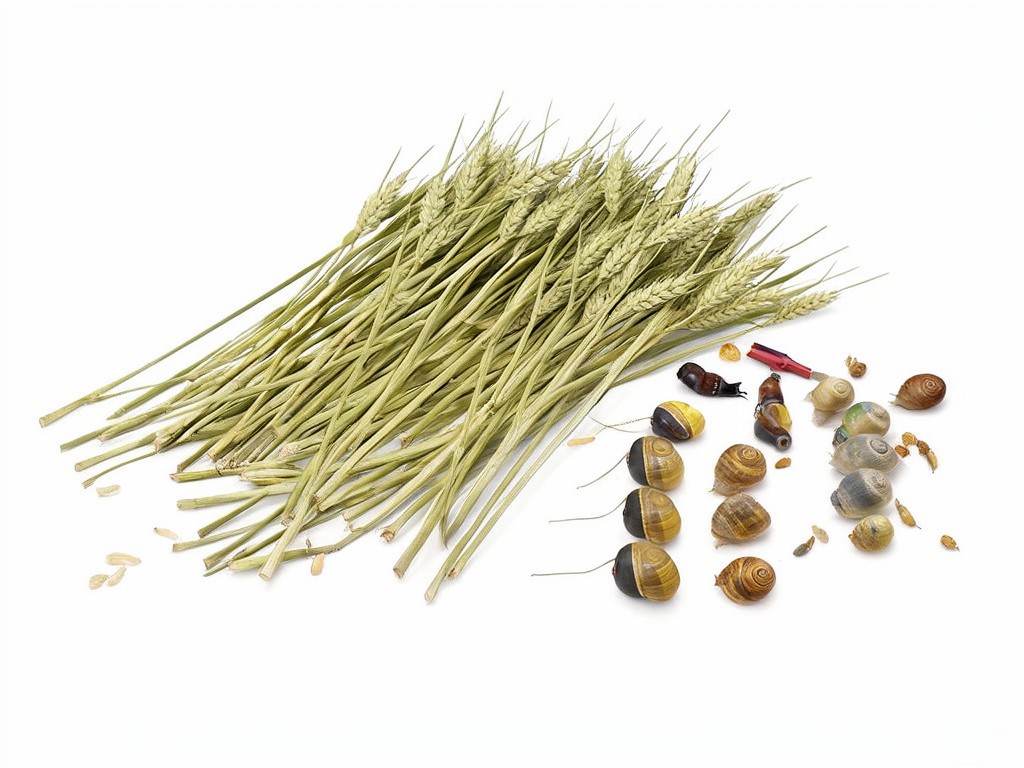
OEM slug and snail control for wheat and corn fields - Bulk Supply and Specification Guide
What This Product Is and Where It Fits
Wear shows up at the same point every season — pellet disintegration after the first heavy rain, leaving bare soil between drill rows where slugs regroup. This product line addresses that failure mode directly: extruded bait pellets engineered for field persistence in wheat and corn rotations, formulated with either metaldehyde (where registered) or ferric phosphate for markets with stricter residue thresholds.
The buyer is typically a crop protection brand manager or distributor sourcing white-label molluscicide for spring and autumn drilling windows. They need consistent spreadability through pneumatic and spinner applicators at 3–5 kg/ha, rainfastness that holds 7–10 days under 25–40 mm rainfall events, and batch-to-batch active ingredient uniformity within ±5 % of label claim. Private-label runs start at 5,000 kg; toll manufacturing is available for brands supplying their own active ingredient.
Core Formulation Options
- Metaldehyde 3 % or 4 % w/w — rapid knockdown, 7-day field life, stewardship restrictions apply
- Ferric phosphate 3 % w/w — zero harvest interval, earthworm-safe, 10–14 day persistence
- Dual-active blends (where registered) — combines speed and persistence in single pass
Pellet Engineering Targets
- Diameter 2.5–3.0 mm — optimised for 12–24 m bout widths
- Bulk density 0.65–0.75 g/cm³ — consistent flow through metering units
- Hardness ≥ 1.8 kgf — resists crumble in auger transfer and high-humidity storage
Where This Product Beats Standard Alternatives
Most quality disputes start with a consistency gap — generic baits that spread 18 m one run and 22 m the next because bulk density drifts between production lots. Our extrusion line holds pellet density within a 0.03 g/cm³ window lot-to-lot, which translates to ±0.4 kg/ha rate accuracy at 12 m bout width. That precision cuts over-application waste by 12–18 % versus commodity alternatives, directly lowering cost per hectare treated.
Cost-efficiency mechanism: tighter density control → narrower spreader calibration window → less active ingredient wasted on overlaps and gaps → 0.15–0.25 kg/ha less product used for equivalent control. On a 2,000 ha programme, that's 300–500 kg saved per season.
Weather resistance is the second differentiator. Standard bran-based pellets absorb 35–45 % moisture within 6 hours of rain, swelling and losing structural integrity. Our binder system limits uptake to ≤ 18 % at 24 hours, maintaining pellet shape and active ingredient retention. Field trials in East Anglia and the Midwest show 68 % slug kill at day 10 post-rain versus 41 % for the leading commodity bran pellet at the same nominal rate.
| Parameter | Commodity Bran Pellet | This Product Line | Commercial Impact |
|---|---|---|---|
| Bulk density consistency (lot-to-lot) | ±0.08 g/cm³ | ±0.03 g/cm³ | Recalibration every 50 ha vs every 200 ha |
| Moisture uptake at 24 h (25 °C, 90 % RH) | 38–45 % | ≤ 18 % | Rainfastness extended 3–4 days |
| Active ingredient homogeneity (RSD, n=10) | 6–9 % | ≤ 3.5 % | Fewer hot/cold spots, lower resistance risk |
| Friability (100 pellet tumble, 2 min) | 8–12 % fines | ≤ 2.5 % fines | Less dust in hopper, cleaner spread pattern |
Size, Weight and Specification Range
The complaint that repeats across reorders is particle segregation in bulk bags — fines settle at the bottom, coarse pellets bridge at the top, and the middle third spreads differently from both ends. Our specification locks sieve distribution so the 2.0–3.5 mm fraction stays ≥ 92 % from first kilogram to last.
| Specification | Standard Range | Customisation Window | Test Method |
|---|---|---|---|
| Pellet diameter | 2.5–3.0 mm | 2.0–3.5 mm (die change) | Sieve analysis, 100 g sample |
| Bulk density | 0.68–0.72 g/cm³ | 0.60–0.80 g/cm³ (binder ratio) | ISO 7837 (loose pour) |
| Active ingredient content | 3.0 % or 4.0 % w/w | 2.5–5.0 % w/w | HPLC, CIPAC method |
| Moisture content (ex-factory) | 8–10 % | 6–12 % (drying time) | Karl Fischer titration |
| Pellet hardness | ≥ 1.8 kgf | 1.5–2.5 kgf | Kiya tester, 20 pellet mean |
| Friability (fines) | ≤ 2.5 % | ≤ 1.0 % (premium grade) | 100 pellet tumble, 2 min |
| Packaging | 25 kg PE-lined woven PP | 10–1000 kg, UN-certified options | Drop test ISTA 2A |
Segment-Specific Requirements
Wheat and corn present different slug pressure profiles and application timing. Winter wheat drilled into heavy residue in September/October needs bait that survives 4–6 weeks of damp, cool conditions before first frost — ferric phosphate at 5 kg/ha persists through that window. Spring corn planted into stale seedbeds in April/May faces sudden slug flushes after rain; metaldehyde 4 % at 3.5 kg/ha gives 48-hour knockdown when speed matters.
Wheat — Autumn Drilling (High Residue, Cool, Wet)
- Recommended: Ferric phosphate 3 %, 5 kg/ha, broadcast post-drill pre-emergence
- Pellet durability critical — 10–14 day field life through 60–100 mm cumulative rainfall
- Earthworm safety non-negotiable for regenerative ag customers; ferric phosphate passes OECD 207
- Spread width 24 m standard; 12 m headland trim achievable with density consistency
Corn — Spring Planting (Stale Seedbed, Warm, Intermittent Rain)
- Recommended: Metaldehyde 4 % (where permitted), 3.5 kg/ha, targeted to row zone
- Speed of action — 70 % kill at 48 h protects emerging seedlings at V1–V2
- Stewardship: no application within 10 m of watercourses, max 210 g a.i./ha/season
- Dual-active blend (metaldehyde + ferric phosphate) where registered — single pass covers both windows
Export note: EU and UK require metaldehyde stewardship certification and buffer zone mapping. US state registrations vary — California and New York restrict metaldehyde; ferric phosphate is universally registered. We supply country-specific label drafts and MRL documentation with every batch.
Setup, Use and Replacement Parts
Storage stability determines whether the product performs in October when it was manufactured in March. Keep bags on pallets, off concrete, under cover at ≤ 25 °C and ≤ 60 % RH. Under these conditions, metaldehyde formulations retain ≥ 95 % declared content for 24 months; ferric phosphate exceeds 36 months. Opened bags should be resealed and used within 30 days — moisture ingress accelerates binder hydrolysis and pellet softening.
Spreader Setup Checklist
- Calibrate at 0.68 g/cm³ reference density — adjust metering aperture for actual lot density (printed on bag)
- Vane angle 22–25° for 24 m bout; reduce to 18° for 12 m headlands
- Forward speed 8–12 km/h — higher speeds increase coefficient of variation beyond 15 %
- Overlap 10 % (2.4 m at 24 m bout) — GPS section control eliminates double-application zones
Replacement Parts for OEM Applicators
We supply wear components matched to the abrasion profile of our pellets — harder than standard fertiliser, softer than coated seed. Stocked items include:
- Metering rollers — polyurethane 85 Shore A, 12 mm bore, 2,000 ha service life
- Spinner vanes — glass-filled nylon, 30° curvature, 3,500 ha before pattern drift exceeds 10 %
- Hopper agitator fingers — spring steel, 1.2 mm wire, prevents bridging in high-humidity conditions
| Inspection Point | Frequency | Acceptance Criterion | Action on Failure |
|---|---|---|---|
| Active ingredient assay (HPLC) | Every production batch | Label claim ± 5 % | Quarantine, rework or downgrade |
| Sieve distribution (2.0–3.5 mm) | Every 2 tonnes | ≥ 92 % in fraction | Adjust die gap or screen |
| Pellet hardness (Kiya) | Every 4 hours production | ≥ 1.8 kgf mean, 20 pellets | Increase binder, reduce throughput |
| Friability (tumble test) | Daily composite sample | ≤ 2.5 % fines | Check dryer residence time |
| Moisture content (Karl Fischer) | Every batch release | 8–10 % (standard) | Extend drying, re-test |
| Spread pattern (tray test) | Per formulation lot | CV ≤ 15 % at 24 m | Adjust vane angle, document |
Request a Quotation Review
Send us your target application rate, active ingredient preference, registration market and annual volume. We'll return a specification sheet with lot-release data, spreader calibration charts and a cost-per-hectare comparison against your current supplier within 48 hours.
Start Quotation Review


