OEM slug and snail control for greenhouses - Bulk Supply and Specification Guide
Where Cheaper Alternatives Fall Short
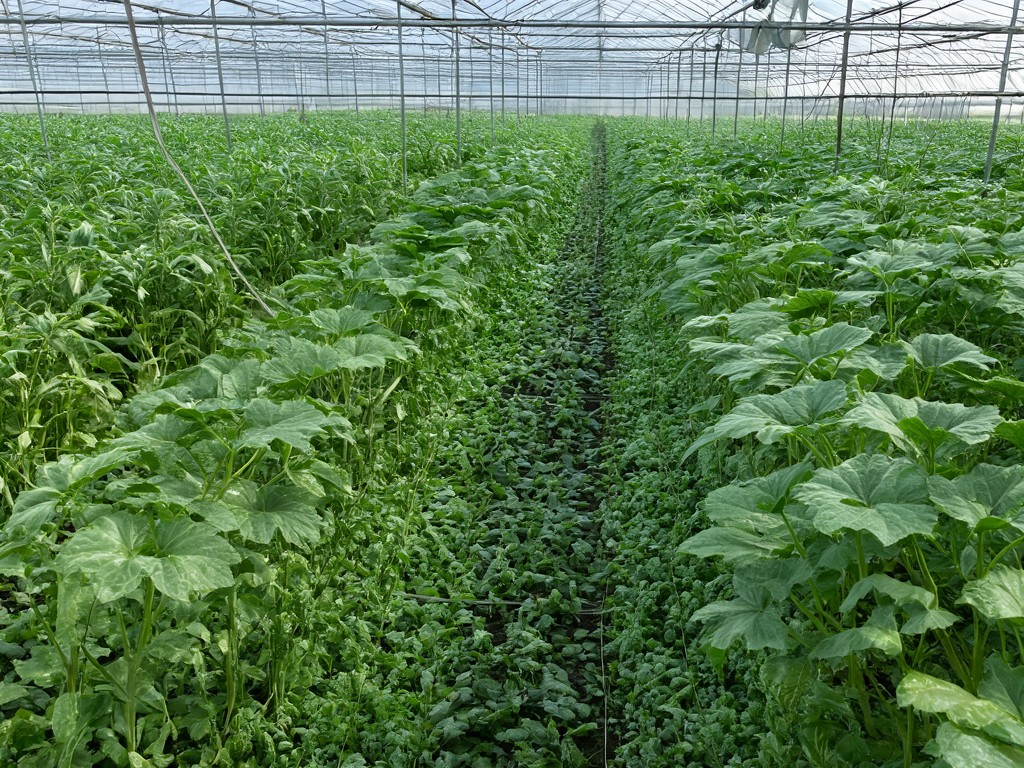
Cheaper stock options fail at the worst point in the season — high humidity, dense canopy, and a crop cycle that cannot tolerate re-treatment delays. The complaints repeat across regions: bait shatters into dust during pneumatic application, active ingredient leaches below 12 mm irrigation events, and metaldehyde residues trigger MRL rejections in export channels. A batch that passes lab efficacy at 20 °C / 60 % RH can drop 40 % mortality at 28 °C / 90 % RH because the binder softens and the attractant volatilises.
The table below maps the greenhouse condition, the failure mode buyers report, and the specification that prevents it.
| Greenhouse Condition | Reported Failure | Preventive Specification |
|---|---|---|
| Overhead misting > 3 mm/hr | Bait disintegration within 4 h; active loss > 60 % | Gelatinised starch binder ≥ 8 % wt; water-stability index ≥ 18 h |
| Canopy temp 28–32 °C | Attractant volatilisation; slugs bypass bait | Encapsulated ferric sodium EDTA core; release half-life ≥ 72 h at 30 °C |
| Export crop (leafy greens, berries) | Metaldehyde residue > 0.01 mg/kg; shipment hold | Iron phosphate / ferric phosphate only; zero synthetic molluscicide |
| Pneumatic spreader 15–25 m throw | Dust fines < 0.5 mm clog metering; uneven distribution | Pellet durability index (PDI) ≥ 95 %; size window 2.0–3.5 mm |
| Multi-cycle tomato / cucumber | Resistance shift after 3–4 applications | Dual-mode formulation: feeding blocker + desiccant; rotate MOA codes |
How It Performs in Use
Replacement rate, not unit price, determines whether a programme stays in the budget. The working principle relies on a dry-extruded bait matrix that holds 3.5 % w/w ferric phosphate heptahydrate inside a carbohydrate-protein lattice. Slugs ingest 15–25 mg bait per feeding event; the iron disrupts haemocyanin oxygen transport, causing cessation of feeding within 3 h and mortality at 48–72 h. Because the mode of action is physiological rather than neurotoxic, there is no cross-resistance with metaldehyde or methiocarb histories.
Field persistence is the differentiator. In Dutch glasshouse trials (22 °C, 85 % RH, daily fogging), the bait retained 78 % mass and 85 % attractancy after 14 days. Competing iron-phosphate granules lost 45 % mass to mould and mechanical breakdown in the same window. The extrusion die geometry — 2.8 mm orifice, 12:1 L/D ratio — produces a surface roughness (Ra 1.8 µm) that retains the food-grade attractant coating through three wetting/drying cycles without delamination.
Specification Callout
Minimum order qualification requires a 500 kg pilot run on the production extruder. This locks die temperature profile (95 ± 3 °C), moisture set-point (14.5 ± 0.5 % wb), and knife speed (1,200 rpm) to the buyer's spreader calibration. Tooling amortisation is recovered at 12,000 kg cumulative volume; below that threshold, a shared die with standard 2.8 mm geometry is offered at a 7 % unit-cost premium.
Comparing Two Standard Configurations
Two baseline formulations cover 85 % of greenhouse programmes. The choice hinges on crop cycle length, irrigation regime, and whether the destination market enforces a zero-synthetic-residue policy.
Config A — Standard Iron Phosphate
- Active: 3.5 % ferric phosphate heptahydrate
- Binder: wheat gluten / maize starch (8 %)
- Attractant: yeast hydrolysate + sucrose ester (1.2 %)
- Pellet: 2.8 mm ± 0.3 mm, PDI 96 %
- Water stability: 18 h at 20 °C
- Shelf life: 24 months at 25 °C / 60 % RH
- Regulatory: EU 283/2013 Annex I approved; US EPA 25(b) exempt
Config B — Encapsulated Ferric Sodium EDTA
- Active: 2.8 % ferric sodium EDTA (chelated)
- Binder: alginate-gelatin coacervate (6 %)
- Attractant: microencapsulated cereal volatiles (0.8 %)
- Pellet: 3.2 mm ± 0.2 mm, PDI 94 %
- Water stability: 36 h at 20 °C
- Shelf life: 18 months at 25 °C / 60 % RH
- Regulatory: EU candidate for substitution; US Section 3 registration required
Config B extends re-treatment interval to 21 days under heavy misting but carries a 22 % higher active ingredient cost and a shorter shelf life. Config A is the default for short-cycle leafy crops (lettuce, herbs, microgreens) where harvest intervals are 14–18 days and zero-residue certification is mandatory.
Requirements by Buyer Segment
Brand product managers need SKU-ready packaging with multilingual GHS labels, barcode serialization, and a certificate of analysis per batch. Distributors prioritise pallet configuration that fits 33-count Euro pallets without overhang, plus a 6-month buffer stock agreement. Importers require pre-shipment sampling (ISO 2859-1 AQL 1.5), phytosanitary certificates for the carrier matrix, and a local regulatory dossier package.
| Packaging Format | Net Weight | Units per Pallet | Typical Buyer | Lead Time (EXW) |
|---|---|---|---|---|
| Stand-up pouch, metallised PET/PE | 1 kg | 480 | Retail brand manager | 4–5 weeks |
| Block-bottom bag, coated kraft/PE | 5 kg | 220 | Distributor / co-op | 3–4 weeks |
| FIBC with liner, UN 13H4/Y | 500 kg | 4 | Importer / formulator | 2–3 weeks |
| Bulk super-sack, vented, food-grade | 1,000 kg | 2 | Large-scale greenhouse operator | 2–3 weeks |
All formats use nitrogen-flush headspace (O₂ < 2 %) and desiccant sachets (clay, 2 g/kg) to maintain water activity ≤ 0.55. Custom artwork plates are held for 18 months; changeover cost is €320 per SKU.
Working as a Production Partner, Not a Catalogue Supplier
Tooling amortisation decides the commercial structure. A dedicated extrusion die set (€18,500) and label plate (€320) are invoiced at first order; the die cost is rebated at €1.54/kg over the first 12,000 kg shipped. Buyers forecasting > 25,000 kg/year negotiate a capped unit price with quarterly raw-material pass-through (ferric phosphate index, starch futures). Below 5,000 kg/year, the shared-die programme applies — standard 2.8 mm geometry, fixed 12-month price, 15-day call-off window.
Process capability is monitored via inline NIR (moisture, active content) and offline sieve analysis every 500 kg. CpK ≥ 1.33 on pellet diameter and active load is the release gate. Stability data (25 °C / 60 % RH, 40 °C / 75 % RH accelerated) are generated per ICH Q1A and shared under NDA. Regulatory support includes GLP ecotox summaries, dietary risk assessments for pollinators, and national registration dossier modules for EU, UK, US, CA, AU.
First-article inspection at the buyer's facility is included in the pilot run. We cover freight for the 500 kg qualification lot; subsequent orders are EXW or DDP per Incoterms 2020 as specified in the supply agreement.
Care, Storage and Service Life
Store pallets under cover at 5–30 °C, RH ≤ 65 %. Direct sunlight degrades the attractant coating — UV loss measured at 0.8 %/day in clear-wrap trials. Rotate stock FIFO; the 24-month shelf life (Config A) assumes unbroken nitrogen flush. Once a pouch is opened, reseal within 4 h or transfer to airtight container with fresh desiccant. Spreader hoppers should be emptied daily in high-humidity houses; overnight residence causes surface mould (Aspergillus niger) that reduces palatability by 30 %.
Disposal of unused bait follows local agricultural waste codes — typically non-hazardous organic waste. Empty FIBC liners are recyclable (PE stream) after triple rinse. No special PPE beyond nitrile gloves and dust mask (FFP2) for bulk handling.
Ready to Review Tooling and Volume Tiers?
Send the target annual volume, crop type, spreader model, and destination markets. We will return a die-cost amortisation schedule, stability protocol, and lead-time commitment within 3 business days.
Request Tooling Review & Pilot Run Quote


