Specifying oem metaldehyde wettable powder supplier for Wholesale and OEM Orders
Core Selection Trade-Off
The choice between standard 50% Metaldehyde WP and custom-blended formulations hinges on active ingredient concentration versus carrier compatibility. Higher concentrations (50%+) reduce the required application volume per hectare, lowering logistics costs, but demand stricter grinding fineness to prevent agglomeration in low-volume tank mixes. Lower concentrations (25-30%) allow for extended shelf life and easier formulation with specific adjuvants, at the cost of higher freight weight. Procurement decisions should prioritize the target market's regulatory label requirements and the end-user's application equipment capabilities before negotiating unit price.
The Problem Buyers Keep Paying For
Fatigue appears at the stress concentration points of the supply chain: batch variability in particle size distribution. Metaldehyde wettable powder (WP) is not a uniform commodity; its efficacy depends on how quickly the granules disintegrate in water to form a stable suspension. If the carrier particle size exceeds 150 microns, the powder settles out of the spray tank during long application windows, causing uneven coverage and potential crop phytotoxicity or pest resistance. This is not a packaging issue; it is a milling process failure that manifests months after shipment.
Repeat loading drives the failure. Many buyers specify "Metaldehyde WP" without defining the particle size distribution (PSD) or the wetting agent load. When a supplier uses a coarser carrier to reduce grinding energy costs, the suspension stability drops below 90% after 30 minutes of static standing. The buyer receives product that passes basic dissolution tests but fails in real-world boom sprayer conditions. The result is a spike in complaint rates, returned goods, and a forced re-negotiation of warranty terms that erodes the original margin advantage.
The limiting factor is rarely the headline specification of 50% active ingredient. It is the compatibility of the inert filler with the wetting agent. Cheap fillers like talc or calcium carbonate with high surface area can bind the wetting agent, reducing its efficacy. The decision rule is simple: verify the supplier's mill specifications and their internal stability testing protocol before finalizing the OEM contract. Do not accept a generic "WP" grade if your label claims specific suspension stability.
What Actually Determines Performance
Performance in a wettable powder formulation is defined by three mechanical variables: grind fineness, wetting agent ratio, and filler type. The grind fineness dictates the initial dissolution rate. A D90 particle size (the diameter below which 90% of particles fall) of less than 44 microns is the industry benchmark for standard agricultural WPs. If the D90 exceeds 60 microns, the powder requires agitation to remain suspended, which increases the energy consumption of the farmer's equipment and risks nozzle clogging. For OEM orders, specifying a D90 of < 30 microns ensures a clear solution or a very stable suspension, but this increases grinding time and energy costs by approximately 15-20%.
The wetting agent ratio is the second critical variable. Typically, 1-3% of a non-ionic surfactant is added to the carrier. Too little, and the powder floats on the water surface; too much, and it causes foam in the sprayer tank, leading to dosing errors. The filler type—usually kaolin, talc, or calcium carbonate—must be chemically inert to prevent degradation of the metaldehyde. Kaolin is preferred for its stability and cost, but it is heavier than talc. Heavier fillers increase the bulk density of the powder, allowing more product to be packed into a standard 25kg bag, which directly impacts freight efficiency. A bulk density of 0.8-1.0 g/cm3 is optimal for efficient packing without compaction issues.
The interaction between these variables is non-linear. A finer grind allows for a lower wetting agent ratio because the smaller particles have a larger surface area-to-volume ratio, facilitating faster wetting. However, if the filler is poorly wetted, even a fine grind will result in poor suspension. The factory must control the moisture content of the raw metaldehyde and the filler to below 0.5% before mixing to prevent pre-agglomeration. This pre-mixing control is the differentiator between a standard commodity supplier and a specialized OEM partner capable of meeting strict quality gates.
Comparing Two Standard Configurations
Buyers typically choose between two baseline configurations: the High-Concentration Kaolin WP and the Balanced Talc WP. The following table outlines the mechanical and economic differences that impact total landed cost and application performance.
| Parameter | Config A: High-Conc. Kaolin WP | Config B: Balanced Talc WP |
|---|---|---|
| Active Ingredient | 50% Metaldehyde | 30% Metaldehyde |
| Carrier/Filler | Kaolin Clay (Heavy) | Talc (Light) |
| Bulk Density | 0.90 - 1.00 g/cm³ | 0.50 - 0.65 g/cm³ |
| Freight Efficiency (25kg Bag) | Higher volume per container ton | Lower volume, higher cost per kg shipped |
| Typical Application Rate | 10-15 kg/ha | 20-25 kg/ha |
| Best For | Large-scale farm operations, cost-sensitive buyers | Precision agriculture, mix tanks with low agitation |
Customisation Options and Their Limits
Customizing an OEM Metaldehyde WP involves adjusting the wetting agent type, adding colorants for brand identification, and modifying the package size. However, these options have strict limits. The wetting agent cannot be reduced below 1% without risking poor suspension, and it cannot be increased above 3% without causing excessive foaming. Colorants must be inorganic pigments that are stable under UV exposure and do not react with the metaldehyde. Organic dyes are prohibited in most agricultural formulations due to stability issues and regulatory restrictions.
Package size customization is limited by the mechanical properties of the powder. Custom sizes below 1kg require specialized filling machines with high accuracy to ensure weight consistency. The filler's flowability affects the filling speed; a coarse, free-flowing talc-based powder can be filled faster than a fine, cohesive kaolin-based powder. If you require a small MOQ for a custom label, expect a higher unit cost due to lower machine utilization rates and the need for manual calibration. The minimum practical batch size for custom formulations is typically 1,000 kg to amortize the setup and cleaning costs of the mixing and packaging lines.
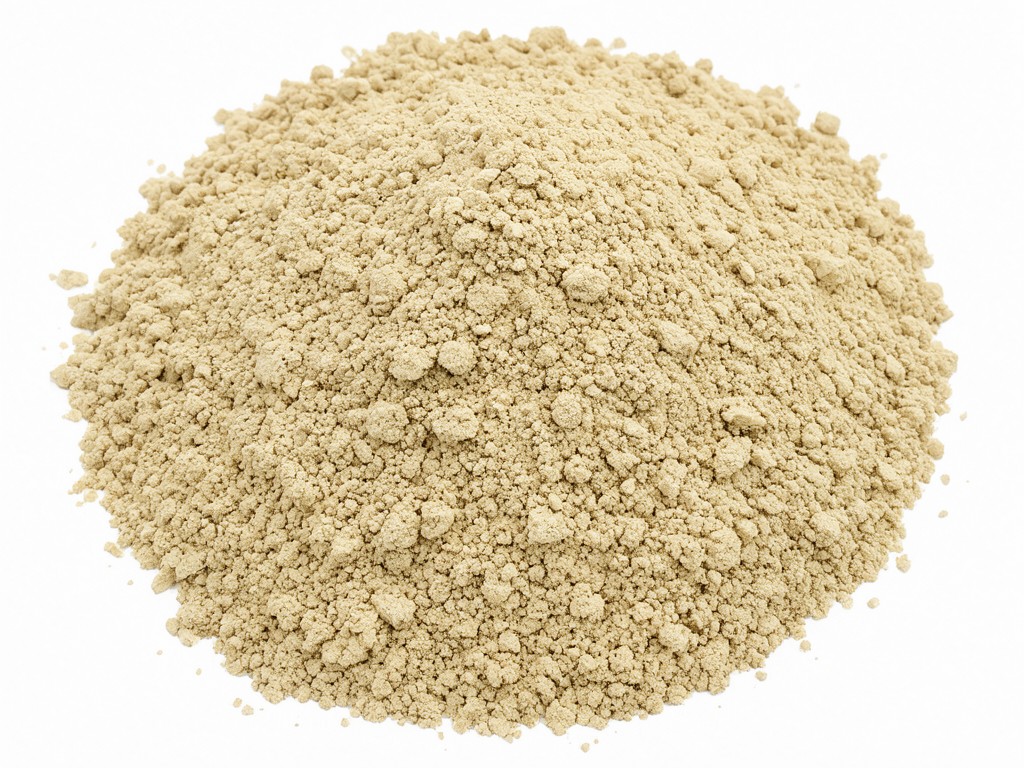
Adding adjuvants or synergists to the formulation is a complex decision that requires stability testing. Metaldehyde is stable in dry conditions, but the presence of certain organic compounds can accelerate degradation over time. The supplier must conduct accelerated aging tests (e.g., 6 months at 54°C) to ensure the custom formulation remains within specification. If you are considering a custom blend with other active ingredients, verify that the pH of the final solution does not shift outside the 6.0-7.5 range, which can affect metaldehyde solubility and efficacy. This testing adds 4-6 weeks to the lead time and requires a separate laboratory fee.
Who Uses It and Where It Matters
The primary buyers of OEM Metaldehyde WP are agricultural distributors and private-label brands targeting the slug and snail control market. These buyers operate in regions with high humidity and rainfall, where slug pressure is a significant crop loss factor. The product must perform reliably in these conditions, meaning it must maintain suspension stability in cold water (as low as 10°C) and adhere well to moist plant surfaces. A formulation that works in warm, dry conditions will fail in these markets, leading to crop damage and customer churn.
Club or academy purchasing managers in specialized horticultural sectors, such as turf care or high-value vegetable farming, also procure this product in smaller, more precise batches. They require a consistent supply of product with a guaranteed particle size distribution to prevent clogging in their low-volume sprayers. For these buyers, the lead time and batch consistency are more critical than the unit price. A delay in supply can result in a missed treatment window, leading to irreversible slug damage. The supplier must demonstrate the ability to hold safety stock and release batches on short notice without compromising quality.
Distributors in emerging markets often face regulatory hurdles that require specific label claims and registration. The OEM supplier must provide full technical data sheets, safety data sheets (SDS), and stability data to support the buyer's registration process. The product must be manufactured in a facility that adheres to Good Manufacturing Practices (GMP) to ensure that the documentation is credible and accepted by local regulatory bodies. Failure to provide this documentation can result in the product being rejected at the port, causing significant financial losses and reputational damage for the buyer.
OEM and ODM Programme Structure
The OEM program is structured around tooling amortization and process capability. Unlike consumer goods, the "tooling" for a chemical WP is the calibration of the milling and mixing equipment. Each custom formulation requires a dedicated setup of the mill parameters and the mixer sequence. The cost of this setup is amortized over the first order. For an OEM order of 5,000 kg, the setup cost is negligible per unit. For an order of 500 kg, the setup cost becomes a significant portion of the unit price. Buyers must understand that low-volume OEM orders carry a premium that covers the risk of process deviation and the cost of dedicated line cleaning.
The ODM program offers pre-formulated products with customizable branding. These products have been tested for stability and efficacy, and the process parameters are locked in. The ODM buyer saves on the R&D and testing costs, but has less flexibility in the formulation. The lead time for ODM orders is shorter because the formulation is already approved and the equipment is calibrated. The primary variable in an ODM order is the packaging and label design. The supplier must have the capability to print and apply custom labels in-house or through a trusted subcontractor. Delays in label approval are a common cause of shipment delays, so buyers should provide final artwork at least 2 weeks before the scheduled production start date.
Both programs require a clear quality agreement that defines the acceptance criteria for each batch. The agreement should specify the particle size distribution, moisture content, active ingredient content, and suspension stability. The supplier must provide a Certificate of Analysis (CoA) for each batch, and the buyer has the right to reject the batch if any parameter falls outside the agreed range. The cost of rejected goods, including return freight, is typically borne by the supplier if the failure is due to process error. If the failure is due to storage or handling by the buyer, the cost is shared. This clarity in responsibility is essential for a long-term partnership.
Quality Control and Batch Consistency
Quality control in Metaldehyde WP manufacturing is focused on physical consistency rather than chemical purity, which is controlled at the raw material stage. The key tests are particle size analysis, moisture content, and suspension stability. Particle size is measured using a laser diffraction analyzer, and the D50, D90, and D99 values are reported. A consistent D90 of < 44 microns is the target. Moisture content is measured using a Karl Fischer titrator, and it must be below 0.5% to prevent clumping. Suspension stability is tested by placing a known volume of the powder in water, stirring for 15 minutes, and then allowing it to stand for 30 minutes. The percentage of solids suspended in the top half of the cylinder is measured. A value of > 90% is acceptable for standard WPs.
| Test Parameter | Method | Acceptance Criteria | Frequency |
|---|---|---|---|
| Active Ingredient | HPLC | Nominal ± 2.0% | Per Batch |
| Particle Size (D90) | Laser Diffraction | < 44 microns | Per Batch |
| Moisture Content | Karl Fischer Titration | < 0.5% | Per Batch |
| Suspension Stability | Standard Cylinder Test | > 90% after 30 min | Per Batch |
| Solubility | Visual Inspection | Disperses without clumps | Per Batch |
Call To Action
To proceed with your OEM or ODM order, we require a detailed specification sheet that includes the target active ingredient concentration, preferred carrier type, package size, and label artwork. We will then conduct a tooling review to determine the optimal process parameters and provide a firm quotation based on your order volume. Our team of process engineers will review your requirements and advise on any potential formulation adjustments to ensure compliance with your target market's regulations. Please contact us to schedule a tooling review and discuss your specific needs.
We understand the pressure of hitting retail and club launch dates. Our production planning is designed to accommodate urgent orders with a dedicated fast-track lane, provided that all technical specifications are finalized and approved within 48 hours of inquiry. Contact our sales engineering team to initiate the process and ensure your product is ready for shipment without delay. We look forward to partnering with you to deliver a consistent, high-performance Metaldehyde WP that meets your exacting standards.



