metaldehyde 6% and 80% snail and slug bait suppliers: Specification, Ordering and Quality Notes
The Problem Buyers Keep Paying For
Total cost of ownership shifts once returns are counted. A 6% pellet that turns to mush after 12 mm of rain forces a re-application the grower never budgeted for. The 80% technical concentrate that cakes in the silo because the anti-caking agent was skipped at the toll blender? That batch gets rejected at the repack line, and the distributor eats the freight both ways.
Cheaper stock options fail at the worst point in the season. Spring humidity spikes. Autumn temperature swings. The bait that held together in the warehouse in January disintegrates in the field in April. Buyers who specify only active ingredient percentage and price per kilogram find out too late that particle integrity, rainfastness, and flowability are the variables that actually drive reorder rate.
How It Performs in Use
Metaldehyde works by contact and ingestion — molluscs feed on the bait, the active ingredient disrupts mucus production, and they die of dehydration. Speed of kill depends on bait palatability and the rate at which the active ingredient releases in the crop canopy. A 6% pellet formulated on durum wheat bran with 2% metaldehyde protectant (typically a polymer coating) holds lethal dose for 10-14 days under 20-25°C and 60-80% RH. The same active on a clay carrier without protectant drops to 3-4 days.
The 80% technical grade is not a field product. It is a formulation intermediate. Buyers requesting 80% are typically toll formulators or registrants building their own finished goods. They need consistent assay (79.5-80.5%), low moisture (<0.5%), and particle size distribution that feeds their micro-encapsulation or extrusion line without bridging. A 200 µm shift in D50 changes the feed rate by 15% on a twin-screw extruder.
Material Options and Their Trade-offs
Carrier Matrix
Durum wheat bran: High attractancy, natural food signal. Absorbs moisture — needs polymer coating for >7 day field life. Cost: medium.
Clay/grit (extruded): Excellent rainfastness, consistent SG for precision spreaders. Low inherent attractancy — requires enhanced lure package. Cost: higher.
Processed grain meal: Good flow, moderate attractancy. Prone to fines generation in bulk handling. Cost: low.
Protectant System
PVA/PVP film coat (2-3% wt): Standard for 6% bran pellets. Extends field life to 10-14 days. Adds 3-4% to finished goods cost.
Micro-encapsulation (core-shell): Used on 80% technical for controlled-release formulations. Extends field life to 21+ days. Adds 18-25% to finished goods cost.
None (bare technical): 80% grade only. Shelf life 24 months in sealed drums at <25°C. Zero field persistence — not for direct application.
Bitrex (denatonium benzoate) at 30-50 ppm is mandatory in most jurisdictions for non-target deterrence. Blue or green colorant (food-grade FD&C) at 0.1-0.2% is standard for field identification. Both add negligible cost but are regulatory gatekeepers — omit them and the registration fails.
How It Is Built and What That Changes
Tooling amortisation decides the economics of private-label runs. A 6% bran pellet line — mixer, extruder, spheronizer, dryer, coater, sifter — carries ~$1.2M in dedicated tooling. At 500 MT annual volume, tooling amortisation adds $0.18/kg. At 50 MT, it adds $1.80/kg. That is why toll blenders enforce 200 MT minimum campaign sizes for custom formulations.
The 80% technical route is different. No extrusion. No coating. The process is micronisation (jet mill or pin mill) → classification → blending with flow aid (fumed silica, 0.2-0.5%) → packing in 25 kg PE-lined fibre drums or 500 kg FIBC with inner liner. Capital intensity is lower ($300k for a micronisation cell), so campaign minimums drop to 20 MT. But the analytical burden is higher — every drum needs CoA for assay, moisture, and PSD.
Batch traceability is non-negotiable. Each production lot must link: raw material CoAs (metaldehyde technical, carrier, protectant, colorant, bitrex), in-process checks (extruder die temp, moisture post-dry, coat weight), and final release data. A single missing CoA blocks the entire container at customs in EU, AU, or NZ markets.
Matching the Product to the Buyer's Need
Private-label buyers fall into three profiles. The retail brand needs 6% pellets in 500 g, 1 kg, 5 kg retail packs — shelf appeal, child-resistant closure, multilingual label compliance. The distributor needs 6% in 25 kg bulk bags for professional applicators — flowability through pneumatic spreaders, dust <0.5%, consistent SG 0.65-0.72. The formulator needs 80% technical in 25 kg drums — assay consistency, low moisture, PSD matched to their encapsulation recipe.
Specify the use case first. Then the factory selects the carrier, protectant, and packaging line. A retail SKU run at 50 MT on a 1 kg pouch line has 6-8 week lead time. A 25 kg bulk bag run at 200 MT on the same line has 3-4 week lead time. The difference is changeover frequency, not raw material availability.
6% Finished Bait — Key Parameters
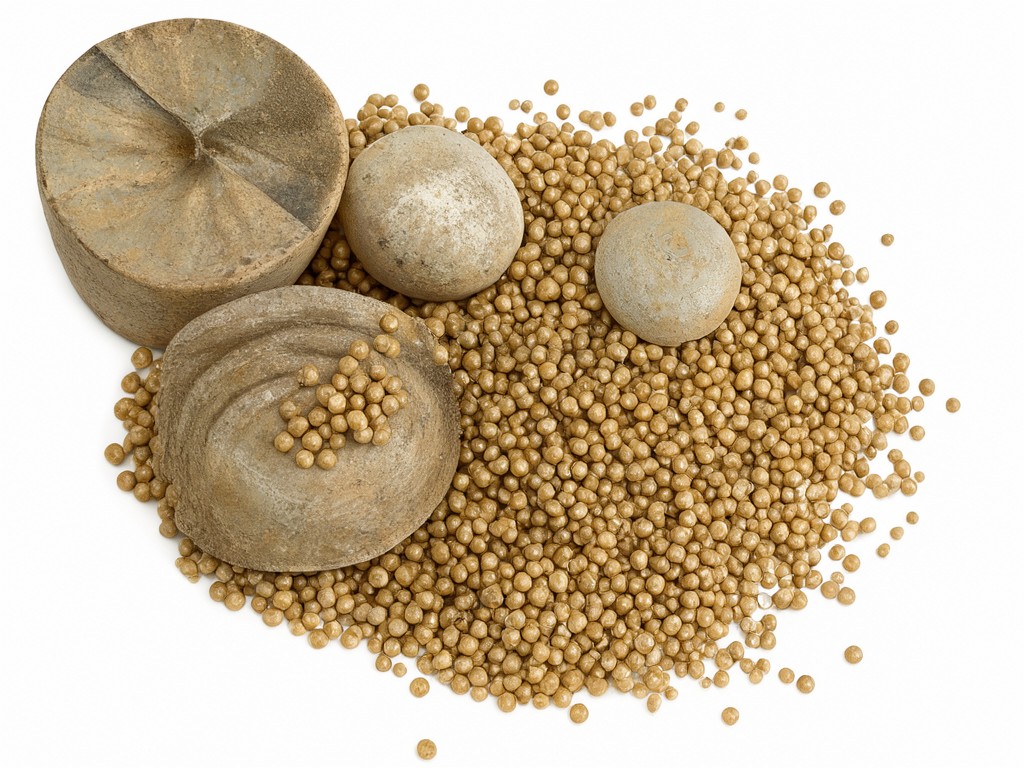
- Particle size: 2.0-3.5 mm (bran pellet), 2.5-4.0 mm (extruded clay)
- Bulk density: 0.55-0.75 g/cm³ depending on carrier
- Moisture: 10-13% (bran), 6-9% (clay)
- Rainfastness: ≥85% AI retention at 25 mm/2h
- Fines: <1% through 1 mm sieve
80% Technical — Key Parameters
- Assay: 79.5-80.5% w/w (HPLC)
- Moisture: ≤0.5% (Karl Fischer)
- Residue on ignition: ≤0.1%
- PSD: D10 40-60 µm, D50 120-180 µm, D90 300-400 µm
- Flow aid: 0.2-0.5% fumed silica
Requirements by Buyer Segment
Retail private label: artwork approval cycle 3 weeks, label compliance review 2 weeks, child-resistant closure certification 4 weeks. Total pre-production: 9 weeks minimum. MOQ 50 MT per SKU (≈50,000 × 1 kg units). Lead time after artwork sign-off: 4 weeks.
Professional bulk: no artwork, standard UN-certified 25 kg woven PP with PE liner. MOQ 100 MT. Lead time 3 weeks from PO. Dust and flow specs tighter — applicator contractors reject loads that bridge in the spreader hopper.
Formulator (80% technical): CoA per drum, drum sequence numbers, liner integrity certificate. MOQ 20 MT. Lead time 2 weeks. They audit the micronisation cell — if you cannot show the classifier calibration record, they walk.
| Buyer Segment | MOQ | Lead Time (post-spec freeze) | Critical Spec Gate |
|---|---|---|---|
| Retail private label (6%) | 50 MT / SKU | 9 weeks (artwork + compliance) + 4 weeks production | Label registration, child-resistant closure cert, rainfastness data |
| Professional bulk (6%) | 100 MT | 3 weeks | Dust <0.5%, flowability, SG consistency, UN packaging cert |
| Formulator (80% technical) | 20 MT | 2 weeks | Per-drum CoA, PSD match, moisture ≤0.5%, liner integrity |
Care, Storage and Service Life
6% bran pellets: store at ≤25°C, ≤60% RH, off concrete floor on pallets. Shelf life 18 months from manufacture. Above 30°C the protectant softens — pellets stick, fines spike, spreader calibration drifts. Below 5°C the bran becomes brittle — attrition in handling doubles. Rotate stock FIFO. Open bags reseal within 4 hours or moisture equilibrium shifts.
80% technical: store at ≤25°C, ≤40% RH in original sealed drums. Shelf life 24 months. Moisture ingress >0.8% triggers hydrolysis — metaldehyde converts to acetaldehyde, assay drops, odour changes. Drums showing liner puncture or condensation on opening: quarantine and re-assay. Do not blend suspect drums into production batches.
Field-applied bait: efficacy drops 50% after 14 days at 25°C/80% RH without protectant. With 2% PVA coat, 70% efficacy holds at day 14. Communicate this to the end user — the most common complaint ("product doesn't work") is actually application timing or storage error.
Request a Sample Batch
We supply 6% finished bait (bran or clay carrier, your protectant choice) and 80% technical grade to spec. Minimum trial quantity: 500 kg for 6%, 100 kg for 80%. Includes full CoA, rainfastness data (6%), PSD report (80%), and packaging compliance docs for your target market.
Lead time on trial batches: 10 business days from confirmed specification sheet. Freight terms: EXW our facility or DAP your warehouse — your choice.



