Imidacloprid 63
Imidacloprid PropertiesCAS number138261-41-3Melting point144°CBoiling point93.5°C (rough estimate)Density1.54Vapor pressure2 x 10-7Refractive index1.5790 (estimate)Flash point2 °CStorage temperature
Imidacloprid Properties
| CAS number | 138261-41-3 |
| Melting point | 144°C |
| Boiling point | 93.5°C (rough estimate) |
| Density | 1.54 |
| Vapor pressure | 2 x 10⁻⁷ |
| Refractive index | 1.5790 (estimate) |
| Flash point | 2 °C |
| Storage temperature | 0-6°C |
| pKa | 7.16±0.20(Predicted) |
| Form | Solid |
| Color | White to off-white |
| Water solubility | 0.061 g/100mL at 20 ºC |
Safety Information
| Risk and safety statements | |
| GHS symbols | GHS hazard GHS07,GHS09 |
| Signal word | Warning |
| Hazard statements | H302-H410 |
| Precautionary statements | P273-P301+P312+P330 |
| Hazard codes | N,Xn,F |
| Risk statements | 11-20/21/22-36-22-20/22 |
| Safety statements | 26-36-22-36/37-16-46-44 |
| RIDADR | UN 2588 |
| WGK Germany | 2 |
| RTECS | NJ0560000 |
| Hazard class | 6.1(b) |
| Packing group | III |
| HS code | 29333990 |
Background
Imidacloprid is a neonicotinoid insecticide, a class of neuro-active compounds modeled after nicotine. It is used in pest control applications, including seed treatment, insecticide sprays, termite control, and flea control. It is also used as a systemic insecticide.
How It Works
Imidacloprid interferes with the normal transmission of nerve signals, disrupting the function of the nervous system. It is more toxic to insects and other invertebrates than to mammals and birds because it binds more effectively to receptors in insect nerve cells.
As a systemic insecticide, imidacloprid can be absorbed by plants from the soil or through their leaves, then distributed throughout stems, leaves, fruit, and flowers. Insects feeding on treated plants may ingest the compound. This exposure can damage their nervous systems and eventually cause death.
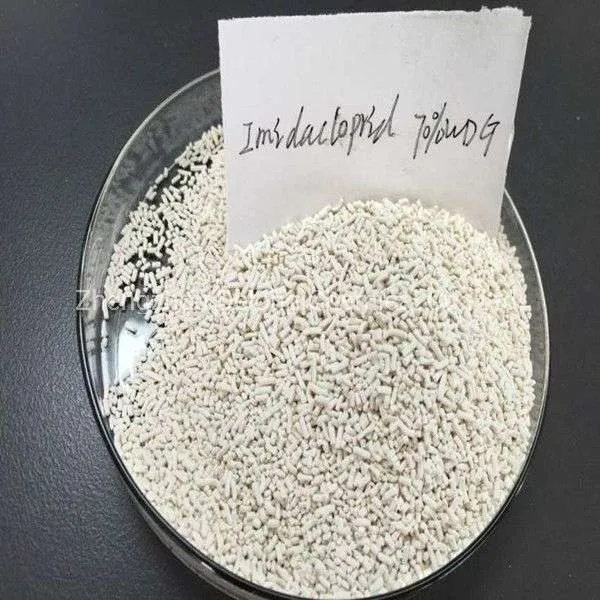
Available Imidacloprid Formulations



