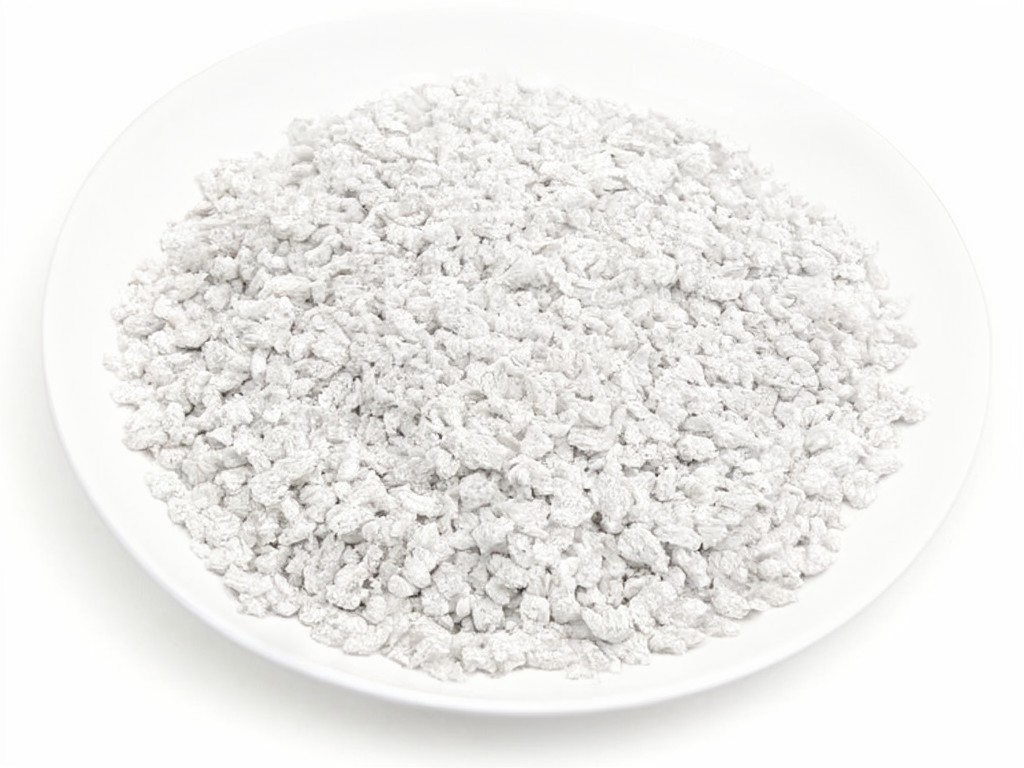
factory price 48% thiacloprid supplier: What Buyers Should Check Before Ordering
What This Product Is and Where It Fits
Thiacloprid 48% SC (suspension concentrate) sits in the neonicotinoid class, targeting sucking pests — aphids, whiteflies, leafhoppers, and certain beetles — across fruit, vegetable, and ornamental crops. The 48% figure refers to active ingredient (AI) load by weight; the balance is a proprietary surfactant-dispersant-antifreeze package that keeps the solid particles in stable suspension for 24 months at ambient warehouse temperatures.
Buyers typically encounter three supply tiers: technical-grade crystalline AI shipped to formulators, bulk 48% SC in 200 L drums or 1000 L IBCs for regional repackers, and finished retail packs (100 mL–1 L) bearing national registration numbers. A factory-price quote usually implies the middle tier — bulk SC ex-works or FOB — where the purchaser owns downstream registration, labelling, and final dilution.
Design Constraints Behind the Specification
Balance and load analysis shows that a 48% suspension concentrate lives or dies by particle-size distribution. The target D90 ≤ 5 µm and D50 ≈ 1.5 µm; anything coarser settles fast, anything finer raises viscosity past pumpable limits. Achieving this window requires wet-milling the technical AI with a polymeric dispersant (typically naphthalene sulfonate formaldehyde condensate) at 8–12% of AI weight, followed by a high-shear bead-mill pass at 12–15 m/s tip speed.
The interface between parts determines freeze-thaw resilience. Propylene glycol at 5–8% w/w depresses the freezing point to −15 °C without splitting the suspension. However, excess glycol reduces flash point and increases freight classification cost. The trade-off is settled by the destination climate zone: tropical shipments can drop glycol to 3%, saving $12–18 per metric tonne of finished SC.
Specification Rule: Suspensibility ≥ 85% after 30 min (CIPAC MT 184) and ≤ 2% sediment after 24 h at 30 °C. If the CoA shows 82% suspensibility, the batch will clog 80-mesh sprayer screens within two tank loads.
Who Uses It and Where It Matters
Primary users are mid-size distributors (annual throughput 500–5000 t) who hold national registrations and operate their own bottling lines. They need drum/IBC deliveries that arrive with consistent rheology so their inline filling heads don’t drift. A secondary segment is large plantation groups (citrus, tea, cotton) buying 20 t+ lots for direct tank-mix use; they prioritise rainfastness (> 2 h) and low phytotoxicity on tender flush.
In both cases the product survives repeated UV exposure on leaf surfaces, high-temperature storage in metal sheds (40–50 °C peak), and hard-water tank mixes (300–500 ppm CaCO₃). The surfactant package must prevent flocculation when the SC hits alkaline water (pH 8.5) — a common failure mode that turns a clean spray solution into a cottage-cheese sludge inside the boom.
How Consistency Is Held Across Batches
Consistency depends on three control gates. First, incoming technical AI is accepted only within 97.5–98.5% purity (HPLC) and ≤ 0.3% total impurities; the impurity profile (especially the chloropyridinyl by-product) correlates directly with phytotoxicity complaints. Second, each milling batch passes a 14-day accelerated storage test at 54 °C (CIPAC MT 46.3) before release — suspensibility, pH, and active content must stay within ±2% of day-zero values. Third, a retained 1 L sample from every 20 t lot sits in the factory QA archive for 24 months; any field complaint triggers re-test against that archive.
Process capability (Cpk) for AI content runs at 1.33 on a 47.5–48.5% window. Viscosity Cpk is lower (1.05) because bead-mill wear shifts particle size gradually; the mill chamber is relined every 120 t throughput to reset capability.
| Parameter | Typical Range | Test Method | Release Gate |
|---|---|---|---|
| Active ingredient content | 47.5 – 48.5% w/w | HPLC (CIPAC 333) | ±0.5% |
| Suspensibility | ≥ 85% | CIPAC MT 184 | ≥ 85% |
| Wet sieve residue (75 µm) | ≤ 0.5% | CIPAC MT 185 | ≤ 0.5% |
| pH (1% dilution) | 6.0 – 8.0 | CIPAC MT 75.3 | ±0.3 units |
| Persistent foam | ≤ 20 mL | CIPAC MT 47.3 | ≤ 20 mL |
| Density at 20 °C | 1.18 – 1.22 g/mL | CIPAC MT 3.3.1 | ±0.02 g/mL |
| Accelerated storage (54 °C, 14 d) | AI loss ≤ 2% | CIPAC MT 46.3 | Pass/Fail |
Volume Planning and Lead Time
A standard 20 t campaign (ten 2000 L batches) requires 14 calendar days from technical AI release to last drum filled, assuming the bead mill is free. Peak season (March–May northern hemisphere) adds 7–10 days queue time. Minimum economic run is 4 t (two batches); below that, changeover waste and mill cleaning push unit cost up 18–22%.
Buyers locking in quarterly forecasts (rolling 90-day) get priority scheduling and a 3% price buffer against spot AI market swings. Spot orders under 10 t are quoted ex-works with a 15-day validity; FOB terms add $45–60/t for UN-certified drumming and dangerous-goods documentation.
Export Packaging and Handling Protection
Bulk SC ships in UN 1A1/Y1.8/200 steel drums (200 L, 0.9 mm body, epoxy-phenolic lined) or UN 31A/Y IBC totes (1000 L, HDPE bottle in steel cage). Each unit receives a tamper-evident seal, GHS pictogram label set (H301, H317, H410), and a batch-specific QR code linking to the CoA PDF. Drums are palletised four per 1100 × 1100 mm heat-treated pallet, stretch-wrapped with 23 µm UV-resistant film; containers are loaded 80 drums per 20' GP or 20 IBCs per 40' HC.
Temperature excursions above 40 °C during ocean transit accelerate sedimentation. We recommend shippers request reefers set to 25 °C for voyages exceeding 25 days; the $350/container premium avoids re-dispersion costs at the destination depot.
Ordering, Tooling and Lead-Time Questions
- What is the minimum order quantity for a custom surfactant package? 20 t (ten batches). Below that, the bead-mill cleaning validation alone consumes 1.2 t of AI-equivalent wash solvent, making the lot uneconomic.
- Can we supply our own technical AI for toll formulation? Yes, provided it passes our incoming spec (97.5% min, impurity profile match). Toll fee is $1,150/t finished SC; lead time starts when your AI clears our QC gate.
- How fast can you turn a pre-shipment SGS/BV inspection? Samples drawn within 24 h of batch release; lab turnaround 48 h for full CIPAC panel. Report issued before container gate-in.
- Do you support private-label drum artwork? Artwork files (AI/PDF, CMYK, 300 dpi) due 10 days before filling. Print proof emailed for sign-off; drums printed inline during filling, no extra lead time.
- What happens if a batch fails accelerated storage after delivery? Retained archive sample is re-tested. If it passes, the failure is transport/storage related — buyer’s freight insurance. If archive also fails, we replace the lot at our cost within 30 days.
Next Step: Project Discussion
Send your annual volume forecast, destination markets, and any registration numbers you hold. We will return a batch-cost model, lead-time calendar, and a draft CoA template matched to your national authority’s data requirements.



