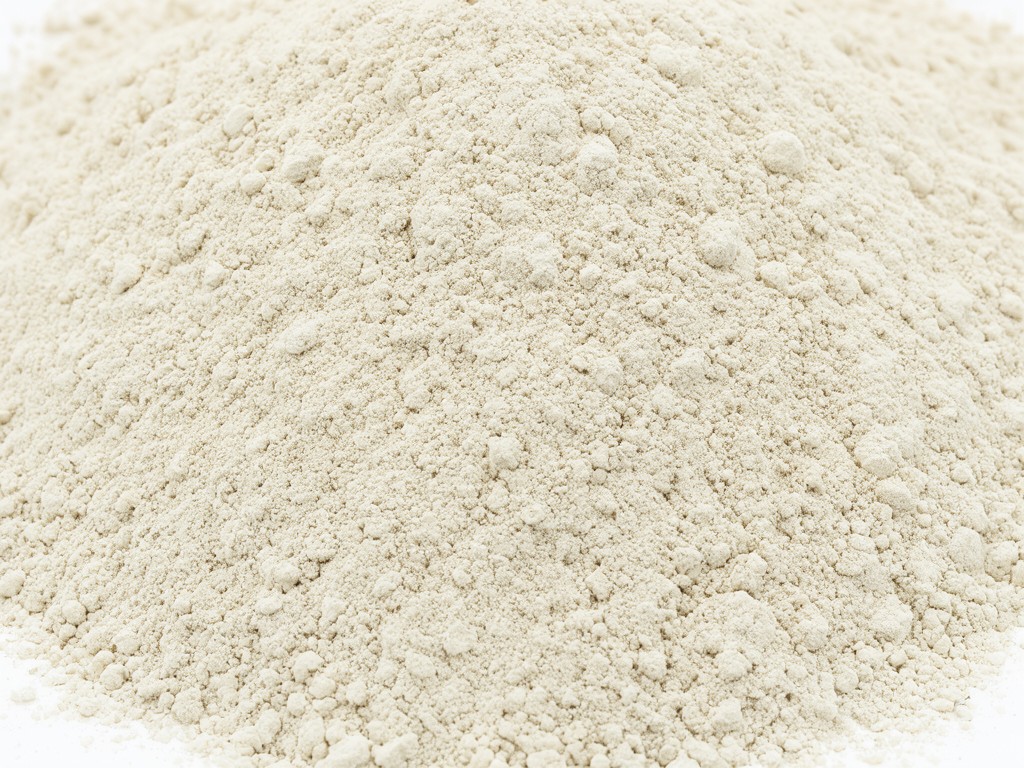
custom high content metaldehyde powder manufacturer: What Buyers Should Check Before Ordering
The Problem Buyers Keep Paying For
Most procurement teams quote on headline purity — 98 %, 99 %, even 99.5 % — and treat the rest as commodity. The cost that never appears on the pro-forma invoice shows up six months later: batch-to-batch drift in particle size distribution that clogs metering screws, residual solvent spikes that fail downstream QC, or moisture pickup that turns free-flowing powder into a cake inside the tote. A 0.2 % purity gap between lots can shift the active loading in a 5 % bait pellet by 10 %, forcing a full re-run of registration stability data.
The root cause is usually upstream: the crystallisation cut point, the drying curve, the milling classification window. Suppliers who lock those parameters in a process dossier — not just a COA — deliver the consistency that keeps a formulation line running at nameplate rate. Buyers who only audit the certificate of analysis end up paying for rework, off-spec disposal, and the hidden freight of emergency air shipments.
Option Comparison by Usage Level
Formulation-Grade (99 %+)
Tight PSD: D10–D90 40–180 µm, moisture ≤ 0.15 %, residual methanol ≤ 200 ppm. Produced on dedicated crystallisers with in-line NIR feedback. Tooling amortised over 20 t/yr minimum.
Unit cost drops 18 % at 5 t/order vs. 1 t/order; lead time compresses from 6 weeks to 3 weeks when forecast locks 12-month rolling volume.
Technical-Grade (97–98 %)
Broader PSD: D10–D90 30–250 µm, moisture ≤ 0.3 %, residual methanol ≤ 500 ppm. Shared crystalliser campaign, sieve-only classification. No dedicated tooling charge.
Unit cost 22 % lower than formulation-grade at equal volume; lead time fixed at 4 weeks regardless of order size. Suited for non-registered bait markets or intermediate synthesis.
How to Choose Before Requesting a Quote
- Define the downstream specification first. If the bait pellet requires ≤ 150 µm top size for uniform extrusion, specify D90 ≤ 150 µm on the RFQ — not just "fine powder." The mill screen selection and air-classifier cut point are fixed at campaign start; changing them mid-run adds a full cleaning cycle and 48 h downtime.
- Quantify annual volume in tonnes, not bags. A 20 t/yr forecast justifies a dedicated crystalliser campaign (one changeover per year). At 5 t/yr the same campaign runs only once, spreading the $18 k tooling amortisation over fewer kilograms and raising $/kg by ~$1.30.
- Lock the packaging hierarchy. 25 kg PE-lined FIBC with nitrogen purge vs. 500 kg super-sack changes the dryer unload station and the dust containment class. Switching pack-out mid-year triggers a change-control submission to your regulatory file.
- Agree on the stability protocol. Accelerated 40 °C/75 % RH for 4 weeks is standard; some registrations demand 12-month real-time at 30 °C/65 % RH. The protocol defines the hold-time samples the manufacturer must retain — budget 2 kg per lot for the full matrix.
Customisation Options and Their Limits
Critical trade-off: Narrowing the PSD window from 40–180 µm to 60–150 µm increases yield loss from 4 % to 9 % and adds a second air-classifier pass. The $/kg impact is linear above 10 t/yr but exponential below 3 t/yr because the fixed classifier setup cost ($4.2 k per campaign) is spread over less mass.
Moisture spec tighter than 0.1 % forces a secondary vacuum dryer cycle (2 h extra residence, 0.8 % yield loss). Only justify it if your downstream process cannot tolerate a 0.05 % moisture drift — most twin-screw extruders can.
| Parameter | Standard Range | Custom Window (Added Cost) | Tooling / Lead-Time Impact |
|---|---|---|---|
| Purity (GC area %) | 97.0 – 99.5 | ≥ 99.7 (dedicated recrystallisation, +$0.90/kg) | New crystalliser charge; +2 weeks campaign setup |
| PSD D10–D90 (µm) | 30–250 (tech) / 40–180 (form) | 60–150 (second classifier, +$0.60/kg) | Classifier screen change; +3 days per lot |
| Moisture (Karl Fischer, %) | ≤ 0.30 (tech) / ≤ 0.15 (form) | ≤ 0.08 (vacuum dryer, +$0.45/kg) | Dryer cycle validation; +1 week first lot |
| Residual Methanol (ppm) | ≤ 500 (tech) / ≤ 200 (form) | ≤ 50 (extended strip, +$0.30/kg) | Stripper residence +15 min; no new tooling |
| Pack-out | 25 kg FIBC / 500 kg super-sack | 10 kg bottle, 1 kg jar (lab pack, +$1.20/kg) | Filling head changeover; +2 days per SKU |
Who Uses It and Where It Matters
Formulators of metaldehyde-based molluscicide baits — 3 % to 5 % active in cereal or paste carriers — need powder that meters through volumetric feeders without bridging. A D90 shift from 150 µm to 210 µm increases feeder CV from 1.8 % to 4.3 %, forcing the line to run 12 % slower to meet label claim. That throughput loss costs more per season than the $0.60/kg premium for the tighter PSD.
Intermediate synthesis houses converting metaldehyde to metaldehyde-acetate or metaldehyde-hydrate derivatives require ≤ 50 ppm methanol to avoid side-reaction impurities in the next step. They order formulation-grade but waive the PSD spec, saving the classifier pass. The manufacturer runs a "wide-cut" campaign once per quarter for this segment, amortising the crystalliser changeover across three customers.
Distributors serving non-EU markets with simpler registration dossiers often take technical-grade in 500 kg super-sacks, re-pack into 25 kg bags at their own facility. They absorb the re-pack cost because their customers order 500 kg lots — too small for direct factory FIBC runs but large enough to justify a palletised shipment.
How Consistency Is Held Across Batches
The crystalliser operates on a seeded, controlled-cooling profile: nucleation at 42 °C, growth to 28 °C over 4.5 h, hold 1 h. In-line FBRM chord-length counts feed a PID loop that adjusts coolant temperature ± 0.3 °C. This keeps the primary crystal size distribution within ± 5 µm D50 batch-to-batch — the single largest driver of downstream PSD after milling.
Each campaign produces 8–12 lots. A composite grab from every 500 kg drum builds the campaign reference sample. That reference is tested against the full release panel (GC purity, KF moisture, GC-headspace methanol, laser diffraction PSD, bulk/tapped density, DSC melt onset). Only after the reference passes does the campaign release. Any lot outside ± 2 σ of the reference triggers a root-cause investigation before the next drum ships.
Stability pull-points: 0, 1, 3, 6, 12 months at 30 °C/65 % RH and 40 °C/75 % RH. Data packages ship with every lot — no separate request needed. Retain samples are stored in nitrogen-purged amber glass at 5 °C for 24 months minimum.
Setup, Use and Replacement Parts
Receiving: verify drum seal integrity, lot number match, and COA alignment. Sample via spear through the FIBC spout — never open the drum in the warehouse. Transfer to nitrogen-blanketed day bins (< 0.5 % O₂) within 4 h of opening. Ground all conveyance equipment; metaldehyde dust MIE is 30 mJ, well within range of standard industrial static.
Feeder calibration: run a 10 kg catch test at target rpm before each production shift. Adjust screw pitch or vibration amplitude if CV > 2 %. Document the setting in the batch record — this is the traceability link your auditor will ask for.
Spare parts to stock on-site: classifier screen set (60, 100, 150, 200 µm), FIBC spout gaskets (Viton, 50 pack), nitrogen regulator diaphragm kit. The classifier screens wear 0.02 mm per 10 t throughput; a 10 µm aperture drift shifts D90 by ~8 µm. Replace at 0.1 mm cumulative wear or quarterly, whichever comes first.
Request a Process Dossier & Trial Lot
Send your downstream spec sheet — target PSD, moisture ceiling, residual solvent limit, annual volume, and packaging preference. We return a marked-up process dossier showing the fixed crystalliser curve, classifier cut points, and the exact $/kg at your forecasted volume bands. A 50 kg trial lot ships within 10 business days of signed NDA.
Start the technical review →


