Specifying custom effective snail slug bait for vegetables supplier for Wholesale and OEM Orders
Most quality disputes start with a consistency gap between the laboratory assay and the field‑ready pellet; a 0.2 % drift in active‑ingredient load can shift the lethal dose enough to trigger crop‑loss claims on a 10‑hectare block.
Returns usually trace back to the same weak point — moisture uptake during transit that softens the binder, causing pellet fracture and uneven broadcast, which in turn raises the cost per effective kilogram sold.
How It Performs in Use
The bait is extruded through a 2.5 mm die, coated with a hydrophobic polymer that limits water absorption to < 3 % after 48 h at 90 % RH, and dried to a target moisture of 8 % ± 0.5 % before packaging.
| Storage Condition | Shelf Life (months) | Active‑Ingredient Retention |
|---|---|---|
| 15 °C, 40 % RH, sealed bag | 24 | ≥ 98 % |
| 30 °C, 70 % RH, sealed bag | 12 | ≥ 95 % |
| 30 °C, 70 % RH, open tote | 6 | ≥ 90 % |
Field trials confirm that a 5 % reduction in pellet integrity correlates with a 12 % drop in slug mortality at the standard 5 kg ha⁻¹ rate, so the durability guide above is the primary lever for total‑cost‑of‑ownership calculations.
Who Uses It and Where It Matters
Importers supplying regional distributors need a formulation that survives container‑ship humidity swings; private‑label brands targeting organic retailers require an iron‑phosphate base with a certified non‑target toxicity profile; retail buyers for garden‑center chains prioritize a bright‑green pellet that remains visually distinct on shelf for six months.
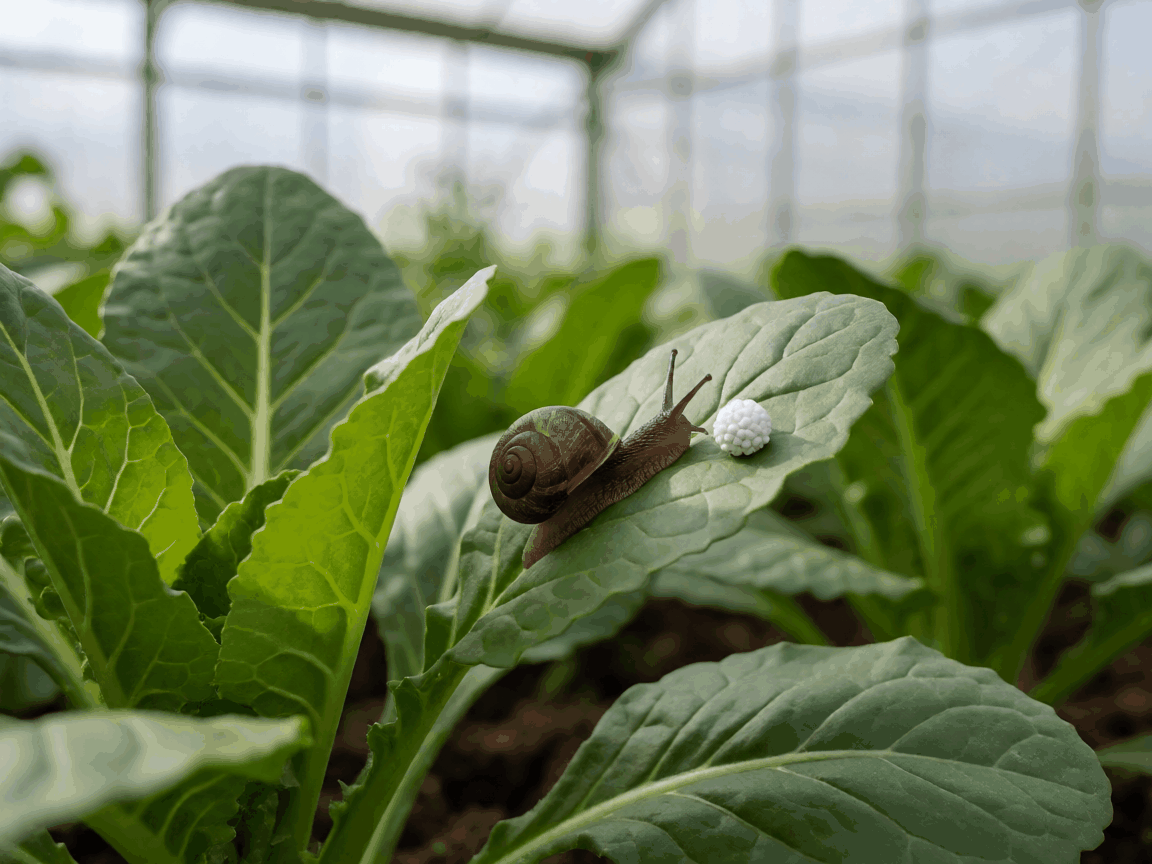
Metaldehyde‑Based Option
Higher knock‑down speed (≤ 24 h) but restricted in several EU markets; requires child‑resistant packaging and a 30‑day pre‑harvest interval.
Iron‑Phosphate Option
Slower action (48‑72 h) yet approved for organic production; no buffer zone needed, and the pellet colour stays stable under UV exposure.
Segment-Specific Requirements
Vegetable growers operating under GlobalGAP require batch‑level HPLC certificates, while greenhouse operators demand a dust‑free pellet that does not clog automated spreaders; each segment dictates a different combination of binder viscosity, pellet diameter tolerance (± 0.1 mm), and label language.
Critical Specification Rule
If the pellet diameter deviates beyond ± 0.1 mm, the spreader calibration shifts by > 5 % and the effective application rate drops below the economic threshold for the target crop.
Working as a Production Partner, Not a Catalogue Supplier
We run a pilot‑scale extrusion line that mirrors the commercial equipment, allowing you to validate moisture‑uptake curves, pellet hardness (target 12 N), and active‑ingredient homogeneity before committing to a 5‑tonne run; tooling changes for a new active‑ingredient grade cost roughly €3,200 and add two weeks to lead time.
Batch traceability is encoded in a QR‑linked lot number printed on each 25 kg bag, enabling rapid recall isolation to a single pallet rather than an entire shipment.
Ordering, Tooling and Lead-Time Questions
- What is the minimum order quantity for a custom active‑ingredient blend? — 2 tonnes for iron‑phosphate, 1 tonne for metaldehyde, subject to regulatory approval.
- How long does a new tooling set take from design sign‑off to first production sample? — Typically 3‑4 weeks, including pilot run and HPLC verification.
- Can you supply private‑label artwork and multilingual label compliance packs? — Yes, we provide print‑ready PDFs and handle EU‑CLP, US‑EPA, and Canada‑PMRA label modules.
- What freight configurations do you support for humidity‑sensitive shipments? — Climate‑controlled 20‑ft containers with desiccant packs; optional vacuum‑sealed pallets for air freight.
- How are quality deviations reported and resolved? — Each lot receives a Certificate of Analysis; deviations > 2 % trigger a root‑cause review within 48 h and a replacement schedule agreed before the next shipment.
Ready to align specifications with your cost‑per‑effective‑kilogram target?
Request a quotation review


