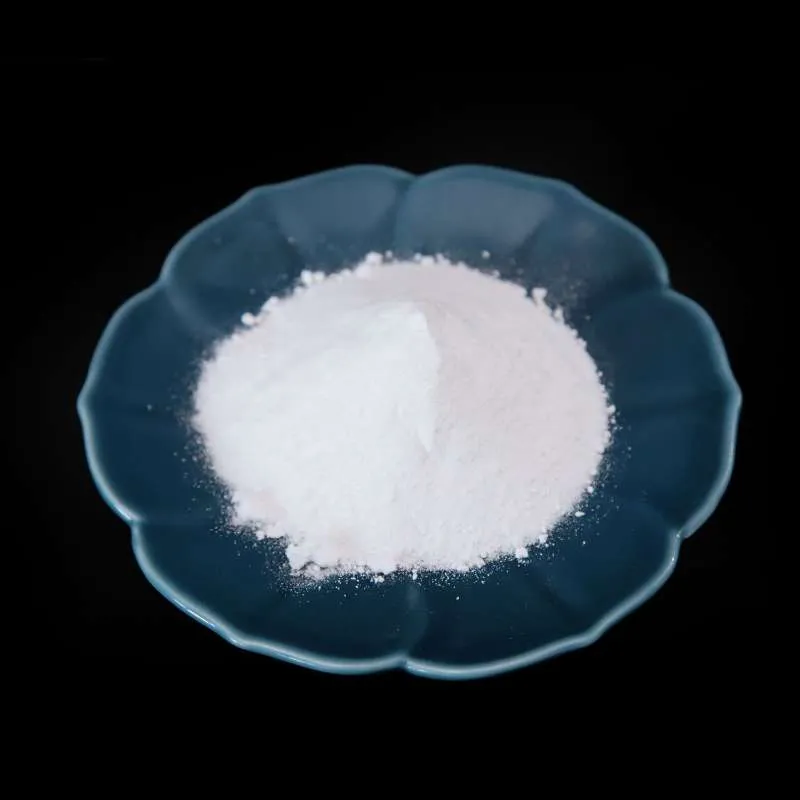
Clothianidin 82
Clothianidin is a neonicotinoid insecticide developed by the former Agro Division of Takeda Chemical Industries, Ltd. (now Sumitomo Chemical Co., Ltd.) and codeveloped with Bayer CropScience. It is
Clothianidin: Chemical Identity and Product Overview
Clothianidin is a neonicotinoid insecticide developed by the former Agro Division of Takeda Chemical Industries, Ltd. (now Sumitomo Chemical Co., Ltd.) and codeveloped with Bayer CropScience. It is described as providing control of a wide variety of insect pests, with activity against members of the Hemiptera, Thysanoptera, Coleoptera, Lepidoptera, and Diptera orders. The source information notes that it can provide excellent control efficacies in small amounts, long-term control, and systemic action, and that it is suitable for use through a variety of application methods.
These characteristics make the active ingredient relevant to different crop-protection and pest-management programs, subject to the directions and approved uses for the particular formulated product. Formulations listed here include seed-treatment flowable concentrates, suspension concentrates, water-dispersible granules, granules, and technical concentrate. This range allows purchasers to assess products in formats intended for different operational needs, rather than treating every Clothianidin product as interchangeable. The supplied concentration and formulation type should be checked against the specific product label before selection or use.
CAS: 210880-92-5
MF: C6H8ClN5O2S
MW: 249.67
Chemical Properties
The following chemical-property data are provided for Clothianidin. Values marked as predicted should be understood as predicted data, as indicated in the source. These details support technical identification and product evaluation; they do not replace the handling, storage, or application instructions supplied for an individual commercial formulation.
Melting point | 178.8 °C |
Boiling point | 412.5±55.0 °C (Predicted) |
Density | 1.61 |
Vapor pressure | 0Pa at 25℃ |
Storage temperature | 0-6°C |
Solubility | DMF: 30 mg/ml; DMSO: 30 mg/ml; DMSO:PBS (pH 7.2) (1:1): 0.50 mg/ml |
pKa | 2.76±0.50 (Predicted) |
Water solubility | 327 mg/L at 20 ºC |
For storage and preparation planning, use the stated storage temperature and solubility information as technical reference points, and follow the commercial product’s own documentation. Solubility figures are reported for the solvents and conditions listed; they should not be interpreted as application instructions or as a guarantee of how a formulated product will behave in every mixture.
Use and Application Considerations
Clothianidin is presented as an insecticide with systemic action and activity across several insect orders. The stated range of application methods and product formats gives agricultural businesses options to evaluate for their operational programs. Seed-treatment flowable concentrates are included in the supply range, alongside granules, suspension concentrates, and water-dispersible granules. Formulation choice should be based on the intended use and the directions authorized for that specific product.
In practice, the formulation type affects how a product is handled within an application workflow. A flowable concentrate for seed treatment is identified for that treatment purpose in its product description; a granule, suspension concentrate, or water-dispersible granule is identified by its own formulation designation. These labels help buyers distinguish product formats during procurement, inventory management, and application planning. They do not, on their own, establish a crop, target pest, application rate, timing, compatibility, or performance guarantee.
The source describes Clothianidin as offering long-term control and excellent control efficacies in small amounts. Its reported activity against Hemiptera, Thysanoptera, Coleoptera, Lepidoptera, and Diptera can be relevant when reviewing a pest-management option, but the actual approved use depends on the label and local requirements. Before use, confirm that the product is registered and appropriate for the intended site, crop, pest, and application method. Follow the product label and safety documentation for handling, protective measures, mixing, application, and disposal. No dose or crop-specific instruction is provided here.
Available Formulations
The listed supply options include Clothianidin as a single active ingredient and in combinations with other named active ingredients. Concentrations and formulation types below are reproduced as supplied, so purchasers can compare product options accurately. The two listed Clothianidin 48% SC entries are retained as provided.
- Pyraclostrobin 3.5% + Thiram 15% + Clothianidin 22.5% FS flowable concentrates for seed treatment
- Clothianidin 8% FS flowable concentrates for seed treatment
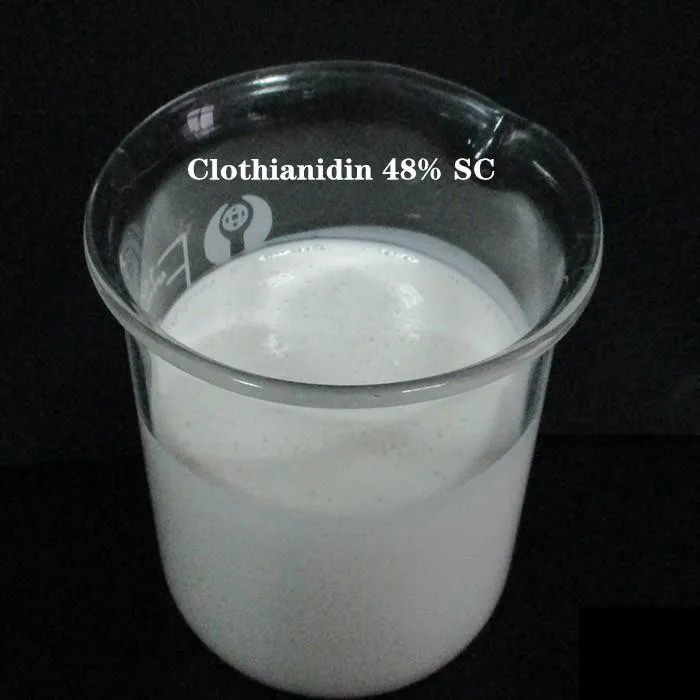
- Clothianidin 48% SC suspension concentrate
- Clothianidin 48% SC suspension concentrate
- Clothianidin 30% SC suspension concentrate
- Clothianidin 0.1% GR granule
- Clothianidin 98% TC technical concentrate
- Clothianidin 50% WDG water dispersible granule
- Clothianidin 20% SC suspension concentrate
- Clothianidin 30% WDG water dispersible granule
- Clothianidin 0.5% GR granule
- Clothianidin 10% FS flowable concentrates for seed treatment
- Clothianidin 18% FS flowable concentrates for seed treatment
- Clothianidin 48% FS flowable concentrates for seed treatment
- Clothianidin 1% GR granule
- Clothianidin 0.2% GR granule
- Clothianidin 0.06% GR granule
- Clothianidin 95% TC technical concentrate
- Clothianidin 0.12% + Chlorantraniliprole 0.04% GR granule
- Diazinon 4.5% + Clothianidin 0.5% GR granule
- Metalaxyl-M 1.5% + Thifluzamide 1% + Clothianidin 20% FS flowable concentrates for seed treatment
- Clothianidin 1.2% + Chlorantraniliprole 0.4% GR granule
- Clothianidin 320 G/L + Lufenuron 80 G/L SC suspension concentrate
- Bifenthrin 5% + Clothianidin 5% SC suspension concentrate
Risk and Safety Information
The supplied risk and safety details identify GHS07 and GHS09 symbols and the signal word “Warning.” The listed hazard codes are Xn,N. Transport and handling information shown here includes RIDADR UN 3077 9 / PGIII, WGK Germany 1, RTECS ME9565000, and HS Code 29341000. These identifiers are provided for product reference and should be checked against the current safety data sheet and applicable transport rules for the specific supplied product.
Symbol (GHS) |
|
Signal word | Warning |
Hazard codes | Xn,N |
RIDADR | UN 3077 9 / PGIII |
WGK Germany | 1 |
RTECS | ME9565000 |
HS Code | 29341000 |


Keep product identification and safety information available through procurement, storage, and application processes. Follow the storage conditions stated for the material and the handling, protective equipment, first-aid, and disposal directions in the current product documentation. The information on this page summarizes the listed data and is not a substitute for the product label, safety data sheet, or applicable local requirements.



