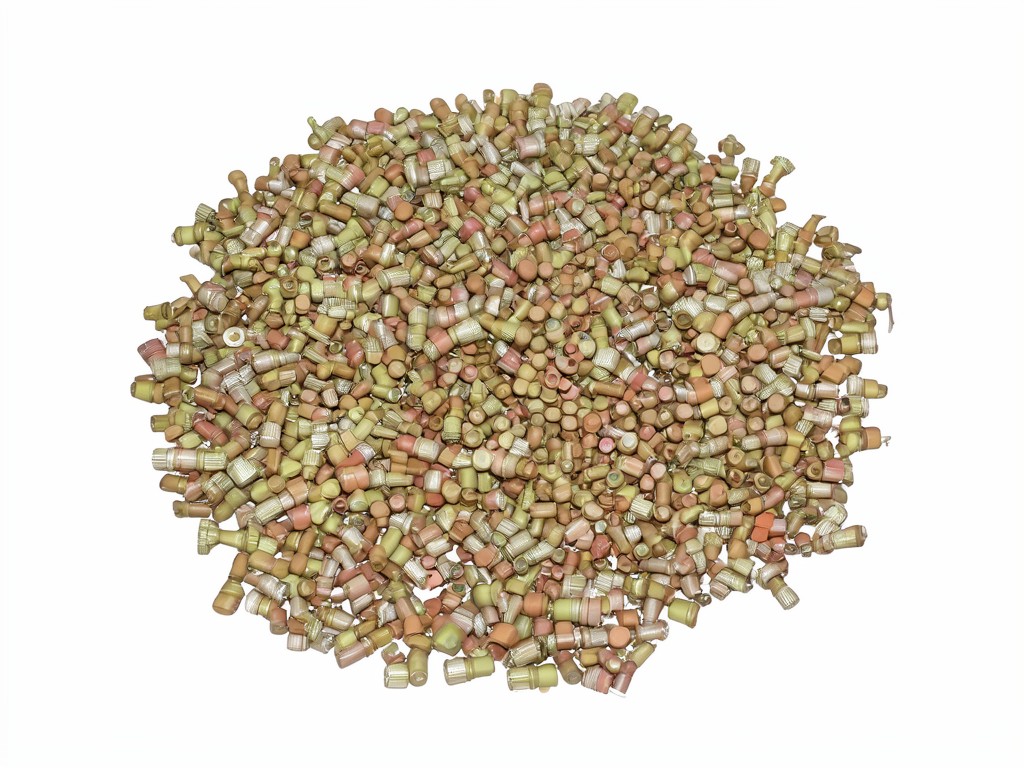
Selection trade-off: technical-grade purity drives formulation flexibility but raises freight classification costs; formulation-grade saves downstream processing but locks you into a single use pattern. Most repeat complaints trace to moisture pickup during trans-shipment — specify 25 kg fibre drums with PE liners and desiccant sachets rather than 500 kg bulk bags when humidity at destination port exceeds 70 % RH.
china imidacloprid thiamethoxam supplier: Specification, Ordering and Quality Notes
Design Constraints Behind the Specification
First-article tooling determines whether the crystalline habit stays consistent across 20-tonne campaign runs. Imidacloprid tends to form needles above 98.5 % purity; thiamethoxam prefers plates. If the crystalliser residence time drifts by more than 15 minutes, the particle size distribution widens enough to clog 150 µm nozzles on downstream SC or WG lines.
Buyers who specify only "≥ 97 %" on the purchase order receive whatever the reactor yields that week — usually 97.2–98.0 % with 12–18 % fines. Adding a D90 ≤ 100 µm clause forces a dedicated milling step and a 3–5 % yield penalty the factory will price in.
Materials and Construction Trade-offs
The build method decides impurity profile. Imidacloprid from the nitromethylene route carries 6-chloronicotinic acid at 0.15–0.30 %; the imidazolidine route pushes that below 0.05 % but adds 200–400 ppm residual DMF. Thiamethoxam from the oxadiazine process leaves thiazolylurea at 0.1–0.2 %; the newer continuous-flow route cuts it to ≤ 0.05 % but requires a dedicated reactor block the toller may not release for campaigns under 50 tonnes.
Packaging choice shows up later as moisture variance. A 25 kg fibre drum with double PE liner and 200 g silica gel holds ≤ 0.3 % H₂O after 12 weeks at 30 °C / 75 % RH. The same material in 500 kg FIBC picks up 0.8–1.2 % — enough to hydrolyse 0.15 % active ingredient to inactive amide during monsoon-season warehousing in Southeast Asia.
Performance Comparison by Grade and Pack
| Parameter | Tech Grade Drum | Form Grade Drum | Tech Grade FIBC |
|---|---|---|---|
| Typical purity | 98.5–99.2 % | 97.0–98.0 % | 98.0–98.8 % |
| Moisture at loading | ≤ 0.2 % | ≤ 0.3 % | ≤ 0.4 % |
| Moisture after 8 wks tropics | 0.3–0.5 % | 0.4–0.6 % | 0.9–1.3 % |
| D90 particle size | 80–110 µm | 40–70 µm | 100–150 µm |
| Freight class (UN) | UN 3077 PG III | UN 3077 PG III | UN 3077 PG III |
| Shelf life (sealed, 25 °C) | 36 months | 24 months | 24 months |
Construction Method and Its Effect on Consistency
Process choice shows up later as batch-to-batch colour drift. Continuous crystallisation on a mixed-suspension mixed-product-removal (MSMPR) train holds CSD within ± 8 µm D50 across 500 tonnes. Batch crystallisers in the same plant swing ± 22 µm unless the seed crystal batch is quarantined and reused — a step most tollers skip to save 18 hours per campaign.
Thermal history matters more than buyers assume. Imidacloprid stored above 40 °C for 72 hours develops a yellow tint that does not affect bioassay but fails visual acceptance at retail shelves in Brazil and Vietnam. Specify max 35 °C in transit and require temperature logger data on the CoA.
Usage Scenarios and Buyer Segments
Formulators running SC 200 + 100 g/L co-formulations need D90 ≤ 80 µm and ≤ 0.15 % water — they order tech grade in drums, mill in-house, and blend within 72 hours of opening. Distributors supplying rice seed-treatment plants in the Mekong Delta take form grade in 25 kg drums because their repack line cannot mill; they accept the 1.5 % price premium over tech grade to avoid capital expenditure.
Public-health tender houses in West Africa specify WHO pre-qualified sources only. Their CoA checklist includes 5-batch impurity fingerprints, heavy metals ≤ 20 ppm, and a dichloromethane solubility test that catches polymorphic shifts invisible to HPLC.
OEM and ODM Programme Structure
Private-label buyers receive a dedicated lot numbering scheme (e.g., PL-IMI-2025-001) and a shortened CoA that masks the toll manufacturer name but retains the synthesis route code. Artwork approval cycles run 10 working days; label substrate must be BS 5609 Section 2 compliant for sea freight — we reject polypropylene labels that delaminate after 21 days salt-spray.
Custom blend requests (e.g., imidacloprid 40 % + thiamethoxam 20 % WDG) trigger a 3-tonne pilot run on the 500 L paddle mixer. If the tensile strength of extruded granules falls below 12 N, we adjust binder ratio and re-run — buyer pays only for the confirmed spec lot.
Quality Control and Batch Consistency
Every 10th drum from a continuous campaign pulls a composite sample for full FAO/WHO Tier 2 analysis: active content, water (Karl Fischer), pH 1 % suspension, sieve residue 75 µm, acidity as H₂SO₄, and the five named impurities by LC-MS/MS. Results are trended; a shift of > 0.03 % in any named impurity triggers a root-cause hold on the next 20 tonnes.
Retention samples: 500 g per batch stored at 25 °C / 60 % RH for 24 months. Buyer may request retest at month 18; we charge lab cost only if the original CoA remains within spec.
Quick Spec Checklist
- Purity grade matches downstream equipment (nozzle, mill, mixer)
- Packaging rated for destination humidity profile
- Impurity limits align with target registration dossier
- Temperature logger required on bill of lading
- Lot traceability format agreed before first shipment
Common Complaint Root Causes
- Moisture pickup in FIBC → hydrolysis → failed assay
- Wide CSD → SC line blockage → 12 h downtime
- Colour drift → retail rejection → relabel cost
- Residual solvent spike → MRL exceedance in export crop
- Label delamination → customs hold → demurrage
Discuss your specification, packaging and lead-time requirements with our technical sales team.



