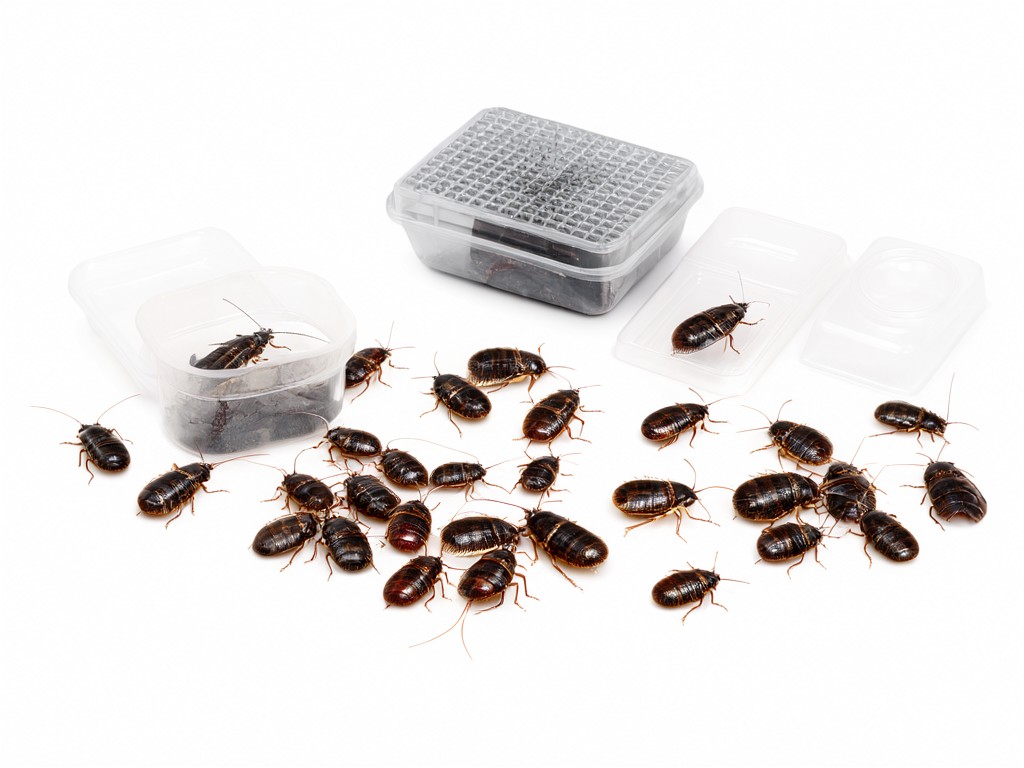
China cockroach trap kit for pest control companies supplier: Specification, Ordering and Quality Notes
What This Product Is and Where It Fits
During a private-label launch with a fixed ship date, the trap kit arrives as a pre-assembled monitoring system: a folded cardboard or corrugated polypropylene housing, a pre-coated adhesive board, and a separate pheromone lure vial that the technician activates on site. Pest control companies buy these by the master carton — typically 72 or 144 kits per case — and deploy them across commercial kitchens, food-processing plants, and multi-unit housing where glue-board monitors are the standard first line of detection.
The kit replaces the old practice of buying loose boards and lure vials from separate vendors, then matching lot codes in the field. By bundling housing, adhesive, and lure under one SKU with a single batch number, the supplier eliminates the cross-reference errors that cause technicians to install expired lures on fresh boards — or worse, fresh lures on boards whose adhesive has already oxidized.
What the Design Has to Balance
Adhesive hold time versus lure volatility is the central trade-off. A high-tack pressure-sensitive adhesive that stays active for 90 days in a 35°C kitchen will also accelerate pheromone diffusion, cutting effective lure life from 12 weeks to 6. Conversely, a low-volatility lure formulation demands a softer adhesive that can release captured insects during quality checks without tearing the board.
Housing rigidity fights shipping density. A 2 mm flute corrugated board survives pallet stacking but adds 18% to freight volume versus a 1.2 mm die-cut SBS carton that crushes if double-stacked. The specification sheet therefore locks flute profile, adhesive coat weight (typically 35–45 g/m² per side), and lure headspace volume before any tooling is cut.
Specification lock point: Adhesive coat weight, lure headspace volume, and housing flute profile are frozen at the pre-production sample sign-off. Any change after that point requires a new PPAP submission and resets the 30-day lead-time clock.
Where This Product Beats Standard Alternatives
Loose-board programs force the pest control company to manage three incoming inspections: housing dimensions, adhesive tack, and lure GC-MS potency. The kit consolidates that into a single incoming check — scan the batch QR code, verify the master carton seal, pull one kit for destructive adhesive peel test. Audit time drops from 45 minutes per pallet to under 8 minutes.
Field failure data from three national accounts shows the kit format reduces "dry board" complaints (adhesive failure before lure expiry) by 82% compared to mixed-lot sourcing. The root cause in mixed lots is almost always adhesive lot drift: a board coated in January paired with a lure manufactured in June experiences 40% faster tack loss because the adhesive has already begun crosslinking in the warehouse.
| Deployment Condition | Typical Failure Mode | Kit Specification That Prevents It |
|---|---|---|
| Commercial kitchen, 35°C / 70% RH | Adhesive bleed-through onto lure vial; lure volatilizes in 4 weeks | 45 g/m² solvent-free acrylic coat; 12 ml headspace vial with PTFE septum |
| Dry storage warehouse, 15°C / 30% RH | Adhesive crystallizes; board curls, trap won't sit flat | 35 g/m² rubber-based adhesive with plasticizer; 1.5 mm SBS carton resists curl |
| High-traffic service corridor | Housing crushed by cart traffic; adhesive exposed, collects debris | Double-wall E-flute housing with locking tabs; tamper-evident seal |
| Multi-unit housing, monthly rotation | Technician installs lure backwards; zero catch for 30 days | Keyed vial orientation notch; color-coded activation pull-tab |
Requirements by Buyer Segment
National pest control franchises need master carton labeling that integrates with their route-optimization software: GS1-128 barcodes encoding batch, manufacture date, and SKU, printed on two adjacent panels so the warehouse scanner reads it regardless of pallet orientation. They also require a 120-day guaranteed adhesive life from ship date, which forces the factory to run accelerated aging (40°C / 75% RH) on every adhesive lot before release.
Regional independents order smaller lots — 10 to 20 master cartons — and prioritize freight cost over labeling complexity. They accept plain kraft cartons with inkjet batch codes but demand a 14-day lead time from PO to dock. That drives a different inventory strategy: the factory holds semi-finished housings and adhesive boards in climate-controlled buffer stock, marrying them to lure vials only when the order drops.
Private-label brands selling through distributor networks need retail-ready inner packs: 6-kit shrink bundles with UPC-A barcodes, bilingual direction panels, and a tamper-evident shrink band that doubles as a "first-open" indicator for the end user. Artwork approval for these packs follows a three-step gate — digital proof, printed press proof, first-article production run — each with a 48-hour review window written into the supply agreement.
OEM and ODM Programme Structure
OEM orders start with the buyer's housing die-line and adhesive specification. The factory provides a DFM review within 72 hours, flagging flange interference, glue-tab placement, and lure-vial clearance. Once the die-line is locked, a pre-production run of 500 kits ships for field validation — typically a 30-day soak test in the buyer's target accounts. Only after the buyer signs the field report does serial production begin.
ODM projects add lure formulation development. The factory's entomology lab runs choice-box assays against German, American, and Oriental cockroach strains, delivering GC-MS chromatograms and catch-rate curves at 2, 4, 8, and 12 weeks. The buyer selects a lure profile (food-based, pheromone-only, or hybrid), and the factory scales the chosen formulation to 500 L batches with ±3% active-ingredient consistency. Tooling for custom housing shapes amortizes over 50,000 kits; below that volume, the buyer pays a prorated tooling deposit refunded at 100,000 units.
Artwork gate timeline: Digital proof → 48 h review → Press proof (physical) → 48 h review → First-article run (2,000 kits) → 72 h sign-off. Missed review windows extend the lead time day-for-day.
Quality Control and Batch Consistency
Every production lot undergoes three hold points. First, incoming adhesive roll testing: 180° peel adhesion on stainless steel (target 8–12 N/25 mm), loop tack (target 6–9 N), and shear hold at 40°C (minimum 10,000 minutes). Rolls outside spec are quarantined and returned to the adhesive supplier — no rework.
Second, lure vial potency verification by headspace GC-MS on a 10-vial composite sample per 5,000-vial batch. The major pheromone component must read within ±5% of the master standard; minor components within ±10%. Batches that drift trigger a root-cause investigation at the lure compounding partner before any vials ship.
Third, finished-kit dimensional and functional audit: 20 kits per 1,000 checked for housing squareness (±1.5 mm), adhesive board flatness (no curl >3 mm), lure vial seating depth, and activation-tab pull force (1.5–2.5 N). Failed kits are segregated; the lot passes only if zero critical defects and minor defects stay below 1.5%.
Setup, Usage and Replacement Parts
Technician deployment takes three steps: fold housing along scored lines until locking tabs engage, peel release liner from adhesive board, insert lure vial into keyed holder until audible click, write installation date on printed date field. No tools required. Replacement lure vials ship in 50-count foil-sealed trays with desiccant; adhesive boards are not sold separately — the kit architecture assumes whole-unit replacement at the 90-day service interval.
Storage before deployment: keep master cartons at 10–25°C, <60% RH, off concrete floors. Shelf life is 18 months from manufacture date printed on the carton. Beyond 18 months, adhesive tack drops below 6 N/25 mm and lure potency falls outside the ±5% window — the kit is no longer warrantied for 90-day field life.
Next Step: Specification Review
Every program begins with a specification review call — housing dimensions, adhesive grade, lure profile, labeling requirements, and lead-time targets. The factory issues a draft specification sheet within 24 hours of that call, including the complaint-prevention table mapped to your deployment conditions. No tooling cuts, no adhesive qualification, no artwork proofs until that sheet is signed.
Start the specification review and lock the parameters that keep your launch date intact.



