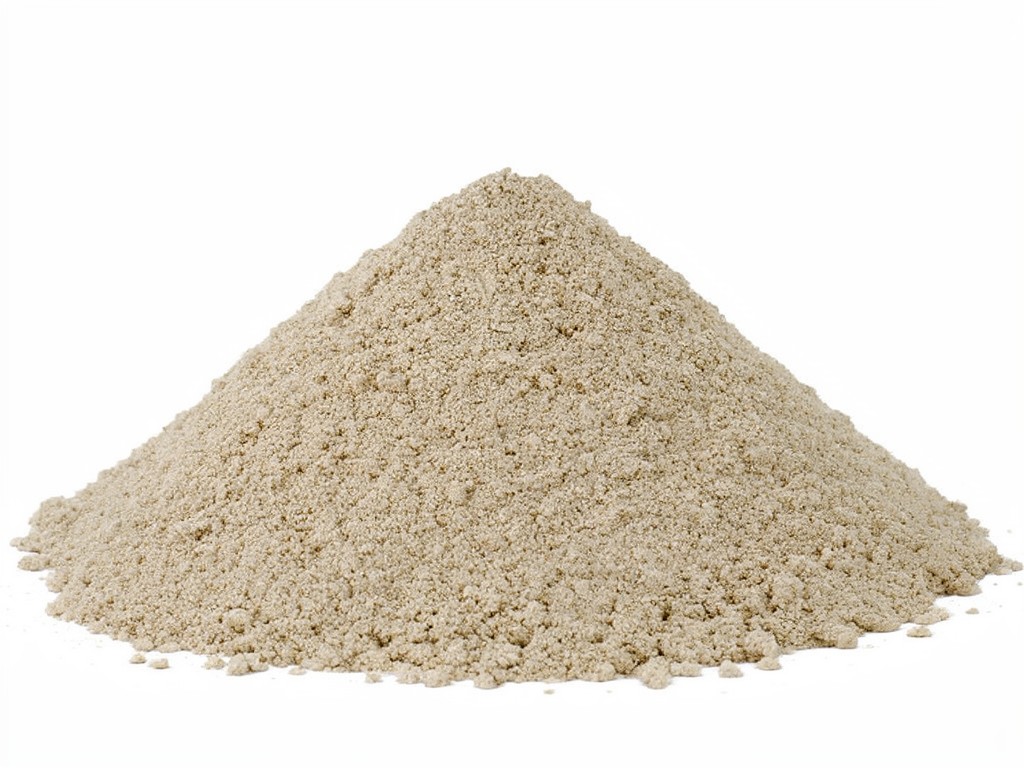
china cockroach killing powder factory: Specification, Ordering and Quality Notes
What This Product Is and Where It Fits
During a private-label launch with a fixed ship date, the powder that arrives at the co-packer's door must match the specification sheet line for line — active ingredient percentage, particle size distribution, moisture content, and flow characteristics. This product is a dry insecticidal dust formulated for crack-and-crevice application against German and American cockroaches in commercial kitchens, multi-unit housing, and food-processing zones. Buyers are typically distributors supplying pest-management professionals, private-label brands launching retail SKUs, or procurement teams for national service contractors.
The formulation centers on a boric acid or borax base (typically 95–99% w/w) with a food-grade attractant and a silica-based flow aid. Some variants swap borate for a pyrethroid or neonicotinoid at 0.5–2% active when faster knockdown is specified. Particle target is 150–300 mesh (50–100 µm) so the dust penetrates deep into harborage voids but remains airborne long enough to coat insects' cuticles. Every batch ships with a certificate of analysis covering assay, loss on drying, sieve analysis, and heavy-metal screen.
The Problem Buyers Keep Paying For
Moving from sample orders to container loads changes the failure modes. A 25 kg drum that flows freely in the lab can cake into a solid plug after six weeks in a non-climated warehouse at 30 °C / 75 % RH. The attractant — often a sugar or starch derivative — is hygroscopic; once moisture exceeds 1.5 % w/w, the powder bridges, clogs bellows dusters, and leaves visible residue that triggers health-department citations.
The second recurring claim is assay drift. Boric acid is stable, but pyrethroid actives degrade under UV and heat. A batch that tests 1.02 % cypermethrin at release can drop to 0.84 % after 90 days in a metal container on a sunny dock. Retail buyers then face regulatory hold or recall. The third issue is label compliance: a drum labelled only in English gets rejected at EU or Canadian customs; a missing EPA establishment number or SDS in the wrong language adds weeks to clearance.
What the Design Has to Balance
The specification negotiation starts with the buyer's end-use conditions: application equipment (hand bellows, electric duster, power duster), target climate zone, shelf-life requirement, and regulatory jurisdiction. From there the factory locks four variables before any material is weighed.
Active System
Boric acid 99 % — lowest cost, unlimited shelf life, slow kill (3–7 days). Pyrethroid 0.5–2 % — faster knockdown, 24-month stability limit, higher regulatory scrutiny. Hybrid blends possible but require compatibility data.
Particle Engineering
Target D50 75 µm ± 15 µm. Narrower spread improves void penetration but raises milling cost 18–25 %. Coarser fractions (>150 µm) reduce drift but leave gaps in harborage coverage.
Moisture Barrier
Silica aerogel 0.3–0.5 % w/w as anti-caking agent. Keeps flow rate > 12 g/s through 2 mm orifice at 60 % RH. Above 0.6 % silica, dust visibility on dark surfaces increases — aesthetic fail for residential accounts.
Attractant Load
Food-grade sucrose ester 1–3 %. Higher load improves uptake but raises water activity. Each 0.5 % increment above 2 % adds ~0.3 % equilibrium moisture at 25 °C / 65 % RH — trackable via Karl Fischer titration.
Specification Lock Protocol
No production run starts until the buyer signs off on a master specification sheet that lists: active ingredient ± tolerance, sieve limits (e.g., 98 % through 150 mesh, <2 % on 300 mesh), moisture max, flow rate minimum, heavy metals (Pb < 10 ppm, As < 5 ppm), and packaging artwork PDF with all mandatory label elements. A 500 g pilot batch is shipped for bioassay confirmation — typically 24-hour knockdown ≥ 90 % and 14-day residual ≥ 80 % in standard Ebeling choice box. Only after written approval does the factory schedule the full lot.
Segment-Specific Requirements
Professional pest-control distributors order 25 kg fiber drums with UN-certified liners; they need lot traceability to the drum level and an SDS in English, Spanish, and French. Retail private-label buyers want 200 g–500 g shaker bottles with child-resistant closures, full-color wrap labels, and UPC/GS1 barcodes applied at the factory. Food-processing clients require NSF/ANSI 360 listing or equivalent third-party verification that the powder leaves no detectable residue on food-contact surfaces — this drives a separate production campaign with validated cleaning between runs.
Export to Australia demands APVMA approval number on every label; Canada requires Pest Control Products Act registration and bilingual SDS. The factory maintains a regulatory matrix by destination country so the buyer only specifies the market — the correct label template, hazard pictograms, and transport classification (UN 3077, Class 9 for borate; UN 2588, Class 6.1 for pyrethroid) are pulled from the master file.
Packing, Marking and Freight Configuration
Standard bulk pack is 25 kg net in a polyethylene-lined fiber drum (UN 1G/X27/S), 18 drums per pallet, 450 kg net per pallet. Shrink-wrapped with corner boards, stretch film 23 µm minimum. Each drum carries a weatherproof label with product code, batch number, net weight, manufacture date, expiry date, and QR code linking to the batch COA. Retail shaker bottles are packed 24 units per master carton (380 × 280 × 220 mm), 60 cartons per pallet.
| Pack Format | Net Weight | Units / Pallet | Pallet Dim (mm) | Gross Weight (kg) | UN / Class |
|---|---|---|---|---|---|
| Fiber drum, PE liner | 25 kg | 18 drums | 1100 × 1100 × 1050 | 475 | UN 3077 / Class 9 (borate) |
| Fiber drum, PE liner | 25 kg | 18 drums | 1100 × 1100 × 1050 | 475 | UN 2588 / Class 6.1 (pyrethroid) |
| Shaker bottle, CRC | 200 g | 1,440 bottles | 1100 × 1100 × 1250 | 380 | UN 3077 / Class 9 |
| Shaker bottle, CRC | 500 g | 1,440 bottles | 1100 × 1100 × 1550 | 820 | UN 3077 / Class 9 |
Container loading: 20 ft GP takes 10 pallets (4,500 kg net bulk, 3,800 kg net retail); 40 ft HC takes 22 pallets. Desiccant sachets (2 kg clay per pallet) are standard for sea freight > 21 days. Temperature logs are not standard but can be added via single-use USB logger at $8/unit — recommended for pyrethroid shipments crossing equatorial routes June–September.
Questions Buyers Ask Before Ordering
What is the minimum order quantity for a custom label run?
2,000 kg bulk (80 drums) or 5,000 retail units per SKU. Below that, the label plate changeover and line clearance cost more than the margin on the powder. A 1,000 kg trial lot is possible with a $1,200 setup surcharge and no custom artwork — generic factory label only.
Can you match a competitor's particle size curve?
Yes, if the buyer provides a laser diffraction report (Malvern or Sympatec) from a reference lot. The factory will mill a 50 kg pilot, run triplicate sieve analysis and laser scan, and ship 500 g for the buyer's bioassay. Match tolerance is D50 ± 5 µm, span < 1.8. Cost: $850 for the pilot plus freight.
How do you guarantee assay consistency across a 20,000 kg lot?
The blender is a 2,000 L ribbon mixer with load-cell dosing. Active ingredient is pre-weighed into 25 kg micro-bags (± 5 g) before charging. In-process HPLC checks every 2,000 kg (8 drums). Final composite sample from 10 % of drums determines release. Historical lot-to-lot assay RSD is 1.2 % for borate, 2.8 % for pyrethroid.
What is the lead time from artwork approval to FOB Shanghai?
18 working days for bulk drums (milling, blending, packing, QC release). 25 working days for retail bottles — adds bottle sourcing, print proof, filling line changeover, and drop-test validation. Chinese New Year and Golden Week add 14 calendar days each if the window falls inside production.
Do you support third-party warehouse drop-ship to multiple DCs?
Yes. The factory can palletize to each DC's spec (pallet type, label placement, ASN format) and load split containers. Minimum split: 2 pallets per destination. Added handling: $18/pallet for re-labeling, $35/pallet for custom ASN/EDI. Buyer provides ship-to list and routing guide at PO placement.
Ready to Lock the Specification?
Send the target market, active system preference, and pack format. We'll return a draft master spec sheet, pilot batch proposal, and lead-time calendar within one business day.
Request specification review →


