bulk snail killer pellets supplier: Specification, Ordering and Quality Notes
What This Product Is and Where It Fits
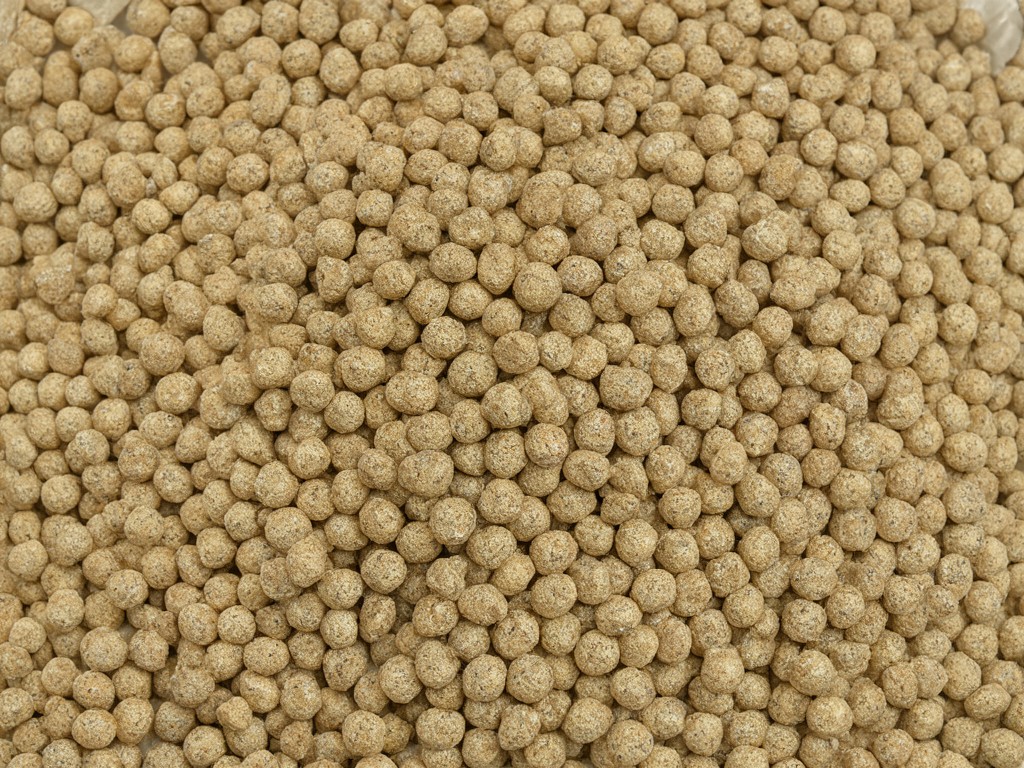
Snail killer pellets are granular molluscicides formulated for broadcast application across turf, row crops, vineyards, and ornamental beds. The core active ingredient is either metaldehyde or ferric phosphate, each with distinct environmental profiles and regulatory pathways. Pellets are produced by extrusion and spheronization to achieve a narrow size distribution — typically 2.0–3.0 mm — that ensures uniform spreader delivery and consistent field efficacy.
Buyers in this category include turf managers at golf clubs and sports academies, agricultural distributors serving row-crop growers, and private-label brands supplying garden-centre shelves. All three segments demand batch-to-batch weight consistency within ±2 % and moisture content below 8 % to prevent caking in storage. A deviation of 0.3 mm in mean pellet diameter can shift spreader calibration enough to cause under- or over-application, directly affecting both pest control results and residue compliance.
Design Constraints Behind the Specification
Pellet durability is governed by the binder system and the drying curve. Too little binder yields friable pellets that generate dust during pneumatic conveying; too much binder slows field breakdown, leaving visible residues that trigger consumer complaints. The extrusion die geometry — land length, compression ratio, and exit angle — determines pellet density, which in turn sets the bulk density range (typically 0.65–0.75 g/cm³) that spreader manufacturers design around.
Critical spec rule: pellet diameter tolerance ±0.2 mm ensures consistent spreader calibration across all common rotary and drop spreaders. Exceeding this tolerance forces end-users to recalibrate per batch, eroding confidence in the brand.
Active ingredient loading is capped by solubility limits in the melt phase. Metaldehyde concentrations above 5 % w/w risk recrystallization during cooling, creating hot spots that cause uneven mortality. Ferric phosphate formulations tolerate higher loadings (up to 3 % Fe) but require a chelation step that adds a unit operation and cost. The choice between these actives is rarely a pure cost decision — it is driven by the target market’s regulatory stance and the buyer’s certification requirements (e.g., organic-approved inputs).
Matching the Product to the Buyer's Need
Selecting the right pellet configuration follows a decision tree that aligns agronomic requirements with supply-chain realities. Walk through the steps below; each annotation reflects a typical trade-off encountered during order qualification.
- Define the target crop and pest pressure
- High-value turf (greens, tees) → prioritize rapid breakdown, low visible residue → ferric phosphate 3 % mini-pellets (1.5–2.0 mm)
- Broadacre cereals, oilseed rape → metaldehyde 3–5 % standard pellets (2.5–3.0 mm) for cost per hectare advantage
- Organic-certified vineyards → ferric phosphate only, with OMRI-listed inert ingredients
- Choose active ingredient and concentration
- Metaldehyde 5 %: lowest unit cost, but restricted in EU/UK; requires buffer zones near water
- Ferric phosphate 3 %: higher unit cost, no buffer zones, accepted in organic systems
- Select pellet size and density window
- Mini-pellets (1.5–2.0 mm) for precision spreaders on turf; bulk density ~0.70 g/cm³
- Standard pellets (2.5–3.0 mm) for high-capacity broadcast spreaders; bulk density ~0.68 g/cm³
- Confirm packaging and labelling format
- 25 kg PE-laminated bags on pallets — standard for distributor warehouses
- 500 kg FIBC with liner — preferred by large-scale contractors for direct field loading
- Private-label retail packs (1 kg, 2.5 kg) — require artwork approval and separate filling line scheduling
- Verify regulatory clearance for destination market
- EU: metaldehyde banned; ferric phosphate requires national authorisation
- USA: EPA registration number on label; state-specific restrictions may apply
- Australia: APVMA approval; label must include withholding periods
Customisation Options and Their Limits
Private-label buyers typically request three types of customisation: artwork on standard bag sizes, minor formulation tweaks (e.g., adding a bittering agent or UV tracer), and bespoke pellet diameters for proprietary spreaders. Artwork changes are handled on the packaging line with a 2-week lead time for plate making; minimum run is 5,000 bags per SKU to amortise setup. Formulation tweaks trigger a stability study (accelerated aging at 40 °C/75 % RH for 8 weeks) and may require a new regulatory submission — budget 12–16 weeks and a 20 t MOQ. Custom die tooling for non-standard pellet diameters costs $8,000–$12,000 and adds 4 weeks to first delivery; the die is owned by the buyer but maintained by the factory.
Colourants are limited to iron oxide pigments (red, brown, green) at ≤0.5 % loading; organic dyes migrate in humid conditions and are rejected by QA. Any change to the active ingredient source (e.g., switching metaldehyde suppliers) requires a comparative efficacy trial — typically a 6-month field plot — before the batch can be released under the existing registration.
Segment-Specific Requirements
Professional turf managers demand dust-free pellets (<0.1 % fines) because dust clogs the low-volume spreaders used on greens. They also require a certificate of analysis for each lot showing metaldehyde or ferric phosphate content within ±5 % of label claim, plus moisture and bulk density. Agricultural distributors prioritise stackable 25 kg bags with UN-certified hazardous goods markings for metaldehyde shipments; they accept a wider fines tolerance (≤0.5 %) because their spreaders handle it. Retail garden-centre buyers need shelf-ready packaging with child-resistant closures and multilingual labels; their MOQs are lower (1,000 units per SKU) but they require faster replenishment cycles (4-week lead time after PO).
- Turf: mini-pellets, ferric phosphate, dust <0.1 %, CoA per lot
- Agriculture: standard pellets, metaldehyde or ferric phosphate, UN bags, fines ≤0.5 %
- Retail: private-label packs, child-resistant, multilingual, 4-week replenishment
Capacity, Tooling and Scheduling
The production line runs two 12-hour shifts, five days a week, with a nominal throughput of 18 t/day per shift on standard pellets. Mini-pellet dies reduce throughput by ~15 % due to higher back-pressure. Tooling changeover between die sets takes 6 hours (die swap, purge, calibration), so scheduling batches of the same diameter back-to-back saves a full shift per week. Peak season (March–May in the northern hemisphere) fills 90 % of capacity by February; late orders are slotted into maintenance windows or require overtime premiums.
The table below consolidates the key dimensional parameters and the corresponding lead-time/MOQ structure. Values are indicative; final figures depend on active ingredient, packaging format, and current order book.
| Parameter | Standard Pellets (2.5–3.0 mm) | Mini-Pellets (1.5–2.0 mm) |
|---|---|---|
| Pellet diameter range | 2.5–3.0 mm (±0.2 mm) | 1.5–2.0 mm (±0.15 mm) |
| Bulk density | 0.65–0.75 g/cm³ | 0.68–0.78 g/cm³ |
| Moisture content (max) | 8 % | 8 % |
| Fines (max) | 0.5 % | 0.1 % |
| Standard MOQ (bulk bags) | 5 t | 3 t |
| Standard MOQ (private-label retail packs) | 5,000 units per SKU | 5,000 units per SKU |
| Lead time (standard formulation, off-peak) | 3–4 weeks | 4–5 weeks |
| Lead time (custom formulation or die) | 12–16 weeks | 14–18 weeks |
| Peak-season surcharge | +15 % unit cost, +2 weeks | +20 % unit cost, +3 weeks |
Export Packaging and Handling Protection
Bulk pellets are hygroscopic; moisture ingress above 10 % initiates premature breakdown and active ingredient leaching. Export shipments therefore use a three-layer barrier: inner PE liner (100 µm), outer woven PP bag with laminated coating, and stretch-wrapped pallet with corner boards. FIBC units include an integrated PE liner and are rated for 500 kg SWL with a 5:1 safety factor. Pallets are heat-treated (ISPM-15) and marked for hazardous goods (Class 9 for metaldehyde, non-hazardous for ferric phosphate). Container loading plans maximise 24 t per 40-ft high-cube; desiccant sachets (2 kg per container) are standard for voyages exceeding 25 days.
Labels comply with GHS pictograms, UN numbers, and destination-country language requirements. Batch traceability is maintained via QR-coded labels linking to the factory’s ERP — each code returns production date, die set, active ingredient lot, and CoA PDF. This chain-of-custody data is increasingly required by retail auditors and by growers participating in assurance schemes (e.g., Red Tractor, GlobalG.A.P.).
Next Steps: Artwork and Branding Review
Ready to lock in specifications, approve artwork, or run a trial batch? Share your target market, volume forecast, and any regulatory constraints. We’ll return a detailed quotation with lead-time scenarios and a sample schedule within two business days.



