Specifying best snail and slug bait for fields wholesale for Wholesale and OEM Orders
How It Is Built and What That Changes
The interface between parts determines efficacy. In field-grade molluscicide baits, the interaction between the active ingredient matrix, the food attractant, and the physical pellet structure dictates survival rates in wet conditions. If the binding agent fails to hold the payload against rain or high humidity, the product washes out of the crop rows within 48 hours, rendering the unit cost irrelevant.
Consistency depends on extrusion pressure and drying temperature. Standard manufacturing involves mixing the active compound (typically Metaldehyde or Ferric Phosphate) with wheat-based or plant-based carriers. The mixture is then extruded into pellets. Variance in extrusion speed leads to inconsistent pellet density. A buyer specifying a 2.0mm pellet tolerance will see different absorption rates than one accepting a 2.5mm variance. This matters when calculating the dosage per hectare; inconsistent weight means inconsistent application, leading to either wasted product or crop loss.
Pellet Density Variance
Standard tolerance is ±0.1g per 100-pellet sample. Exceeding this results in non-uniform distribution when broadcast by mechanical spreaders. Buyers requiring mechanical precision must specify high-density extrusion to prevent clogging in spreader hoppers.
Rain Resistance
Water-resistant coatings extend shelf life in storage and efficacy in the field. A wax-based coating adds 3-5% to unit cost but prevents the active ingredient from leaching out during heavy rainfall events, which is critical for pre-harvest applications.
Attractant Load
The percentage of food lure directly impacts kill speed. Higher lure percentages (15-20%) attract slugs faster but degrade quicker. Lower percentages (5-10%) offer longer residual activity but may require multiple applications in high-pressure infestations.
Balance and load analysis shows that the packaging interface is as critical as the chemical composition. A 5kg bag with poor moisture barrier properties will clump in transit if the pellets are not individually coated. This clumping causes feeders in commercial spreaders to jam. The result is not just a broken machine, but a wasted application window during which pest pressure escalates. Specifying a laminate with a minimum tear strength of 15N is a non-negotiable baseline for bulk field applications.
Comparing Two Standard Configurations
Most wholesale buyers choose between a standard extruded pellet and a granular dust formulation. The trade-off is application precision versus cost per hectare. Granular dust is cheaper to produce because it skips the extrusion and coating steps. However, it is more susceptible to wind drift and rain wash-off, making it unsuitable for high-value crop rows where precision matters.
| Parameter | Extruded Pellet (2.0-2.5mm) | Granular Dust (0.5-1.0mm) |
|---|---|---|
| Unit Cost | Higher (includes extrusion & coating) | Lower (basic mixing only) |
| Rain Resistance | High (if coated); survives 24-48h rain | Low; washes out after light rain |
| Application Method | Mechanical spreaders or hand broadcast | Hand broadcast only (wind-sensitive) |
| Shelf Life | 12-18 months (stable structure) | 6-9 months (prone to caking) |
| Best For | High-value crops, row crops, automated farming | Low-cost maintenance, non-critical areas |
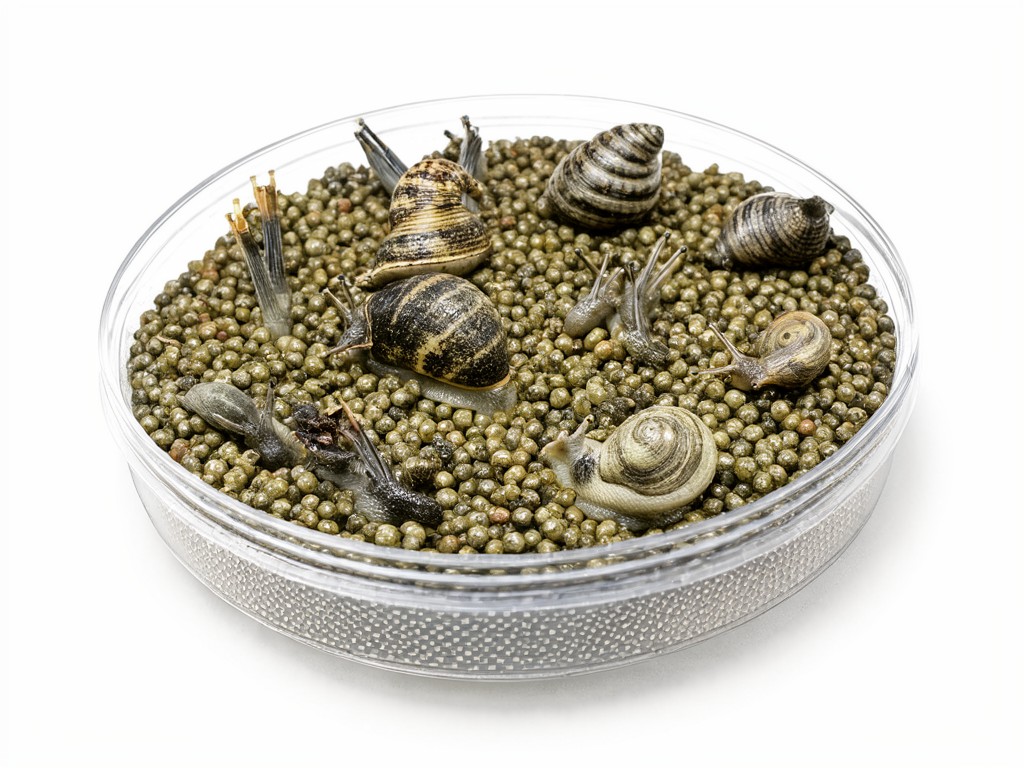
Procurement Note: If your buyers use mechanical spreaders, do not specify granular dust. The fine particle size causes hopper bridging. You will receive returns for "clogged equipment" rather than "pest control failure." The extra 15-20% cost of extruded pellets is cheaper than the return logistics and brand damage.
Buying Mistakes That Lead to Returns
The most common return reason is not efficacy, but packaging failure. Buyers often specify standard paper bags for bulk field use. Paper bags absorb moisture from the ground or rain during storage. The pellets inside clump into hard bricks. When the farmer opens the bag, the product is unusable. This is a specification error, not a manufacturing defect.
- Ignoring local pest species: Slugs and snails have different appetites. A bait formulated for Deroceras reticulatum may not attract Limax maximus as effectively. Always confirm the target species in the region where the product will be sold.
- Mismatching pellet size to spreader capacity: A 2.5mm pellet will clog a spreader calibrated for 3.0mm. Check the technical specifications of the machinery your end-users employ before finalizing the extrusion die size.
- Omitting rain-resistant coatings in wet climates: In regions with >800mm annual rainfall, uncoated pellets lose efficacy within one storm. The cost of the coating is a fraction of the cost of reapplication.
Another frequent error is specifying a "generic" active ingredient concentration. Different soil pH levels affect the release rate of Ferric Phosphate. If the product is sold for use in acidic soils, a standard concentration may break down too quickly, releasing the active ingredient before the slugs consume the pellet. This leads to reduced residual activity and poor results in the second week of the application window.
Usage Scenarios and Buyer Segments
Large-scale row crop operations (corn, soybean, potato) prioritize volume and mechanical application. They need 25kg sacks with easy-tear seals and pellets that flow freely through spreaders. Their primary concern is cost per hectare and minimal downtime. A specification error here results in a loss of the entire account.
Horticultural growers (strawberry, lettuce, root vegetables) prioritize precision and residual activity. They often apply by hand or with small broadcast spreaders. They need smaller bag sizes (5kg or 10kg) with high-attractant formulations that work quickly in high-value, low-margin crops. They are less sensitive to unit cost and more sensitive to efficacy reliability.
Wholesale distributors act as the middle layer. They need stock that lasts 18-24 months on the shelf. They prioritize packaging durability and clear labeling that meets local regulatory requirements. They will not stock a product that has a high return rate for packaging damage or labeling non-compliance. Your specification must ensure that the product arrives in perfect condition, ready for resale, without any intervention from the distributor.
Stock Availability and Reorder Planning
Lead times for custom formulations are typically 4-6 weeks. This includes the time to source specific active ingredients, set up the extrusion line, and run the initial quality control checks. If you order 1,000 units, the tooling cost for custom dies or coatings is spread over a smaller batch, increasing the unit cost. Ordering 10,000 units reduces the unit cost by 15-20% but requires 10x the storage space and capital.
Seasonal spikes in demand are predictable. Slug and snail pressure peaks in late spring and early autumn. Buyers who order in January-March secure the best pricing and priority production slots. Orders placed in April often face lead times of 8-10 weeks due to capacity constraints. Plan your inventory accordingly to avoid stockouts during the peak season.
For private-label orders, add an additional 2-3 weeks for artwork approval and packaging printing. Do not assume that your artwork is ready when you place the order. Provide final, print-ready files at the time of the PO to avoid delays.
Questions Buyers Ask Before Ordering
What is the minimum order quantity for a custom formulation?
The MOQ for a standard formulation in custom packaging is 500 units. For a fully custom formulation (different active ingredient or attractant blend), the MOQ is 2,000 units. This is due to the cost of raw material sourcing and line changeover time.
Can you provide samples for field testing?
Yes. We provide 3-5kg sample quantities for field testing. Shipping is at the buyer's cost. We recommend testing in your specific soil and climate conditions before placing a bulk order. This reduces the risk of mismatched specifications.
What certifications are required for export to Europe?
Export to the EU requires compliance with local pesticide regulations. We provide certificates of analysis (CoA) for each batch. You are responsible for obtaining local registration and permits. We can assist with technical documentation, but we do not handle regulatory filings.
Call to Action
Ready to specify your next batch? We need your target species, application method, and packaging requirements to provide an accurate quote. Send us your technical specifications and artwork for review.
Contact our sales team for a detailed quotation and sample availability. Request a Quote and Sample



