B2B paddy field molluscicide bait supplier: Specification, Ordering and Quality Notes
The core trade-off in molluscicide bait procurement is pellet integrity versus active ingredient release rate. A formulation that holds together in standing water for 72 hours typically needs higher binder loadings, which can dull palatability and delay lethal ingestion. Conversely, a high-attractant, low-binder pellet may disintegrate before the target species encounters it. Specify the minimum water-stability window your field conditions demand — usually 48 to 96 hours in flooded paddy — and require the supplier to demonstrate that window at the declared active ingredient concentration, not at a laboratory optimum.
Design Constraints Behind the Specification
The complaint that repeats across reorders is inconsistent pellet durability between production lots. A batch that passes the 72-hour immersion test in January may crumble at 36 hours in July because the bran moisture content at extrusion shifted by two percentage points and the dryer residence time was not adjusted. Most quality disputes start with a consistency gap exactly there: the supplier treats the binder system as a fixed recipe rather than a controlled variable that must track raw-material moisture in real time.
Returns usually trace back to the same weak point — mould growth inside sealed bags after six weeks in tropical warehousing. Water activity (aw) above 0.65 at packing enables Aspergillus and Penicillium colonisation, which consumes attractants and produces mycotoxins that further suppress feeding. A competent supplier monitors aw on every lot and caps it at 0.60, even if that means extending cooling conveyance or adding a desiccant sachet to the master carton.
What Actually Determines Performance
Field efficacy hinges on three measurable parameters, not brand reputation. First, active ingredient homogeneity: the coefficient of variation (CV) across 10 subsamples from a single 25 kg bag must stay below 5% for metaldehyde or ferric sodium EDTA formulations. Second, pellet size distribution: 80% by weight between 2.0 and 3.5 mm ensures uniform broadcast spread at 5–10 kg/ha and matches the gape limitation of Pomacea canaliculata. Third, palatability index measured against a standard rice-bran reference bait — a ratio below 0.85 in laboratory choice tests predicts field failure regardless of active ingredient loading.
Degradation kinetics matter as much as initial potency. Metaldehyde baits lose 15–20% actives per week at 30 °C and 80% RH; iron-phosphate complexes are more stable but require acidic gut conditions for activation, so pellet pH must be held between 4.5 and 5.5. Ask for accelerated stability data at 40 °C/75% RH for four weeks — any supplier unwilling to share that curve is managing opacity, not quality.
How It Is Built and What That Changes
Extrusion through a 3 mm die at 80–95 °C gelatinises the starch binder, creating a glassy matrix that controls water uptake. Twin-screw extruders with barrel zone control produce tighter residence-time distribution than single-screw units, which directly reduces pellet-to-pellet variability in active ingredient exposure. After extrusion, pellets enter a fluid-bed dryer where inlet air temperature and dew point determine final moisture; 10–12% w/w is the target window. Over-drying below 9% creates friable pellets that generate fines during bagging — fines that settle at the bottom of the spreader hopper and leave untreated strips in the field.
Coating is the step where private-label programmes diverge. A micro-encapsulated attractant layer (typically yeast hydrolysate + sugar ester) applied in a rotary drum coater adds 0.3–0.5% to pellet weight but can lift palatability index from 0.78 to 0.92. The coating also seals surface actives, reducing dust-off during handling — a regulatory requirement in several ASEAN markets where operator exposure limits are enforced. If your specification omits coating, you are accepting higher drift loss and lower first-night kill rates.
Comparing Two Standard Configurations
Configuration A — Standard Bran Pellet
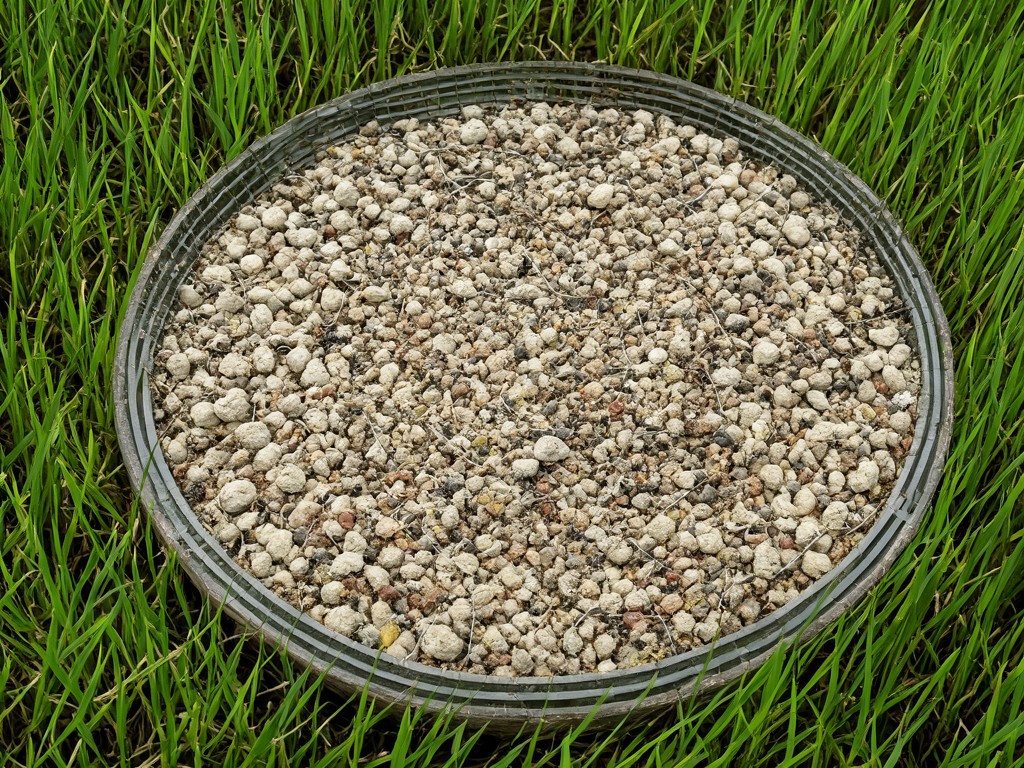
Extruded rice-bran/wheat-middlings base, 3% metaldehyde, no attractant coating. Water stability: 48 hours at 25 °C. Palatability index: 0.75–0.82. Dust generation: 1.8% by weight after 1 m drop test. Shelf life: 12 months at 25 °C/60% RH in woven PP bags with PE liner.
Unit cost baseline. Suitable for large-scale government programmes where application timing is controlled and re-treatment windows are short. Higher per-hectare rate needed (8–10 kg/ha) to compensate for lower first-night attraction.
Configuration B — Coated High-Attractant Pellet
Same base, 3% ferric sodium EDTA, yeast-hydrolysate coating at 0.4% load. Water stability: 72 hours at 25 °C. Palatability index: 0.90–0.95. Dust generation: 0.6% after drop test. Shelf life: 18 months in laminated foil-laminate bags with oxygen scavenger.
15–20% premium over Configuration A. Enables 5–6 kg/ha rates, reduces non-target exposure, meets stricter dust standards. Preferred by private distributors servicing progressive growers who measure snail-count reduction per application pass.
Segment-Specific Requirements
Government tender specifications typically mandate metaldehyde ≤ 3% w/w, pellet size 2–3.5 mm, and aw ≤ 0.60 at dispatch. They also require a certificate of analysis (CoA) for every 50 mt lot, referencing HPLC method AOAC 971.22 or equivalent, plus a bioassay report from an accredited entomology lab. Private-label buyers for retail channels need additionally: branded packaging artwork approval cycles (minimum three rounds), barcode registration, and a minimum 14-month residual shelf life at point of sale to accommodate distribution lag.
Export shipments to markets with maximum residue limit (MRL) enforcement — Japan, EU, Korea — demand bait produced on dedicated lines with documented changeover cleaning validated by swab test. Cross-contamination from a previous metaldehyde run into an iron-phosphate batch can trigger border rejection even at 0.01 mg/kg. Confirm the supplier runs allergen-style changeover protocols and retains cleaning records for two years.
Inspection Items and Test Methods
| Test Parameter | Method / Standard | Acceptance Criteria | Frequency |
|---|---|---|---|
| Active ingredient assay | HPLC-UV (metaldehyde) or HPLC-ICP-MS (ferric EDTA) per AOAC 971.22 / in-house validated | 95–105% of label claim; CV ≤ 5% across 10 subsamples | Every production lot |
| Pellet size distribution | Rotary sieve shaker, 5 min, ISO 3310-1 meshes (2.0, 2.5, 3.0, 3.5 mm) | ≥ 80% w/w in 2.0–3.5 mm fraction; fines < 2.0 mm ≤ 5% | Every production lot |
| Water stability (immersion) | 100 g pellets in 500 mL deionised water, 25 ± 1 °C, static; visual integrity scoring at 24, 48, 72 h | ≥ 90% pellets retain structural integrity at specified window (48 h or 72 h per config) | Every production lot |
| Moisture content | Gravimetric, 105 °C, 3 h (ISO 1666) | 10–12% w/w | Every production lot |
| Water activity (aw) | Capacitance hygrometer, 25 °C (ISO 21807) | ≤ 0.60 | Every production lot |
| Palatability index (bioassay) | Choice test vs. standard rice-bran bait, 3rd-instar P. canaliculata, 24 h, n=30 replicates | ≥ 0.85 (Config A) or ≥ 0.90 (Config B) | Quarterly + every formulation change |
| Microbial load | Plate count agar (total), DRBC (yeast/mould), 25 °C, 5 d | Total viable count ≤ 104 CFU/g; yeast/mould ≤ 103 CFU/g | Every production lot |
| Dust generation (friability) | Heubach dustmeter, 1 m drop, 1 kg sample, 1 min rotation | ≤ 2.0% (Config A) or ≤ 0.8% (Config B) by weight | Every production lot |
| Accelerated stability | 40 °C / 75% RH, 4 weeks; assay, moisture, aw, palatability at 0, 2, 4 weeks | Active loss ≤ 10%; aw ≤ 0.65; palatability index drop ≤ 0.05 | Annual + process change |
Setup, Use and Replacement Parts
Bait is a consumable, not equipment — there are no replacement parts. The operational variable is spreader calibration. Broadcast spreaders (hand-crank or tractor-mounted) must be recalibrated for each pellet batch because bulk density shifts with moisture and coating: Configuration A typically 0.58–0.62 g/cm³, Configuration B 0.61–0.65 g/cm³. A 5% density change alters application rate by the same margin at fixed aperture. Require the supplier to declare tapped density on the CoA and provide a calibration card for the three most common spreader models in your territory.
Storage protocol determines usable life more than the printed expiry date. Pallets must stay on double-stacked plastic pallets (not wood), under roof, with ambient temperature below 30 °C and RH below 70%. Direct sunlight on black PP bags raises internal temperature 12–15 °C above ambient, accelerating active degradation. If the warehouse cannot guarantee those conditions, negotiate climate-controlled storage into the INCOTERMS or accept a reduced warranty period.
Request a Representative Lot for Qualification
We supply 25 kg evaluation lots of either configuration with full CoA, bioassay summary, and accelerated stability excerpt. Minimum order for commercial supply is 5 mt per configuration; lead time 30 days from artwork approval for private-label, 21 days for standard-spec stock. Submit your specification sheet and target delivery window and we will return a lot-specific quality dossier within five business days.



