Acephate
Acephate, also known as Orthene, is an organophosphate foliar insecticide supplied in several formulation types. It is described as a contact and systemic insecticide used for controlling sucking and
Acephate Properties and Product Overview
Acephate, also known as Orthene, is an organophosphate foliar insecticide supplied in several formulation types. It is described as a contact and systemic insecticide used for controlling sucking and chewing insects across a range of crops. The product information identifies applications in cotton, ornamentals, forestry, tobacco, fruits, vegetables and other crops, as well as use against selected pests in horticulture. These different crop and pest settings make it important to select a suitable formulation and follow the applicable product label and local requirements for any intended use.
Acephate is characterized in the supplied information as a foliar spray insecticide of moderate persistence with residual systemic activity. Its contact and systemic properties are relevant to crop protection programs that target insects feeding on plant foliage. The source describes its use against leaf miners, caterpillars, sawflies and thrips in crops, and aphids in vegetables and horticulture. It also lists a broader range of sucking and chewing insects. Specific application decisions should be based on the current product label, the intended crop, and the pest being managed rather than on a general product description alone.
Melting point | 93°C |
Density | 1.35 |
Vapor pressure | 2.26 x 10⁻⁴ Pa (24 °C) |
Flash point | 2 °C |
Storage temperature | APPROX 4°C |
Solubility | Chloroform: Soluble; DMSO: Soluble; Water: Soluble |
pKa | 11.00±0.46 (Predicted) |
Form | Solid |
Color | White to yellow |
Water solubility | Readily soluble |
Insect Control Uses and Operational Considerations
The stated use of Acephate is control of a wide range of sucking and chewing insects in multiple crop categories. The pests specifically named in the supplied product information include alfalfa looper, aphids, armyworms, bagworms, bean leaf beetle, bean leafroller, blackgrass bugs, bollworm, budworm and cabbage looper. The product is also described for the treatment of leaf miners, caterpillars, sawflies and thrips in crops, and aphids in vegetables and horticulture. This pest list helps buyers assess whether the product description is relevant to their crop-protection needs; it does not replace checking permitted crop and pest uses on the applicable label.
For agricultural and horticultural operations, a foliar product format can be considered as part of a planned crop treatment where labeled use applies. The source identifies both contact action and systemic activity, including residual systemic activity, but does not provide application rates, spray intervals, mixing instructions or a crop-specific program. Those details should therefore be obtained from the product label or supplier documentation rather than assumed. Confirming the intended formulation before preparation can also help align purchasing, handling and application processes with the requirements of the operation.
The original description explains that Acephate takes effect through inhibition of acetylcholinesterase (AChE) after metabolic conversion to methamidophos. It also states that because Acephate cannot be converted to methamidophos, it is thought to cause no effect on animals and human beings. This statement is part of the supplied description and should not be treated as a substitute for a current safety data sheet, product label, or professional risk assessment. The hazard information below should be reviewed alongside all current handling and transport documentation.
Formulation and handling value
A range of formulation types is available, allowing buyers to compare technical concentrate, soluble powder, emulsifiable concentrate, soluble granules and water-dispersible granules. This variety supports procurement planning for different product formats, while the exact preparation and application method depends on the individual formulation. Store and handle Acephate according to the applicable label and safety documentation; the supplied property data lists an approximate storage temperature of 4°C. Follow current local rules for application, storage, transport and disposal.
Risk, Safety and Transport Information
Review the listed hazard and transport details before procurement, storage or use. The values below reproduce the product information provided and are not a replacement for the current safety data sheet or applicable transport regulations. Users should verify the latest documentation for the specific Acephate formulation they are handling.
Symbol (GHS) |
|
Signal word | Warning |
Hazard statements | H302+H312 |
Hazard codes | Xn,F |
RIDADR | UN1648 3/PG 2 |
HS Code | 29299040 |

The listed GHS symbol is GHS07 and the signal word is Warning. Hazard statements are recorded as H302+H312, with hazard codes Xn,F. The provided transport entry is UN1648 3/PG 2, and the listed HS Code is 29299040. Because regulatory classifications and transport requirements can vary by formulation, jurisdiction and current rules, verify these details against the documentation supplied for the exact product being purchased or shipped.
Available Acephate Formulations
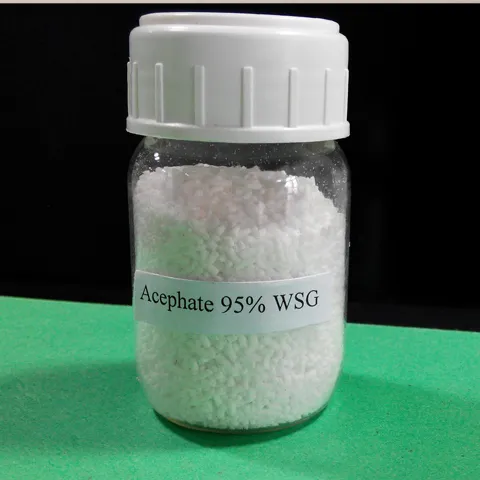
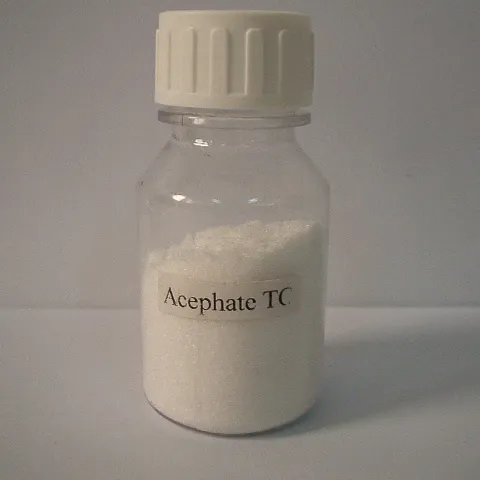
Our supply includes the following Acephate product presentations. The stated percentages and formulation abbreviations are listed as provided. Buyers can use this range to compare the available concentrate, powder and granule formats when discussing supply requirements. Confirm the formulation, intended use and current technical documentation before ordering, as product preparation and handling instructions are specific to each product presentation.
- Acephate 97% TC technical concentrate
- Acephate 75% SP soluble powder
- Acephate 40% EC emulsifiable concentrate
- Acephate 98% TC technical concentrate
- Acephate 97% SG soluble granules
- Acephate 30% EC emulsifiable concentrate
- Acephate 97% WDG water-dispersible granule
This assortment includes technical concentrates as well as formulations intended for further preparation, including SP, EC, SG and WDG types. Comparing the listed forms can support planning for purchasing, storage and operational handling. No application rate, dosage, package size or preparation method is specified here; use the instructions and restrictions supplied with the selected formulation. For product selection and safe operation, consult the current label, safety data sheet and applicable regulatory guidance.



