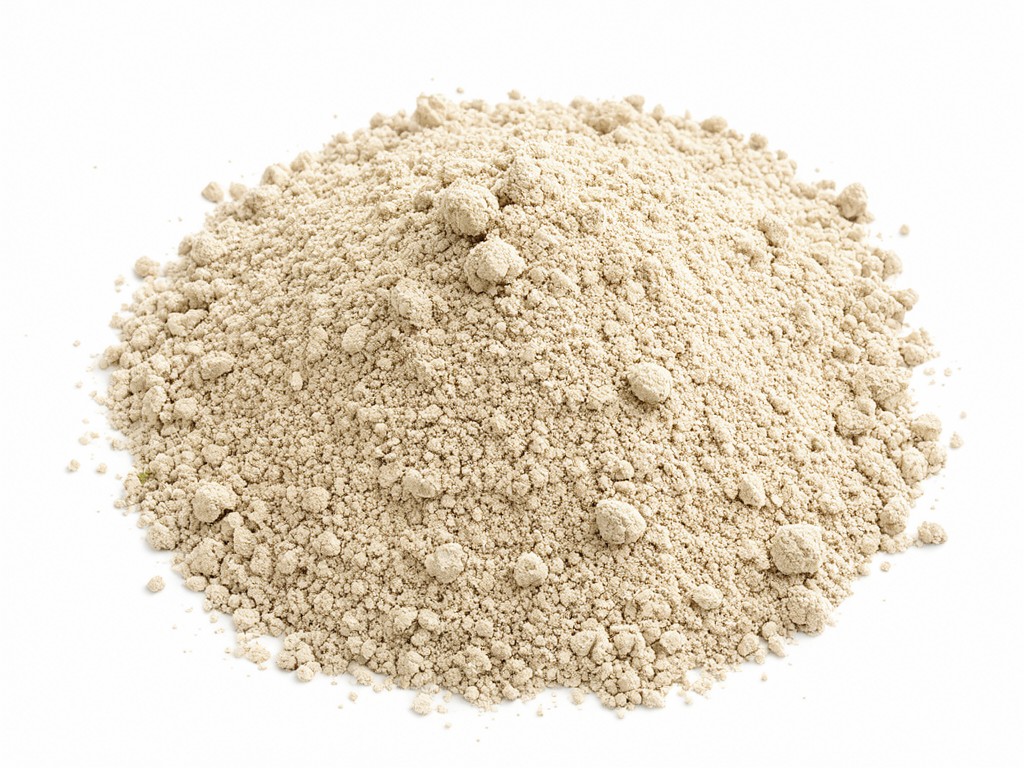
80% metaldehyde technical wettable powder supplier: What Buyers Should Check Before Ordering
The Problem Buyers Keep Paying For
Cost and durability pull in opposite directions once a formulation leaves the reactor. An 80% technical wettable powder that passes lab suspensibility at 25 °C can still clog nozzles after three weeks in a non-climate-controlled warehouse. The failure mode isn't the active ingredient — it's the carrier and dispersant package that wasn't qualified for the humidity range your distribution chain actually sees.
Buyers who specify only "80% WP" on the purchase order get what the factory has in the silo that week. The difference between a batch that suspends at 98% after 30 minutes and one that drops to 82% is the difference between a grower respraying once or three times. That respray cost never shows up on the COA.
Material Options and Their Trade-offs
Material choice starts with the conditions the product will meet in transit and storage. The carrier matrix — typically kaolin, diatomaceous earth, or a silica blend — determines both flowability and water-dispersible granule integrity. A high-kaolin grade flows freely through 25 kg bag fillers but can cake above 65% RH. Silica-heavy carriers resist caking but increase abrasion on packing screws, raising tooling maintenance cost per tonne.
Kaolin-Dominant Carrier
- Flowability: excellent, < 15° angle of repose
- Caking threshold: ~60% RH at 30 °C
- Packing wear: low, standard carbon steel screws
- Cost index: baseline
Silica-Enhanced Carrier
- Flowability: good, 18-22° angle of repose
- Caking threshold: ~75% RH at 30 °C
- Packing wear: moderate, hardened screws recommended
- Cost index: +8-12% vs kaolin baseline
Specification callout: require the supplier to quote suspensibility at both 25 °C and 35 °C per CIPAC MT 184. A single-temperature COA hides the temperature coefficient that predicts field performance in tropical zones.
Matching the Product to the Buyer's Need
Where chlorine, sweat or UV exposure is routine — that's not this product's domain. Metaldehyde WP sits in agricultural distribution: wholesale agronomy distributors, government tender programmes, and private-label formulators who tank-mix with herbicides. The buyer's need is defined by registration dossier requirements, not retail shelf life.
A tender spec calling for "particle size < 50 µm, 90% passing" sounds precise until you realise the jet mill setting that achieves it also generates 12% fines < 5 µm. Those fines become dust during bagging, trigger worker exposure flags, and reduce active loading efficiency in the downstream suspension concentrate line. The selection guide below maps the real decision points.
| Parameter | Standard Range | Tender-Grade Target | Cost Impact |
|---|---|---|---|
| Active ingredient (w/w) | 80% ± 1.5% | 80% ± 0.8% | +3-5% for tighter assay control |
| Suspensibility (CIPAC MT 184) | ≥ 85% | ≥ 95% at 25 °C & 35 °C | +7-10% for dual-temp validation |
| Wet sieve residue (75 µm) | ≤ 0.5% | ≤ 0.2% | +5% for finer milling pass |
| Moisture (Karl Fischer) | ≤ 1.5% | ≤ 1.0% | +2-3% for extended fluid bed drying |
| pH (1% suspension) | 4.0 - 7.0 | 5.5 - 6.5 | Neutral (buffer cost minimal) |
| Packaging | 25 kg PE-lined PP bags | 25 kg UN-certified, double PE liner | +$0.80-1.20/kg for UN spec |
Assumptions Buyers Should Stop Making
"Technical grade means consistent." It doesn't. Technical metaldehyde purity ranges 99.2-99.8% depending on the crystallisation cut. The 0.6% spread translates to 0.48% active on an 80% WP — enough to shift a registration boundary in some jurisdictions. Ask for the crystallization batch record, not just the final COA.
"Wettable powder is wettable powder." The dispersant system (lignosulfonate vs naphthalene sulfonate vs alkylnaphthalene sulfonate) changes wetting time from 45 seconds to 3 minutes. That difference determines whether a backpack sprayer user gets a usable tank mix or a sludge layer. Most suppliers quote one dispersant; the tender spec should name the chemistry or demand wetting time ≤ 60 seconds.
"Shelf life is two years." Only if the warehouse stays below 30 °C and 60% RH. Accelerated storage at 54 °C / 14 days (CIPAC MT 46.3) predicts 18 months at tropical ambient. If your supply chain includes Mombasa or Jakarta transshipment, specify the accelerated test result on the COA, not the temperate-zone claim.
Quality Control and Batch Consistency
The factory that runs one 5-tonne campaign per quarter cannot hold the same dispersion profile as one running 20 tonnes monthly. Campaign frequency determines whether the jet mill classifier wears evenly or develops a step-change at 3 tonnes throughput. Ask for the last six batch records — not the COA summary, the raw particle size distributions.
In-process controls that matter: fluid bed outlet temperature logged every 30 seconds (drying uniformity), dispersant addition sequence verified by torque rheometer (mixing energy), and post-mill air classification cut point checked every 500 kg. A supplier who shares these logs without prompting is managing the process; one who only shares the final certificate is managing the paperwork.
Traceability: each 25 kg bag should carry a laser-etched batch code linking to reactor charge, milling run, and packing shift. That code lets you isolate a single pallet if a downstream formulators reports foaming — without quarantining the entire container.
Capacity, Tooling and Scheduling
Tooling amortisation drives the real MOQ. A dedicated 80% WP campaign requires: reactor cleaning validation (8 hrs), jet mill classifier changeover (4 hrs), fluid bed dryer recipe load (2 hrs), and packing line sieve calibration (3 hrs). That's 17 hours of non-productive time before the first kilogram hits a bag. At 2 tonnes/hour packing rate, the break-even campaign is 12 tonnes — but the economic minimum for scheduling priority is 20 tonnes.
Lead time breakdown for a 20-tonne order:
- Raw material procurement (technical metaldehyde, carrier, dispersant): 14-21 days
- Reactor scheduling window: 3-7 days depending on campaign queue
- Processing + drying + milling: 2 days
- QC release (full CIPAC suite): 5 days
- Packing + palletising + container stuffing: 1 day
Total: 25-36 calendar days ex-works. Air freight cuts transit but not production. If your launch date is fixed, the PO must land 45 days before vessel cutoff. Blanket orders with monthly call-offs reduce per-tonne cost by 6-9% because the factory can cluster campaigns and avoid repeated changeovers.
Request a Quotation Review
Share your tender specification, target volume, and delivery schedule. We'll return a batch-record-backed proposal with dual-temperature suspensibility data, accelerated storage projection, and a campaign schedule that protects your launch date.
Submit Specification for Review


