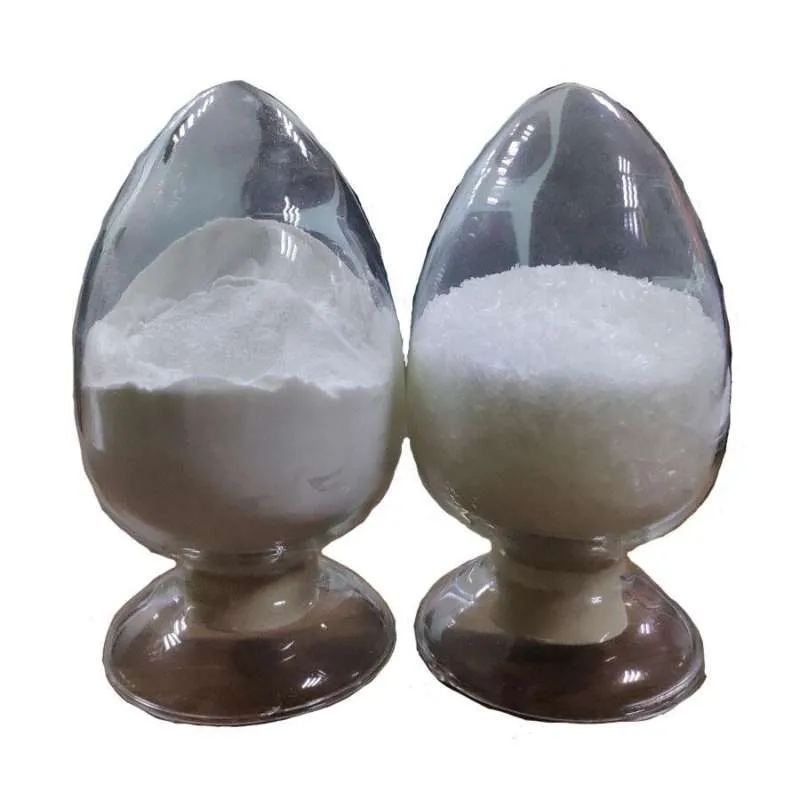
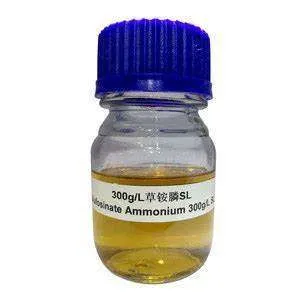
Glufosinate Ammonium
CAS No.: 77182-82-2 Molecular formula: C5H18N3O4P Molecular weight: 215.19 Melting point: 210°C Boiling point: 519℃ Density: 1.4 g/cm3 Flash point: 100 °C Storage: Keep in a dark place under an inert
Glufosinate-ammonium Identification
- CAS No.: 77182-82-2
- Molecular formula: C5H18N3O4P
- Molecular weight: 215.19
Glufosinate-ammonium Properties
- Melting point: 210°C
- Boiling point: 519℃
- Density: 1.4 g/cm3
- Flash point: 100 °C
- Storage: Keep in a dark place under an inert atmosphere at 2–8°C.
- Solubility: Slightly soluble in methanol; soluble in water.
- pKa: 9.15 [at 20 ℃]
- Form: Solid
- Color: White to beige
- Water solubility: Soluble in water
Risk and Safety Statements
GHS symbols |
|
Signal word | Danger |
Hazard codes | Xn, T |
Hazard class | 6.1(b) |
Packing group | III |
HS code | 29319019 |


Glufosinate-ammonium Chemical Properties and Uses
Glufosinate-ammonium, also known as glufosinate, is a non-selective, foliar-applied organophosphorus herbicide. It was first developed in 1979 by the chemical synthesis company Hoechst in the Federal Republic of Germany. The herbicide is absorbed through the leaves and has some translocated activity: it can move from the leaf base toward the tips, but transfers to other parts of the plant to a limited extent. It does not affect shoots that have not emerged or seeds. After application, plant metabolism is disrupted and the cytotoxic glufosinate-ammonium ion accumulates. Photosynthesis is also strongly inhibited; treated plants become yellowish-white as they lose their green color, then turn yellow and die within 2 to 5 days. Glufosinate-ammonium loses activity after contact with soil, so it is used as a post-emergence spray on stems and leaves.
Application and weed spectrum
Uses include weed control in orchards, vineyards, potato fields, nurseries, forests, pastures, ornamental shrubs and fallow land. The listed target annual and perennial grasses include foxtail, wild oats, crabgrass, barnyard grass, green foxtail, bluegrass, quackgrass, bermudagrass, bentgrass, reeds and fescue. Listed broadleaf weeds include quinoa, amaranth, smartweed, chestnut, black nightshade, chickweed, purslane, cleavers, sonchus, thistle, field bindweed and dandelion. It also has some effect on sedges and ferns.
For early-season broadleaf weeds and grasses at the tillering stage, the source recommends spraying weed populations at 0.7 to 1.2 kg/hectare. Weed control lasts 4 to 6 weeks; repeat treatment if necessary to extend the control period. In potato fields, apply before emergence. It may also be sprayed before harvest to kill and control ground stubble. For fern control, the listed rate is 1.5 to 2 kg per hectare. Glufosinate-ammonium is usually used alone and may also be mixed with simajine, diuron or methylchloro phenoxyacetic acid.
Available Formulations
- Glufosinate ammonium 18%SL
- Glufosinate ammonium 20%SL
- Glufosinate ammonium 95%TC
- Fluoroglycofen Ethyl 2% + Glufosinate Ammonium 30% OD
- Glufosinate Ammonium 88% WDG
- Glufosinate ammonium 20%+Fluoroglycofen ethyl 0.9%+Quizalofop-P-ethyl 2.1% ME
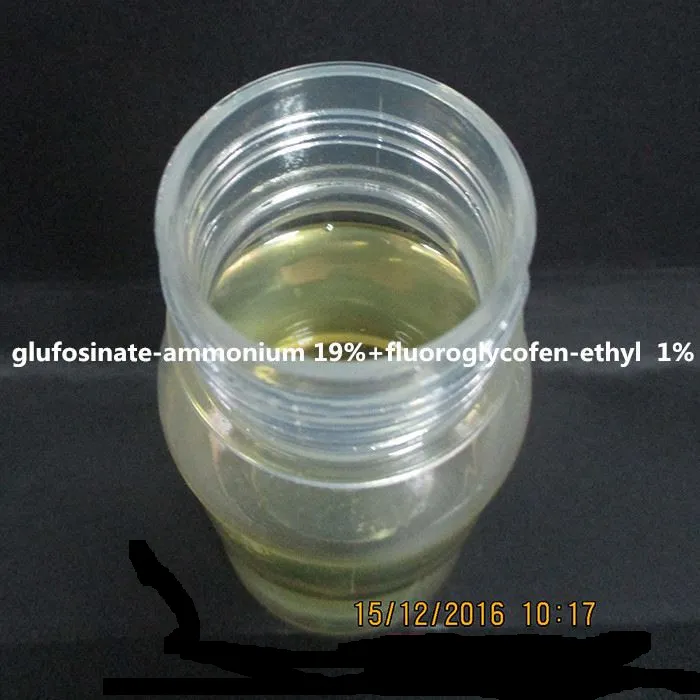
- Glufosinate ammonium 19%+Fluoroglycofen ethyl 1% ME
- Glufosinate ammonium 60%+Flumioxazin 6% WP
- Glufosinate ammonium 22.5%+Fluoroglycofen ethyl 1.5% OD
- Glufosinate-p 20% SL
- Glufosinate-ammonium 10% SL



