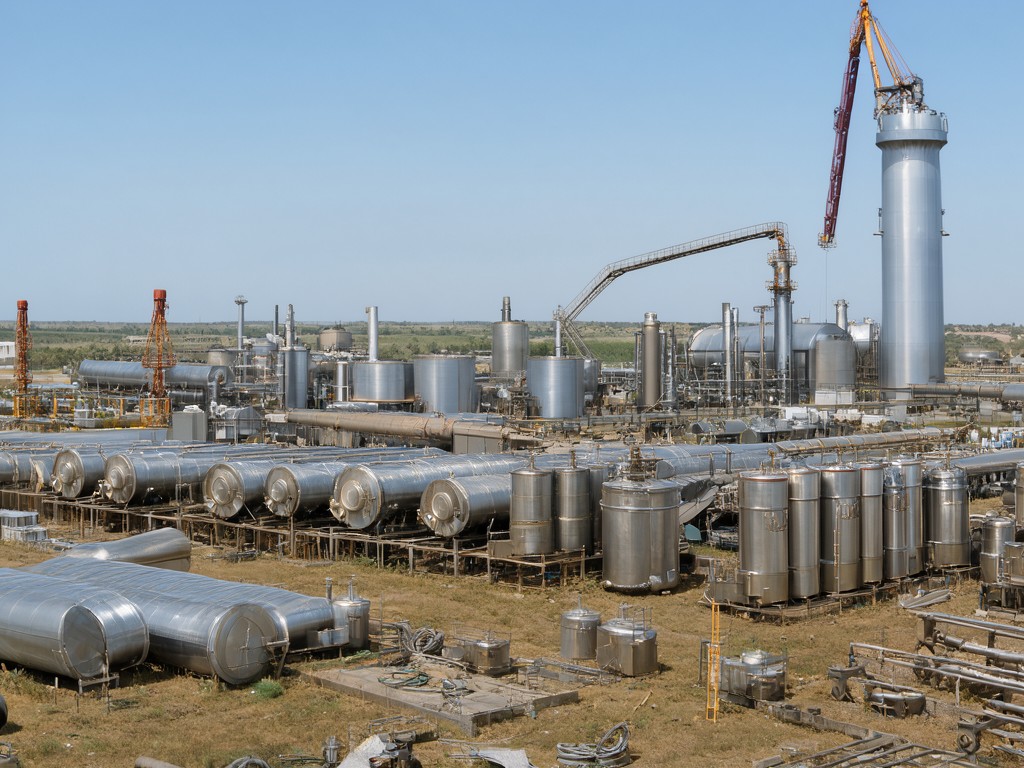
china glufosinate factory for agricultural pesticide export: What Buyers Should Check Before Ordering
The synthesis route and purification depth set the real floor price — not the quoted FOB. A 95 % technical concentrate from a continuous phosphinothricin-ammonium process typically carries 0.3–0.5 % more impurities than a batch-crystallised 97 % grade, and those impurities dictate formulation stability, registration dossier cost, and the maximum shelf life you can promise downstream distributors.
Construction Method and Its Effect on Consistency
The build method decides whether batch-to-batch variation stays inside the ±0.5 % active-ingredient window that FAO specification 541/2021 demands for glufosinate-ammonium technical concentrate.
Continuous-flow hydrogenation of the phosphinic acid precursor reduces residence-time distribution, which narrows the impurity fingerprint — mainly MPP (3-methylphosphinico-propionic acid) and PPO (phosphinothricin-oxalate) — to a repeatable 0.15–0.25 % combined. Batch hydrogenation in 6 m³ reactors, by contrast, shows 0.35–0.55 % combined impurities when the catalyst age exceeds 12 cycles. That difference forces the formulator to either increase safener loading or accept a shorter tank-mix stability claim. First-article tooling determines the practical minimum order: a dedicated continuous line needs 500 mt annualised to amortise the fixed-bed reactor and downstream ion-exchange train; a batch train breaks even at 150 mt but carries higher per-tonne solvent recovery cost.
Customisation Options and Their Limits
Process choice shows up later as flexibility — or rigidity — in the formulation grades you can offer without re-validation.
| Grade / Configuration | Typical Purity | Impurity Profile Control | Packaging Options | Minimum Economic Run | Lead Time (after PO) |
|---|---|---|---|---|---|
| Technical concentrate (TC) 95 % | 95.0 ± 0.5 % | MPP + PPO ≤ 0.5 % | 200 L steel drums, 1 mt IBC | 50 mt | 21–28 days |
| Technical concentrate (TC) 97 % | 97.0 ± 0.3 % | MPP + PPO ≤ 0.2 % | 25 kg fibre drums, 500 kg FIBC | 30 mt | 28–35 days |
| SL 200 g/L (soluble concentrate) | 200 ± 5 g/L | MPP ≤ 0.15 %, PPO ≤ 0.10 % | 10 L HDPE, 200 L drum, 1 mt IBC | 20 mt a.i. | 35–42 days |
| WG 68 % (water-dispersible granule) | 68 ± 1.5 % w/w | MPP ≤ 0.2 %, dust < 0.5 % | 10 kg PE-laminated bags, 25 kg fibre drums | 15 mt a.i. | 42–50 days |
Custom surfactant packages for SL grades require pilot-scale spray-drying trials — minimum 500 kg — before the factory will lock the spray-tower inlet temperature and atomiser speed. That trial cost sits on the buyer unless the annual forecast exceeds 100 mt a.i.
Quality Control and Batch Consistency
Every export lot ships with a certificate of analysis tied to the FAO/WHO specification, but the factory’s internal release limits are tighter — and that is what protects your registration.
| Test Parameter | FAO Limit | Factory Release Limit | Method | Frequency |
|---|---|---|---|---|
| Glufosinate-ammonium content | ≥ 950 g/kg (TC 95 %) | ≥ 955 g/kg | HPLC-C18, external standard | Every batch |
| MPP (impurity) | ≤ 3 g/kg | ≤ 1.5 g/kg | HPLC-C18, external standard | Every batch |
| PPO (impurity) | ≤ 2 g/kg | ≤ 1.0 g/kg | HPLC-C18, external standard | Every batch |
| Water (Karl Fischer) | ≤ 5 g/kg | ≤ 3 g/kg | Karl Fischer titration | Every batch |
| pH (1 % aqueous) | 4.0–7.0 | 4.5–6.5 | Potentiometric | Every batch |
| Accelerated storage (54 °C / 14 d) | Content change ≤ 5 % | Content change ≤ 3 % | CIPAC MT 46.3 | 1 batch per 10 production runs |
The factory retains a 500 g reference sample from every batch for 36 months. If a destination country requests post-shipment verification, the retained sample is analysed against the original CoA at no extra charge — provided the seal is intact and chain-of-custody documentation is complete.
Setup, Use and Replacement Parts
Glufosinate technical concentrate is hygroscopic above 60 % RH; drums must be stored under cover, off concrete, and used within 24 months of manufacture date to stay inside the factory’s stability envelope. Once a drum is opened, headspace nitrogen blanketing extends usable life by roughly 8 weeks — a detail that matters for formulators running intermittent campaigns. For SL formulations, the surfactant system (typically alkylpolyglucoside + nonylphenol ethoxylate) begins to hydrolyse above 35 °C; warehouse temperature logs are part of the quality agreement. WG granules generate < 0.5 % dust per CIPAC MT 171, but pneumatic conveying at the formulator’s plant can raise that to 1.2 % if the conveying velocity exceeds 22 m/s — a specification the buyer must enforce on their side.
Questions Buyers Ask Before Ordering
What is the real minimum order for a first shipment?
20 mt of TC 95 % in 200 L drums, or 10 mt a.i. equivalent of SL 200 g/L. Smaller lots are possible only as a paid pilot run (5 mt minimum) with no export licence commitment from the factory.
Can you supply the GLP five-batch analysis package for a new country registration?
Yes, but the five consecutive batches must be produced within a single 90-day window to satisfy most regulators. That requires a firm 150 mt forecast so the factory can schedule the continuous line without changeovers. The analytical cost (≈ USD 18,000) is invoiced separately and credited against the first commercial order.
How do you handle export licence and customs code (HS 2931.39) compliance?
The factory holds a permanent export licence for glufosinate-ammonium under HS 2931.3900. For formulated grades (SL, WG), the HS code shifts to 3808.93 and the factory applies for a shipment-specific licence once the buyer provides the destination country’s import permit. Licence lead time is 7–10 working days; build that into your vessel booking.
What happens if a batch fails the accelerated storage test after shipment?
The retained sample is re-tested. If the failure confirms a manufacturing deviation (content loss > 3 % or MPP increase > 0.5 g/kg), the factory replaces the affected tonnage at FOB origin and covers return freight for the off-spec material. Consequential losses — crop damage claims, registration withdrawal — are excluded per the standard supply agreement.
Can we audit the synthesis and formulation lines before placing a contract?
On-site audits are scheduled quarterly (March, June, September, December) and limited to two buyer representatives per slot. Virtual audits with live HPLC data feed are available on 10 business days’ notice. Audit reports are shared under NDA; no photography in the hydrogenation or ion-exchange areas.
Ready to Review Specifications?
Send your annual volume forecast, target grade(s), and destination countries. We will return a technical data package, current impurity fingerprint chromatograms, and a landed-cost model that includes licence lead time and packaging optimisation.
Request Specification Review


