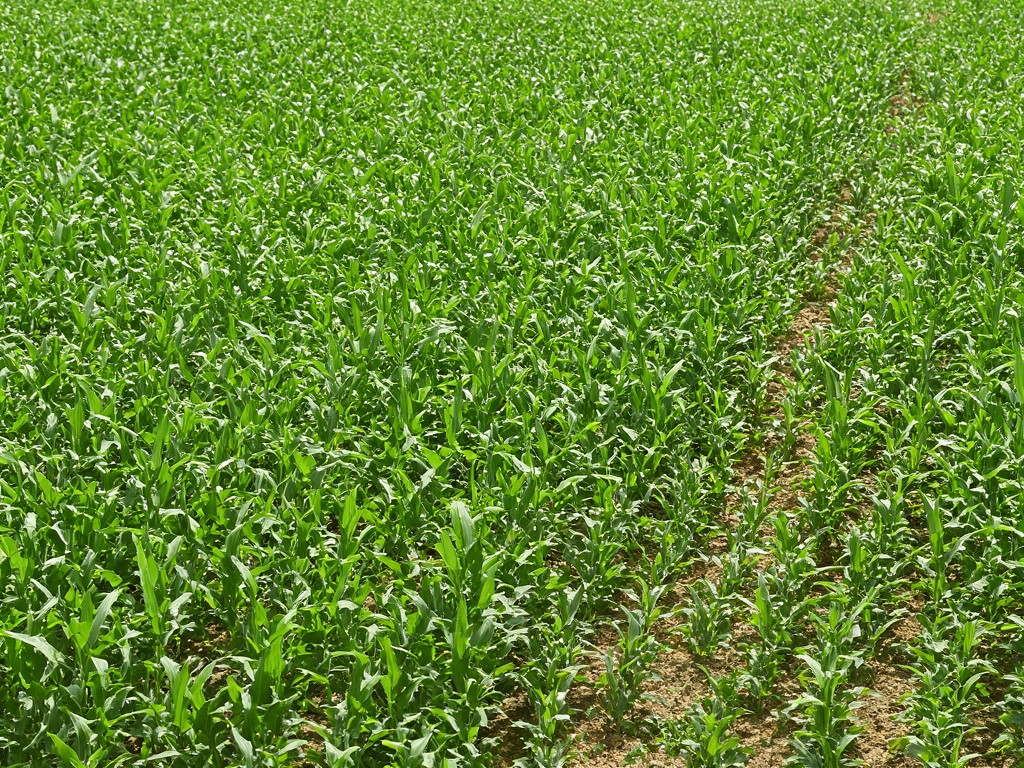
Specifying China Crop Field Glufosinate Weed Control Supplier for Wholesale and OEM Orders
Formulation stability decides whether a glufosinate-ammonium order arrives as a homogeneous solution or a crystallized loss. Buyers qualifying a second source for 150 g/L SL or 200 g/L SL grades need to verify that the technical concentrate meets FAO specification 685/TC before any tank-mix or label-extension work begins.
Size, Weight and Specification Range
Active Ingredient Content
150 g/L ± 5 g/L (standard SL)
200 g/L ± 5 g/L (high-load SL)
TC ≥ 950 g/kg for formulation use
Physical Properties
pH 4.0–7.0 (1% dilution)
Density 1.12–1.18 g/mL at 20 °C
Pourability ≤ 30 mL residue (CIPAC MT 148)
Packaging Increments
1 L, 5 L HDPE bottles (retail)
20 L, 200 L fluorinated drums (distributor)
1000 L IBC totes (formulator bulk)
Shelf-Life Baseline
24 months at 25 °C ambient
Passes 54 °C / 14-day accelerated
No crystallization to −10 °C
| Parameter | Standard Grade (150 g/L) | High-Load Grade (200 g/L) | Technical Concentrate |
|---|---|---|---|
| Glufosinate-ammonium purity | ≥ 150 g/L ± 3.3% | ≥ 200 g/L ± 2.5% | ≥ 950 g/kg |
| Impurity profile (MPP, MPPA) | ≤ 1.5 g/L combined | ≤ 2.0 g/L combined | ≤ 5 g/kg combined |
| Water content (Karl Fischer) | N/A (aqueous SL) | N/A (aqueous SL) | ≤ 5 g/kg |
| Suspensibility (if WG) | — | — | ≥ 85% (CIPAC MT 184) |
| Wet sieve test (75 µm) | No residue | No residue | ≤ 0.5% residue |
Assumptions Buyers Should Stop Making
Identical active ingredient percentages on two certificates of analysis do not guarantee equivalent field performance. The surfactant package, solvent system, and buffer capacity determine rainfastness, crop safety on sensitive varieties like LibertyLink® cotton, and compatibility with glyphosate or residual partners in tank mixes.
- Assuming all 200 g/L SL formulations use the same tallow-amine ethoxylate load — some suppliers cut surfactant 15–20% to reduce cost, increasing drift risk and reducing leaf penetration.
- Treating crystallization at 0 °C as a shipping defect rather than a formulation choice; proper SLs remain pourable to −10 °C without precipitate.
- Believing that a single efficacy trial on barnyardgrass validates the product across all target weeds; glufosinate activity on broadleaves (amaranth, nightshade) is more surfactant-dependent.
- Overlooking that drum fluorination quality varies — non-fluorinated HDPE absorbs 2–3% AI over 12 months, shifting label rates.
Specification Callout
Request the CIPAC MT 46.3 (emulsion stability) and MT 39.2 (persistent foam) reports for any SL grade. Foam > 60 mL after 1 minute or cream separation > 2 mL disqualifies the batch for aerial application labels in most jurisdictions.
Segment-Specific Requirements
Distributors supplying row-crop retailers need different documentation than formulators blending glufosinate + glyphosate co-packs. The table below maps the deliverables each segment actually audits.
| Buyer Segment | Mandatory Documentation | Batch Release Tests | Label / Registration Support |
|---|---|---|---|
| Row-crop distributor (LATAM, SEA) | FAO spec compliance, GHS SDS, UN 3082 cert | AI content, pH, density, pourability, 54 °C stability | Local language labels, MRL letters, efficacy summaries |
| Formulator (co-pack / twin-pack) | TC certificate, impurity profile, 5-batch stability | Water content, assay, MPP/MPPA, sieve residue | Blanket GLP study access, inert ingredient disclosure |
| Private-label brand (EU, Brazil) | Full dossier (Parts A–C), BPD/ECP certificates | Full CIPAC suite + biological equivalence | Zonal RMS pre-submission meeting minutes |
How Consistency Is Held Across Batches
Consistency in glufosinate SL production hinges on three control points: technical concentrate lot qualification, inline pH adjustment during formulation, and final fill-head verification. A supplier that skips any one of these will deliver batches that drift outside the ± 5 g/L label tolerance within six months.
The technical concentrate arrives in 200 kg drums or 1000 kg IBCs. Each lot receives an incoming HPLC assay (CIPAC 46.1) and impurity fingerprint. Lots outside 950–960 g/kg purity or exceeding 5 g/kg MPP+MPPA are rejected before they reach the formulation reactor — this single gate prevents 80% of downstream stability failures.
- Inline pH stat maintains 5.5 ± 0.2 during surfactant addition; deviation > 0.3 units triggers automatic hold and rework.
- Density check every 500 L at fill head; target 1.150 ± 0.005 g/mL correlates to AI content within ± 2 g/L.
- Retained samples from every batch stored at 25 °C, 35 °C, and 54 °C; 14-day 54 °C data released before shipment authorization.
- Annual five-batch stability protocol (CIPAC MT 46.3) reported to buying QA teams — not just a summary, the raw chromatograms.
Export Packaging and Handling Protection
Glufosinate SL ships as UN 3082 (Environmentally Hazardous Substance, Liquid, N.O.S.) Packing Group III. The packaging spec is not optional — it is the difference between a clean customs clearance and a rejected container at Santos or Ho Chi Minh City.
Fluorinated HDPE Drums (20 L, 200 L)
Minimum 10% fluorination depth; eliminates AI permeation and paneling. UN 1H1/X1.2/250 mark mandatory. Vented caps with PTFE liners for temperature cycling.
IBC Totes (1000 L)
Composite IBC (31HA1) with fluorinated inner bottle. Steel cage galvanized ≥ 60 µm. Bottom discharge valve PTFE-sealed. Stack test 2-high loaded.
Palletization: 20 L drums — 48 per euro pallet (800 × 1200 mm), stretch-wrapped with UV-resistant film, corner boards top and bottom. 200 L drums — 4 per pallet, same wrap. IBCs — single-stacked, strapped to pallet base. All pallets labeled with GHS pictograms, UN number, net weight, batch QR code linking to CoA.
Care, Storage and Service Life
Warehouse conditions dictate whether the 24-month shelf life is realized or cut in half. The formulation tolerates temperature excursions better than most herbicides, but repeated freeze-thaw cycles or sustained heat above 35 °C accelerate hydrolysis to MPPA.
- Store under roof, ambient 5–35 °C. Avoid direct sun on drums — surface temperature exceeds 50 °C even at 30 °C air temp.
- Rotate stock FIFO; glufosinate SL does not improve with age. Batches > 18 months at dispatch require re-test CoA (pH, assay, pourability).
- If crystallization observed at < 5 °C, warm to 20 °C and roll drum 10× before use. Do not apply heat guns or steam — localized overheating degrades surfactant.
- Spill cleanup: absorb with inert clay, collect for hazardous waste. Do not flush — aquatic toxicity LC50 (fish) 10–100 mg/L.
Handling Note
Operators decanting 200 L drums into spray tanks should wear nitrile gloves (EN 374-3 rated for > 480 min breakthrough) and face shield. The formulation pH 4–7 is mild, but surfactant strips skin lipids after repeated contact — barrier cream reduces dermatitis claims.
Request a Representative Sample
Qualify the formulation in your tank-mix matrix before committing volume. We ship 1 L reference samples under UN 3082 exempt quantities with full CoA and CIPAC data packet.
Request Sample & Technical DossierCustomization Options
| Option | MOQ Impact | Lead Time Adder |
|---|---|---|
| Private-label artwork | +0 kg (standard MOQ) | +7 days |
| Surfactant package adjustment | +5,000 L | +21 days |
| Dye / marker addition | +2,000 L | +14 days |
| Alternate drum fluorination spec | +10,000 L | +30 days |



