Atrazine 92
CAS No.: 1912-24-9 Molecular formula: C8H14ClN5 Molecular weight: 215.68 Melting point175°C Boiling point200°C Density1.187 Vapor pressure0Pa at 25℃ Refractive index1.6110 (estimate) Flash point11 °C
Atrazine
CAS No.: 1912-24-9
Molecular formula: C8H14ClN5
Molecular weight: 215.68
Atrazine Properties
Melting point | 175°C |
Boiling point | 200°C |
Density | 1.187 |
Vapor pressure | 0Pa at 25℃ |
Refractive index | 1.6110 (estimate) |
Flash point | 11 °C |
Storage temperature | Keep in a dark place under an inert atmosphere at room temperature. |
Solubility | DMSO: 83.33 mg/mL (386.36 mM) |
pKa | pKa 1.64 (uncertain) |
Form | Crystalline |
Color | Crystals |
Water solubility | Slightly soluble; 0.007 g/100 mL |
Stability | Stable. Incompatible with strong oxidizing agents. |
Safety Information
Risk and Safety Statements
Symbol (GHS) |
|
Signal word | Warning |
Hazard codes | Xn;N,N,Xn,T,F,Xi |
Hazard class | 9 |
Packing group | III |
HS code | 29336990 |


Atrazine Chemical Properties and Uses
Atrazine is an odorless white powder and a selective triazine herbicide. It is used to control the growth of broadleaf and grassy weeds in crops and plantings that include sorghum, maize, sugarcane, lupins, pine, eucalyptus plantations, and triazine-tolerant canola.
US statistics from 2014 ranked atrazine as the country’s second most widely used herbicide, after glyphosate. Its herbicidal action targets the photosystem II system in weeds, disrupting photosynthesis and resulting in weed death. Atrazine can be manufactured by treating cyanuric chloride with ethylamine and isopropylamine. The source information also notes potential toxicity to humans and other animals through effects on the endocrine systems.
Agricultural and Land-Management Uses
Atrazine is used as a selective herbicide to manage broadleaf and grassy weeds in agriculture and on other land. Agricultural applications include corn, sugarcane, and pineapple, as well as orchards, sod, tree plantations, and rangeland. Due to its low solubility, atrazine is described as moderately persistent in the environment. It has been detected in groundwater and in upper soil-profile layers in many areas (Huang and Frink, 1989). The Environmental Protection Agency (EPA) reported atrazine as one of the two most commonly used agricultural herbicides in 2007 (EPA, 2011).
Available Atrazine Formulations
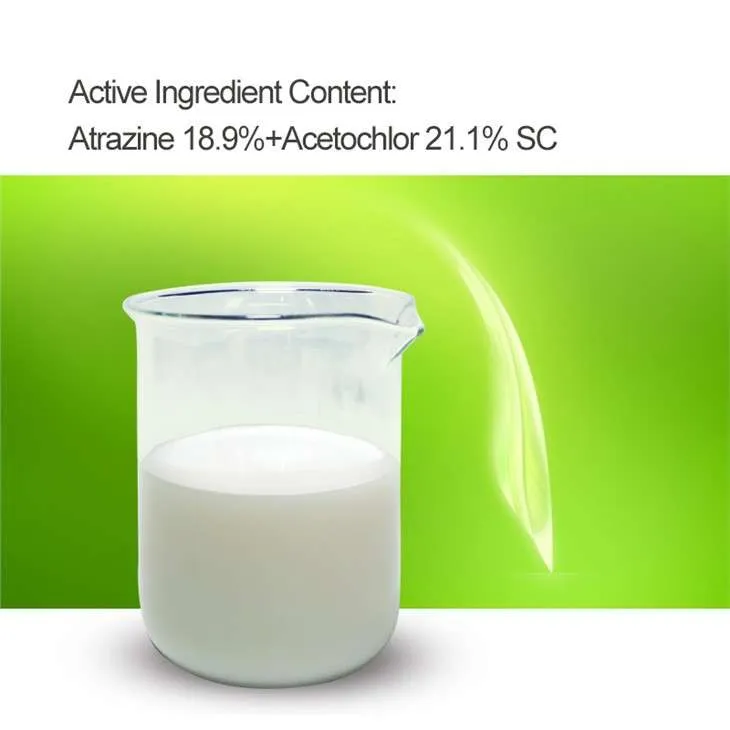
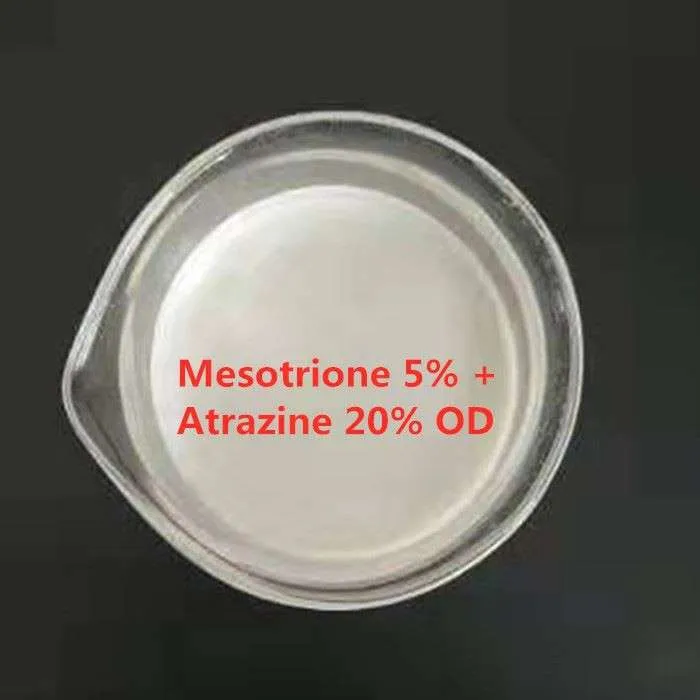
Our supply includes the following atrazine products and combinations:
- Atrazine 38% SC suspension concentration
- Atrazine 50% SC suspension concentration
- Atrazine 20% + Mesotrione 5% + Nicosulfuron 2% OD
- Atrazine 18.5% + Nicosulfuron 1.5% OD
- Atrazine 90% WDG
- Atrazine 97% TC
- Atrazine 80% WP



