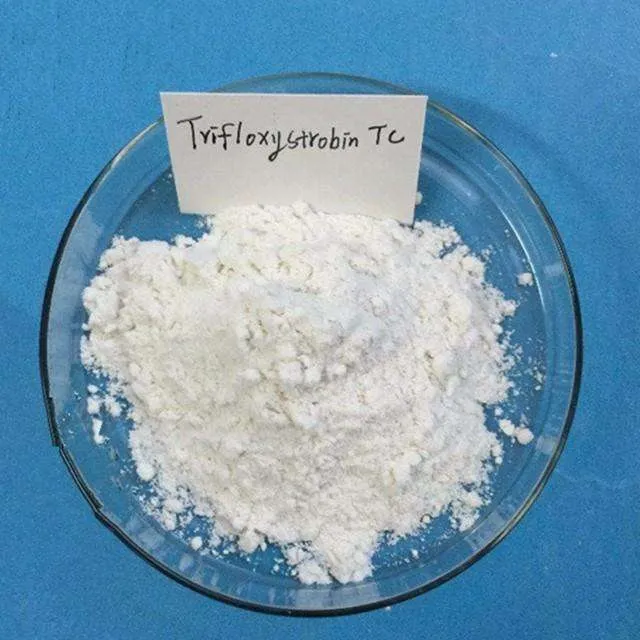
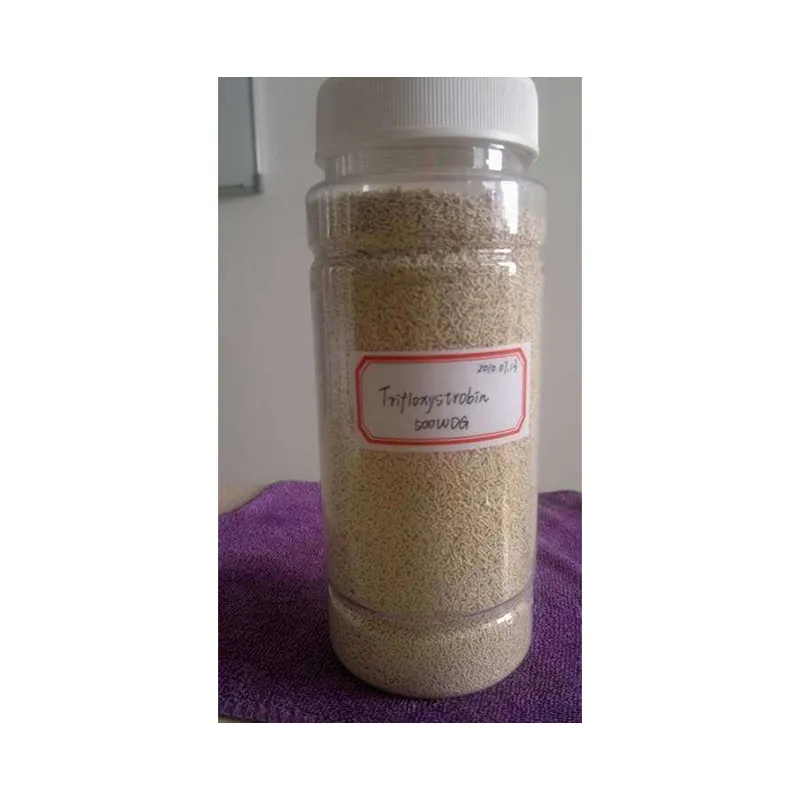
Trifloxystrobin 102
CAS: 141517-21-7MF: C20H19F3N2O4MW: 408.37EINECS: 480-070-0Trifloxystrobin Chemical PropertiesMelting point72.9°Boiling pointbp~312°Density1.21±0.1 g/cm3 (predicted)Flash point>70 °CBoiling
CAS: 141517-21-7
MF: C20H19F3N2O4
MW: 408.37
EINECS: 480-070-0
Melting point | 72.9° |
Boiling point | bp~312° |
Density | 1.21±0.1 g/cm3 (predicted) |
Flash point | >70 °C |
Boiling point | Decomposes before boiling |
Storage temperature | Sealed, dry storage at 2-8°C |
Solubility | Slightly soluble in chloroform and methanol |
Form | Solid |
Color | White to off-white |
Stability | Hygroscopic and moisture-sensitive |
Hazard codes | |
Risk statements | 43-50/53 |
Safety statements | 24-37-46-60-61 |
RID/ADR | UN3077 9/PG 3 |
WGK Germany | 2 |
Trifloxystrobin is a synthetic derivative of naturally occurring strobilurins, compounds found in several genera of wood-decaying fungi, including Strobilurus tenacellus. As a strobilurin foliar fungicide, it inhibits mitochondrial respiration by blocking electron transfer in the respiratory chain. This action makes trifloxystrobin an effective inhibitor of fungal spore germination and mycelial growth. It shows activity against many fungal pathogens in the Ascomycete, Deuteromycete, Basidiomycete, and Oomycete classes.
Target diseases include grape and cucurbit powdery mildew, apple scab and powdery mildew, peanut leaf spot, and brown patch of turfgrass. Trifloxystrobin may be applied to cereals, ornamentals, vegetables (carrots, asparagus, cucurbits, fruiting vegetables, and root vegetables except radish), fruits (apples, pears, grapes, and strawberries), and tropical crops. This broad-spectrum agricultural fungicide is used in plant protection, where it works by inhibiting fungal spore germination.



