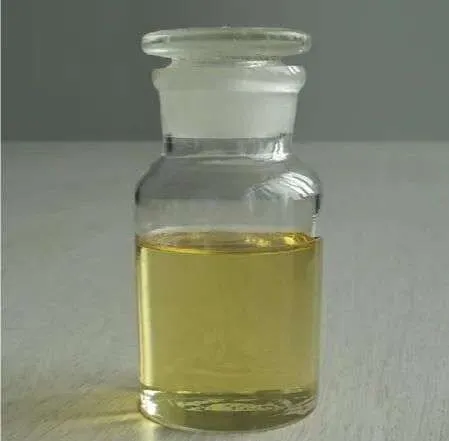
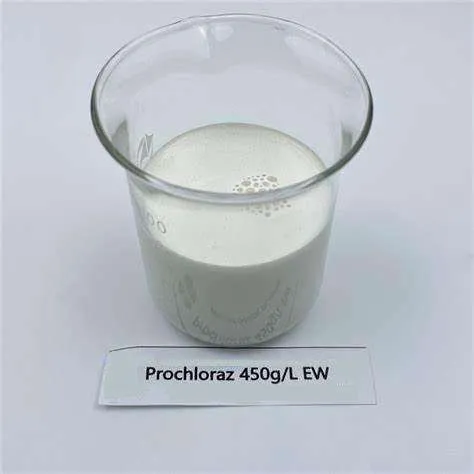
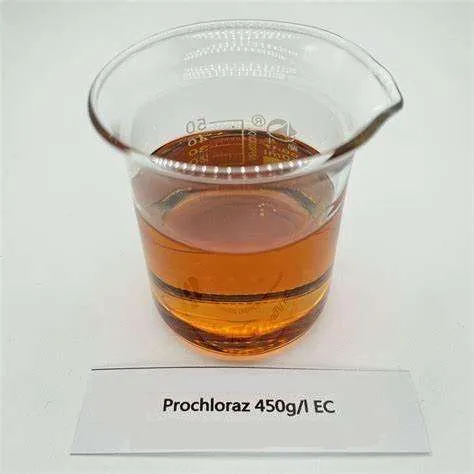
Prochloraz 97
CAS No.: 67747-09-5 Molecular formula: C15H16Cl3N3O2 Molecular weight: 376.67 Melting point46-49°CBoiling point360℃Density1.405Vapor pressure1.5 x l0-4 Pa (25 °C)Refractive index1.6490
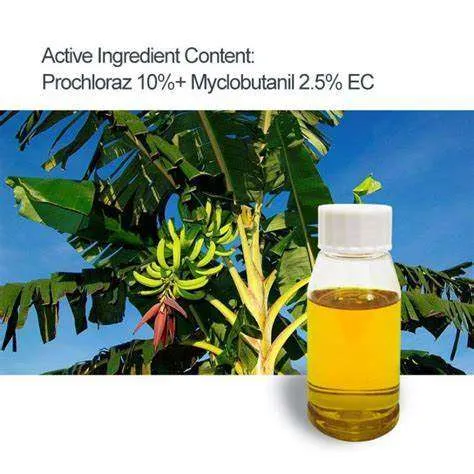
Prochloraz
CAS No.: 67747-09-5
Molecular formula: C15H16Cl3N3O2
Molecular weight: 376.67
Prochloraz Properties
Melting point | 46-49°C |
Boiling point | 360℃ |
Density | 1.405 |
Vapor pressure | 1.5 x l0-4 Pa (25 °C) |
Refractive index | 1.6490 (estimate) |
Flash point | 2 °C |
Storage temperature | Sealed in dry, 2-8°C |
Solubility | DMF: 30 mg/ml; DMSO: 30 mg/ml; Ethanol: 30 mg/ml; Ethanol:PBS (pH 7.2) (1:1): 0.5 mg/ml |
pKa | 3.8 (weak base) |
Water solubility | 34.4 mg l-1 (25 °C) |
Form | Solid |
Color | White to light yellow to light orange |
Risk and Safety Statements
GHS symbols |
|
Signal word | Warning |
Hazard codes | Xn;N,N,Xn,F |
RIDADR | UN 3077 |
Hazard class | 9 |
Packing group | III |
HS Code | 29332900 |


Prochloraz Chemical Properties and Uses
Prochloraz is an imidazole fungicide used in agriculture and horticulture across Europe, Australia, Asia, and South America. Applications described include wheat, barley, mushrooms, cherries, golf-course turf, and flower production. In Ecuador, for example, roses may be treated with prochloraz before export to the USA.
Prochloraz is active against a wide range of diseases affecting cereals, field crops, fruit, and other crops. Listed target diseases include anthracnose, the dothiorella complex, stem-end rot, and eyespot. Uses include treatment of field crops, mushrooms, turf, avocados, mangoes, cereals such as wheat, barley, and winter rye, and winter oilseed rape.
The compound was first evaluated by JMPR for residues and toxicology in 1983. Six additional residue reviews were conducted between 1985 and 1992. Its toxicology was re-evaluated in 2001 under the CCPR Periodic Review Programme, followed by a 2004 periodic review of residue and analytical aspects.
Prochloraz Formulations Available
- Prochloraz 95% TC
- Prochloraz 97% TC
- Prochloraz 45% EW
- Prochloraz–manganese chloride complex 50% WP
- Prochloraz 25% EC
- Prochloraz 20% ME micro emulsion
- Prochloraz 25% EW
- Prochloraz 0.5% FS
- Prochloraz–manganese chloride complex 60% WP
- Prochloraz–manganese chloride complex 98% TC



