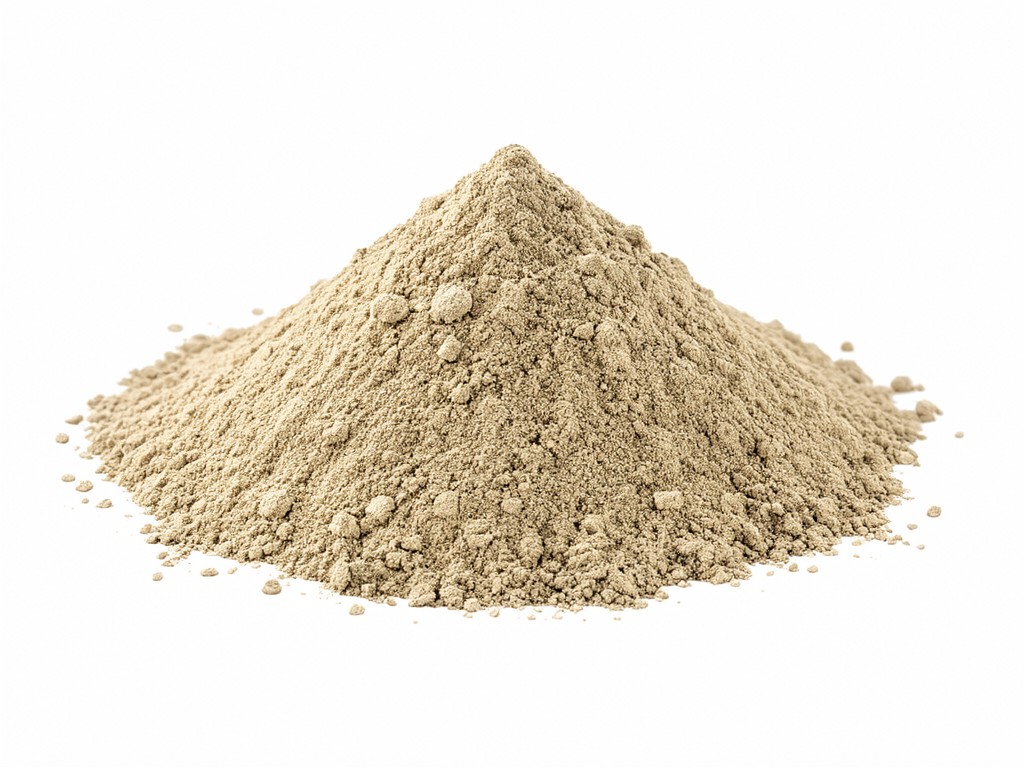
china fungicide powder supplier: Specification, Ordering and Quality Notes
Replacement rate, not unit price, drives the real economics of a second-source fungicide programme. A five percent drift in active ingredient recovery across three consecutive lots forces a full re-registration dossier in most import markets, and the cost of that paperwork dwarfs any per-kilogram saving the original quote promised.
Procurement teams that treat fungicide powder as a commodity chemical — comparing only USD/kg on a specification sheet — discover the hidden costs when a shipment fails accelerated storage testing at 54 °C / 14 days. The active degrades, the pH shifts outside the FAO/WHO window, and the entire container becomes unsellable in regulated channels. Consistency of particle size distribution, moisture pickup, and thermal stability across lots is what keeps a private-label line on the shelf.
Material Options and Their Trade-offs
The active ingredient defines the chemistry, but the carrier, anti-caking agent, and surfactant package determine whether the powder behaves in the field. Three grade tiers dominate Chinese production:
- Technical grade (TC) — 95–98 % AI, minimal formulation additives. Lowest FOB cost, but requires downstream milling and dispersion equipment at the buyer's facility. Lot-to-lot particle size can swing ±15 mesh without warning unless a milling spec is written into the contract.
- Wettable powder intermediate (WP-int) — 70–80 % AI plus dispersant and wetting agent. Pre-milled to 200–325 mesh (D90 ≤ 45 µm). Adds 8–12 % to material cost but eliminates a milling step and narrows the PSD window to ±5 mesh. Moisture spec typically ≤ 1.5 % Karl Fischer.
- Finished wettable powder (WP) — 50–75 % AI, full adjuvant package, anti-caking agent (usually amorphous silica 0.5–1.0 %), dye tracer. Ready for bag-in-box or water-soluble sachet packing. Highest per-kilogram price, but the factory owns the stability data package — critical when the end-user demands a two-year shelf-life claim at 30 °C / 75 % RH.
Specification callout: if the destination market requires FAO/WHO specification compliance, insist on WP-int or finished WP with a factory-issued certificate of analysis for each lot covering AI content (HPLC), pH 1 % suspension, wettability (seconds), suspensibility (%), persistent foam (ml), and accelerated storage (14 days at 54 °C). Technical grade lots rarely carry full FAO data.
Construction Method and Its Effect on Consistency
Tooling amortisation decides whether a supplier can hold the PSD window you need. Jet milling (fluid-energy mill) produces the narrowest distribution — D90 ≤ 45 µm, span < 1.8 — but the classifier wheels wear after 80–120 tonnes, widening the tail and increasing fines that cake in humid warehouses. Pin milling is cheaper per tonne but generates a broader span (2.2–2.6) and more heat, risking thermal degradation on temperature-sensitive actives like strobilurins.
Blending sequence matters as much as milling. Adding the anti-caking agent before the final milling step coats particle surfaces uniformly; adding it after creates pockets of high silica that reduce wettability. A supplier who documents the addition order, blend time (typically 12–18 minutes in a double-cone blender), and post-blend sieve check (100 % through 200 mesh) is signalling process control. Ask for the blend uniformity protocol — coefficient of variation ≤ 3 % on AI assay across ten grab samples is the practical benchmark.
What Can Be Customised and What Cannot
The decision tree below maps the choices a private-label buyer actually controls versus the constraints imposed by chemistry and registration:
- Active ingredient selection — fixed by registration. You cannot swap AI without a new dossier. Confirm the supplier holds a valid ICAMA manufacturing licence for that specific AI.
- AI concentration — adjustable in 5 % increments within the registered formulation range (e.g., 50 %, 55 %, 60 % WP). Each step changes bulk density and bag fill weight; re-run flowability tests.
- Carrier / diluent — choice of kaolin, clay, or silica. Kaolin gives better suspensibility; silica improves flow and reduces dust. Cost delta ≤ USD 0.15/kg.
- Surfactant package — negotiable. Standard naphthalene sulfonate dispersant + alkylbenzene sulfonate wetter. Premium block-copolymer dispersants cut wettability time from 60 s to ≤ 30 s but add USD 0.40–0.60/kg.
- Anti-caking agent type and load — 0.3–1.5 % amorphous silica. Higher load extends cake-free storage in tropical humidity but can push suspensibility below the 70 % FAO floor.
- Dye tracer colour — cosmetic only. Blue, red, or green FD&C dyes at 0.02–0.05 %. No performance impact; purely for brand identification.
- Packaging format — fully customisable. 25 kg PE-lined woven PP bags, 500 kg FIBC with inner liner, or retail sachets (10 g, 50 g, 100 g water-soluble film). Sachet tooling amortisation: USD 3,000–5,000 per size, 30-day lead.
| Customisation Parameter | Range / Options | Cost Impact | Lead-time Adder |
|---|---|---|---|
| AI concentration | 50–75 % in 5 % steps | ± USD 0.80–1.20/kg per 5 % | None (standard blend) |
| Surfactant upgrade | Block copolymer vs standard | + USD 0.40–0.60/kg | 7–10 days (qualification lot) |
| Sachet size | 10 g, 50 g, 100 g, 200 g | Tooling USD 3–5k + USD 0.08/sachet | 30 days for new die |
| Dye tracer | Blue / Red / Green / None | Negligible | None |
OEM and ODM Programme Structure
Total cost of ownership shifts once returns are counted. An OEM programme where the buyer supplies the registered formulation and the factory toll-manufactures typically runs 12–15 % below a full ODM quote, but the buyer owns all stability failures. ODM transfers formulation risk to the supplier — they develop the adjuvant system, run the accelerated storage, and issue the FAO/WHO test report — but adds a development fee (USD 8,000–15,000) and a 90–120 day pre-production window.
The practical split for a second-source qualification:
- Phase 1 (weeks 1–4): buyer provides reference sample and target specification; factory runs three pilot batches at 500 kg each, varying only the anti-caking load and surfactant ratio.
- Phase 2 (weeks 5–8): buyer selects the pilot lot that meets wettability ≤ 45 s, suspensibility ≥ 75 %, persistent foam ≤ 60 ml, and passes 14-day 54 °C storage. Factory locks the BOM and produces a 3-tonne registration batch.
- Phase 3 (weeks 9–16): registration batch undergoes full FAO/WHO tier-1 testing at a GLP lab (buyer-paid, typically USD 4,000–6,000). On pass, commercial supply agreement executes with a lot-release CoA requirement.
What Gets Checked Before Shipment
Every commercial lot releases against a minimum panel before the container doors close:
- AI content by HPLC — target ± 2 % of declared (e.g., 50 % ± 1 % absolute)
- Moisture (Karl Fischer) — ≤ 1.5 % for WP, ≤ 1.0 % for WP-int
- pH 1 % suspension — within registered range (typically 4–9)
- Wettability — ≤ 60 seconds (standard) or ≤ 30 seconds (premium)
- Suspensibility — ≥ 70 % after 30 min (FAO floor)
- Particle size — D90 ≤ 45 µm, span ≤ 2.0 (laser diffraction)
- Bulk density — tapped, recorded for bag-fill weight calibration
- Dustiness (Heubach or rotating drum) — only if buyer specifies; adds 2 days lab time
Accelerated storage (14 days at 54 °C) is not run on every lot — it is a quarterly monitor on the registration batch. Require the supplier to retain a 1 kg retention sample per lot for 24 months; this enables retrospective testing if a field complaint arises.
Volume Planning and Lead Time
A 20-foot container (18–20 tonnes on pallets) is the economic minimum for sea freight from Shanghai or Qingdao. Below that, LCL surcharges and devanning costs erase the unit-price advantage. Production scheduling works on a 25-day cycle from raw-material release to container loading:
- Days 1–5: AI and adjuvant incoming QC (HPLC, moisture, pH)
- Days 6–12: Milling and blending (three 8-tonne batches per shift)
- Days 13–18: Lot testing, CoA generation, buyer release
- Days 19–22: Packing (bags or sachets), palletising, stretch-wrapping
- Days 23–25: Container stuffing, fumigation certificate, shipping docs
Peak season (March–May, pre-planting in northern hemisphere) adds 7–10 days to milling queue time. Lock quarterly forecasts 90 days out to hold a dedicated slot; ad-hoc orders during peak slip to the next available window and incur a 5 % expedite surcharge.
Request a Quotation Review
Send your target specification, annual volume split by pack format, and destination market registration status. We return a landed-cost model with lot-release testing scope and lead-time commitment within two business days.
Start Quotation Review


