Azoxystrobin 101
CAS No.: 131860-33-8 Molecular Formula: C22H17N3O5 Molecular Weight: 403.39 Melting point118-119°Boiling point581.3±50.0 °C(Predicted)Density1.33Vapor pressure1.1 x 10-10 Pa (25 °C)Storage
Azoxystrobin
CAS No.: 131860-33-8
Molecular Formula: C22H17N3O5
Molecular Weight: 403.39
Azoxystrobin Properties
Melting point | 118-119° |
Boiling point | 581.3±50.0 °C(Predicted) |
Density | 1.33 |
Vapor pressure | 1.1 x 10⁻¹⁰ Pa (25 °C) |
Storage temperature | Sealed in dry, room temperature |
Solubility | Chloroform: slightly soluble |
pKa | -0.93±0.18(Predicted) |
Form | Solid |
Water solubility | 6 mg l-1 (20 °C) |
Colour Index | 23860 |
Color | White to yellow |
Risk and Safety Statements
Symbol (GHS) |
|
Signal word | Danger |
Hazard codes | T;N,N,T |
RIDADR | UN 2811 |


Azoxystrobin Chemical Properties and Uses
Description
Azoxystrobin is a broad-spectrum strobilurin fungicide. It forms a white to beige crystalline solid or powder.
Uses
This strobilurin fungicide inhibits mitochondrial respiration by blocking electron transfer between cytochromes b and c1. First introduced in 1998, azoxystrobin is systemic and broad-spectrum, inhibiting spore germination. It is active against fungal pathogens across the Oomycetes, Ascomycetes, Deuteromycetes and Basidiomycetes groups.
Azoxystrobin is used to control crop diseases on cereals, rice, vines, apples, peaches, bananas, citrus, cucurbits, potatoes, tomatoes, peanuts, coffee and turf. Listed target diseases include rusts, downy and powdery mildew, rice blast and apple scab. Major crop uses in California include almonds, rice, pistachios, wine grapes, raisins and garlic. It has been processed as a Reduced Risk pesticide for turf uses and is a U.S. EPA restricted Use Pesticide (RUP).
Azoxystrobin Formulations Available
- Azoxystrobin 97% TC technical concentrate
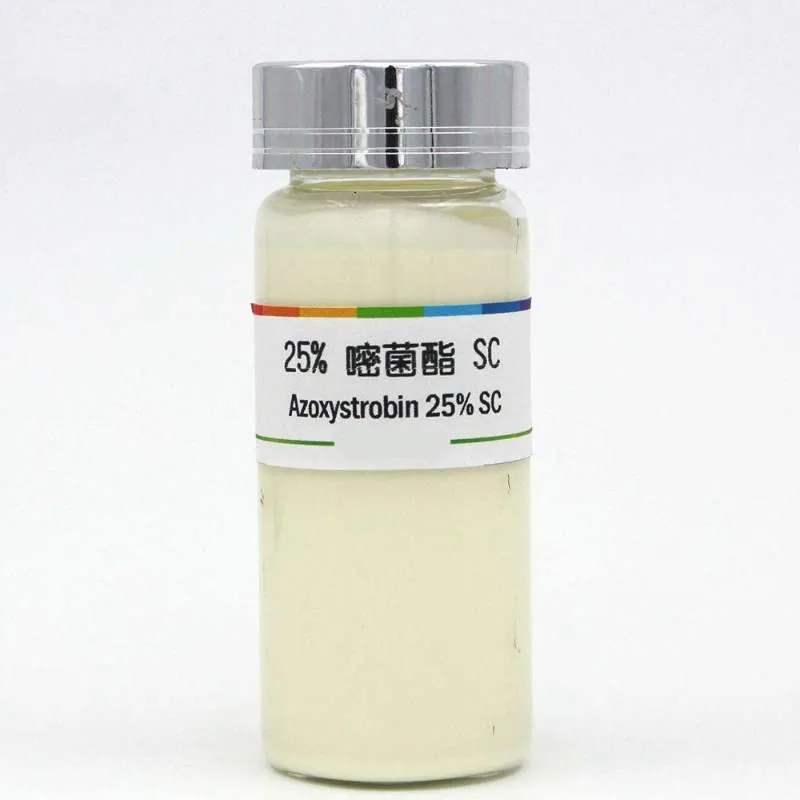
- Azoxystrobin 25% SC suspension concentrate
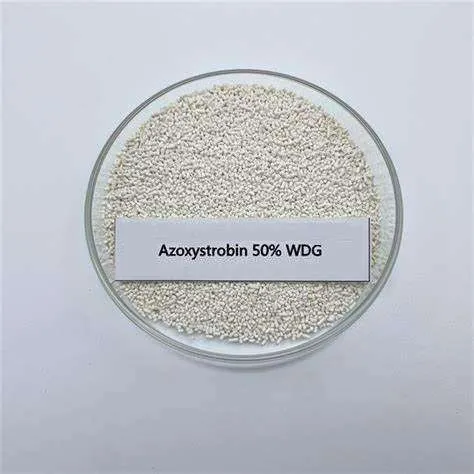
- Azoxystrobin 50% WDG water dispersible granule
- Azoxystrobin 98% TC technical concentrate
- Azoxystrobin 80% WDG water dispersible granule
- Azoxystrobin 20% WP wettable powder
- Azoxystrobin 10% FS flowable concentrate for seed coating
Combination Formulations
- Azoxystrobin 200 g/L + Difenoconazole 125 g/L SC suspension concentrate
- Azoxystrobin 20% + Imethomorph 50% WDG water dispersible granule
- Metalaxyl-M + Fludioxonil + Azoxystrobin 11% FS
- Azoxystrobin 250g/L + Flutriafol 250g/L SC
- Azoxystrobin 20% + Cymoxanil 50% WDG



