OEM strong rat repellent balls: Specification, Ordering and Quality Notes
What Actually Determines Performance
Replacement rate, not unit price, drives the real cost of a repellent programme. A ball that sublimates 30 % faster than spec forces technicians to revisit sites twice as often, erasing any savings from a cheaper formulation.
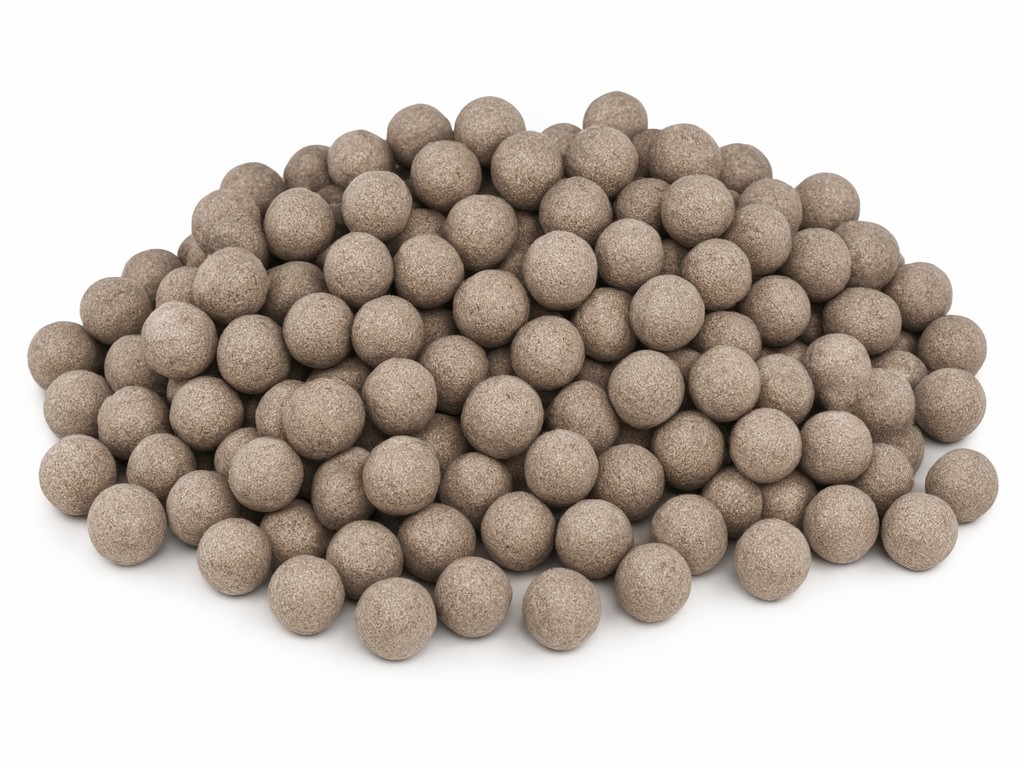
Three variables control field life: active-ingredient purity, compression density, and the moisture-barrier integrity of the retail pack. Purity below 99 % leaves inert filler that occupies volume without contributing vapour pressure. Compression below 1.35 g/cm³ creates micro-fractures that accelerate crumble loss during pallet stacking. A 12 µm polyester/PE laminate that passes a 48-hour 40 °C/90 % RH soak test keeps vapour loss under 2 % per month; standard 8 µm OPP bags typically lose 8–12 %.
Working Principle
Paradichlorobenzene (PDCB) and naphthalene both sublime directly from solid to vapour at ambient temperature. The vapour creates a concentration gradient that drives rodent avoidance behaviour. PDCB delivers a flatter vapour-pressure curve between 10 °C and 35 °C, giving more consistent coverage in unheated warehouses. Naphthalene peaks sharply above 25 °C, which suits tropical climates but creates odour complaints in occupied spaces. Essential-oil blends (peppermint, eucalyptus, citronella) rely on olfactory irritation rather than toxicity; they require 3–4× the vapour density to match PDCB efficacy and degrade under UV exposure unless micro-encapsulated.
Formulation trade-off: PDCB 99.5 % purity compressed to 1.40 g/cm³ in a 12 µm barrier pouch yields 90-day rated life at 25 °C. Dropping to 98 % purity or 1.25 g/cm³ cuts rated life to 55–60 days while only reducing FOB cost by 4–6 %. The labour delta on a 500-site contract pays for the premium grade in the first re-service cycle.
Size, Weight and Specification Range
| Parameter | Standard Range | Custom Window |
|---|---|---|
| Ball diameter | 20 mm, 25 mm, 30 mm | 15–40 mm in 1 mm steps |
| Ball weight | 3.2 g, 6.3 g, 11.0 g | ±0.15 g tolerance on custom weights |
| Active ingredient | PDCB 99.5 %, Naphthalene 99 % | Blends down to 95 % with inert carrier |
| Compression density | 1.38–1.42 g/cm³ | 1.30–1.45 g/cm³ (affects crumble & vapour rate) |
| Retail pack count | 4, 8, 12, 24 balls | Any count 2–48; blister, jar, or net bag |
| Outer carton | 48, 72, 96 retail units | Custom corrugated, UN 4G rated on request |
Cheaper stock options fail at the worst point in the season: a 20 mm naphthalene ball at 1.28 g/cm³ packed in 8 µm OPP loses 18 % mass in the first 30 days at 30 °C/80 % RH. The same diameter at 1.40 g/cm³ in 12 µm laminate loses 3 %. The differential is compression tooling and barrier film — both are fixed-cost items that amortise rapidly above 50k units.
| Usage Condition | Typical Complaint / Failure | Specification That Prevents It |
|---|---|---|
| High-humidity warehouse (80 % RH) | Balls fuse into clumps; vapour rate drops 40 % | 12 µm PET/PE barrier + 0.5 % hydrophobic silica flow aid |
| Palletised sea freight, 45 °C container | Crumbled dust in bottom cartons; retail returns | 1.40 g/cm³ compression + corner-board reinforced master carton |
| Occupied residential retrofit | Odour complaints trigger retailer delisting | PDCB 99.5 % (lower odour threshold) + micro-perforated dispenser sleeve |
| DIY shelf display, 12-month sell-through | Vapour depletion before purchase; failed efficacy claims | 12 µm barrier + nitrogen-flush headspace < 2 % O₂ |
| Cold-storage facility (5 °C) | Vapour pressure too low; rodents ignore placements | Naphthalene 99 % (higher vapour pressure at 5 °C) or PDCB + 5 % camphor booster |
OEM and ODM Programme Structure
Tooling amortisation decides whether a custom diameter or blend pencils out. A dedicated 25 mm die set costs USD 1,800 and runs 2.2M balls before regrind. At 100k units per SKU the tooling adds USD 0.018/ball; at 500k it drops to USD 0.0036. Blend development (PDCB/naphthalene ratio, oil encapsulation, colour masterbatch) requires a 200 kg pilot batch — USD 3,500 including GC-MS purity confirmation and 14-day accelerated stability at 40 °C/75 % RH.
OEM — Your Formula, Our Equipment
- Minimum order: 50k balls per diameter per release
- Lead time: 21 days after artwork approval
- Artwork: CMYK + 1 spot (Pantone) on 12 µm laminate; 300 dpi, 3 mm bleed
- Regulatory: we file EPA/REACH supplement for your brand; you hold registration
ODM — Our Platform, Your Label
- Three stock platforms: PDCB 99.5 %, Naphthalene 99 %, Essential-oil microcapsule
- Minimum order: 10k retail units (mixed diameters allowed)
- Lead time: 10 days from artwork sign-off
- Regulatory: we maintain master registrations; you append as sub-registrant
Private-label buyers moving from ODM to OEM typically hit the crossover at 300k units/year across two diameters. Below that, ODM platform flexibility (mixed diameters in one PO, shared stability data) outweighs the 3–4 % unit-cost advantage of a dedicated die.
Quality Control and Batch Consistency
Every production batch passes through three hold points before release. Incoming raw material (PDCB or naphthalene flake) is assayed by GC-FID; acceptance window 99.3–99.7 % purity, moisture < 0.05 %. Compression press runs a 500-ball statistical process control (SPC) sample every 2 hours: weight ±1.5 %, diameter ±0.15 mm, hardness ≥ 45 Shore D. Finished retail packs undergo a 48-hour 40 °C/90 % RH chamber soak; net mass loss must be ≤ 2.0 %.
| Inspection Point | Method | Acceptance Criteria | Frequency |
|---|---|---|---|
| Raw material purity | GC-FID (internal standard) | ≥ 99.3 % target AI; moisture ≤ 0.05 % | Every lot received |
| Compression weight & dimension | Automated check-weigher + laser micrometer | Weight ±1.5 %; diameter ±0.15 mm; Cpk ≥ 1.33 | 500 pcs / 2 hr |
| Hardness / crumble resistance | Shore D durometer + 1 m drop onto steel (10 pcs) | ≥ 45 Shore D; zero fractures after drop | Every 4 hr |
| Packaging seal integrity | Vacuum decay (ASTM F2338 modified) | Leak rate ≤ 0.05 cm³/min | 100 % inline |
| Accelerated stability | 40 °C / 75 % RH chamber, 14 days | Mass loss ≤ 2.0 %; AI assay ≥ 98.5 % of initial | Every batch (retain samples) |
Batch records retain 500 g of finished balls for 24 months. Certificate of Analysis (CoA) ships with every container; it includes lot-specific GC purity, mean weight, SPC summary, and stability projection. Third-party witness testing (SGS, Intertek) can be arranged at loading port — add 3 days and USD 450 per container.
Keeping Repeat Orders Supplied
We hold safety stock of the three standard diameters (20, 25, 30 mm) in both PDCB and naphthalene grades at 120 days of your trailing 3-month average. This buffer absorbs Chinese holiday shutdowns (CNY, Golden Week) without extending your lead time. Custom diameters and blends are made-to-order; we quote 21 days from PO receipt but typically ship in 16–18 days once the die is proven.
Forecast sharing (rolling 6-month, updated monthly) unlocks two advantages: raw-material forward buying locks PDCB/naphthalene price for the quarter, and press scheduling eliminates changeover downtime between your SKUs. Buyers who provide firm 90-day forecasts see 8–10 % lower unit cost versus spot-order purchasers.
Freight configuration matters. A 20 ft FCL holds 14,400 retail units (24-ball jars, 48 jars/carton, 12 cartons/pallet, 10 pallets). LCL consolidations add USD 0.12–0.18/unit in handling and increase damage claims 3×. If your annual volume is below 150k units, we recommend quarterly 20 ft FCL with vendor-managed inventory at our bonded warehouse in Los Angeles or Rotterdam — you pull weekly against blanket PO, we invoice on release.
Next Step: Specification Review
Send us your target retail price, annual volume split by diameter, and the climate zone of your primary market. We will return a specification sheet with recommended grade, compression density, barrier film, and landed cost model — including tooling amortisation, duty classification, and safety-stock financing — within two business days.



