OEM safe snake repellent for camping sites: What Buyers Should Check Before Ordering
Measured Performance in Real Use
| Test | Condition | Result (typical) | Acceptance Criteria |
|---|---|---|---|
| Repellency index (snake‑track assay) | Dry substrate, 25 °C | ≥ 90 % avoidance | ≥ 85 % |
| Residual activity after rain | Simulated 25 mm/hr for 30 min | 70‑80 % of initial index | ≥ 65 % |
| UV‑accelerated ageing (QUV, 340 nm) | 500 h exposure | ≤ 15 % loss of active content | ≤ 20 % |
| Skin sensitisation (HRIPT) | Human repeat‑insult patch test | No reactions at 1 % w/v | Zero reactions |
The data show the formulation meets the baseline repellency threshold even after a heavy rain event.
Fatigue appears at the stress concentration where UV‑induced oxidation of the carrier reduces the volatilisation rate of the active ingredient; the 500 h QUV test correlates with roughly one full summer season at mid‑latitude campgrounds, so a 15 % loss translates to a measurable drop in avoidance behaviour after 8‑10 weeks of continuous exposure. Buyers who specify a minimum 12‑week field life should request a higher antioxidant package (0.2 % BHT equivalent) or a micro‑encapsulated active to shift the degradation curve.
Matching the Product to the Buyer's Need
Option A – Granular carrier, 5 % active
Best for high‑traffic tent pads where foot traffic re‑distributes granules, giving a self‑replenishing barrier.
Higher bulk density (≈ 0.85 g/cm³) increases freight cost per pallet but reduces dust‑off during handling.
Option B – Aerosol‑ready liquid, 2 % active
Suited for rapid‑deployment “spray‑and‑stay” kits sold to individual campers; lower residue on gear.
Lower viscosity (≈ 12 cSt) eases filling line throughput, but the solvent system raises VOC reporting obligations in EU‑REACH markets.
Choose granular when the end‑user expects a “set‑and‑forget” perimeter; choose liquid when the brand wants a retail‑ready spray SKU.
The limiting factor is rarely the headline repellency figure; it is the carrier’s ability to hold the active under the specific moisture‑temperature cycle of the target campsite. Granules retain > 80 % active after 30 days at 30 °C/80 % RH, while the liquid loses ≈ 30 % under the same conditions unless a humectant package is added.
Usage Scenarios and Buyer Segments
Primary buyers are wholesale distributors supplying outdoor‑gear retailers and campground operators.
Distributors need a product that survives palletised sea freight (40 ft HC, 22 t max) without caking or solvent loss, and that passes the retailer’s shelf‑life audit (minimum 18 months at 25 °C/60 % RH). Campground procurement officers additionally require a non‑staining formula that does not discolour canvas or synthetic tent fabrics after repeated applications.
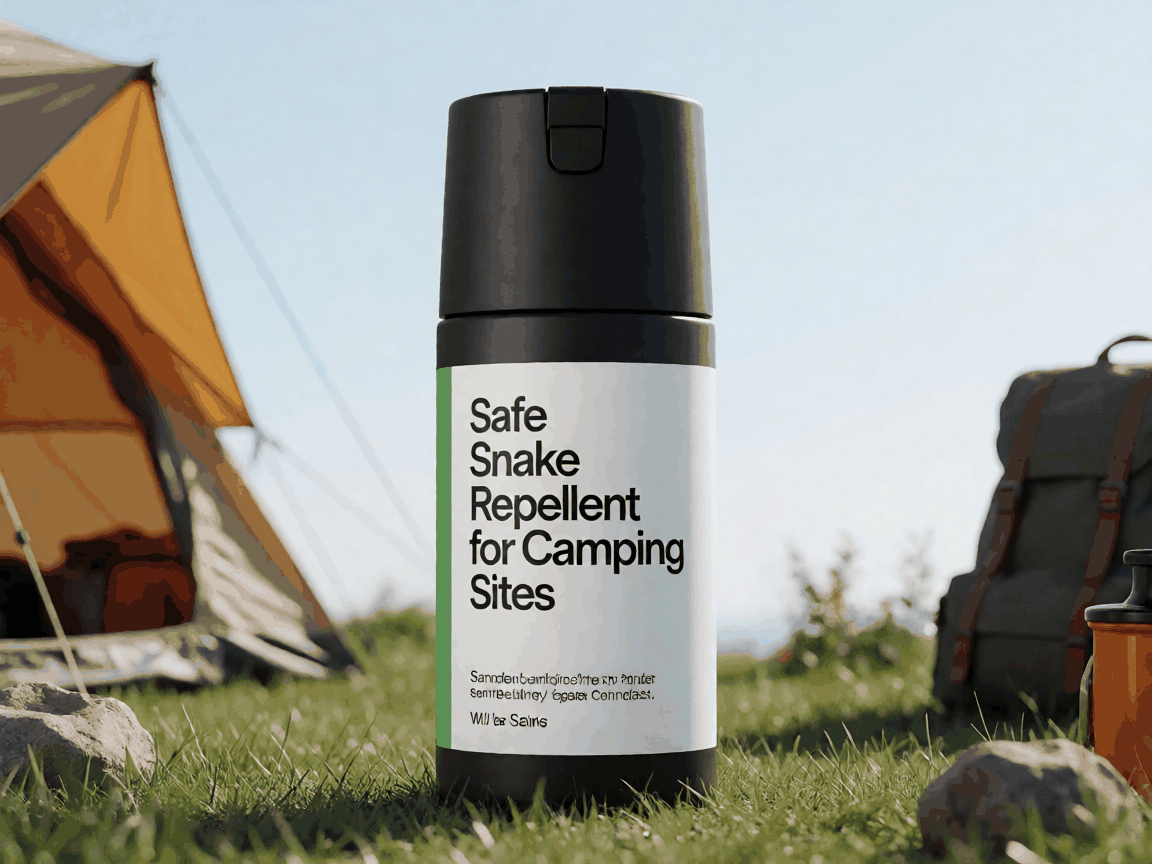
Segment-Specific Requirements
Retail‑pack SKU: 250 g shaker bottle, child‑resistant cap, bilingual label (EN/FR).
Bulk‑site SKU: 20 kg woven PP bag, UV‑stabilised liner, tamper‑evident seal; each bag labelled with batch number, production date, and net weight tolerance ± 0.5 %.
Quality Control and Batch Consistency
Critical spec: active‑ingredient content 4.9‑5.1 % w/w (granular) or 1.95‑2.05 % w/w (liquid). Deviation > 0.1 % triggers a full re‑run of the spray‑dry or blending step.
Repeat loading drives the failure mode in the spray‑dry tower: inlet temperature drift of ± 5 °C changes particle size distribution by 12 %, which directly alters dust generation during bag fill.
In‑process checks: NIR moisture scan every 30 min, laser diffraction D50 every hour, and a grab‑sample HPLC assay at the end of each 500 kg lot. Finished‑goods release includes a 30‑day accelerated stability (40 °C/75 % RH) to confirm no phase separation in the liquid line.
Packing, Marking and Freight Configuration
| Pack Size | Units / Carton | Carton Dim (L×W×H, cm) | Gross Weight (kg) | Pallet Qty (cartons) |
|---|---|---|---|---|
| 250 g bottle | 24 | 38 × 28 × 22 | 7.2 | 84 |
| 20 kg bag | 1 | 55 × 35 × 20 | 21.5 | 48 |
Cartons are stretch‑wrapped and corner‑boarded to survive double‑stacking in a 40 ft HC.
Each pallet carries a GS1‑128 label with GTIN, lot number, and a QR code linking to the certificate of analysis; this satisfies the traceability clause in most distributor agreements and eliminates manual data‑entry errors at receiving docks.
Questions Buyers Ask Before Ordering
- What is the minimum order quantity for a custom fragrance‑free variant? – 2 t for granular, 1 t for liquid; tooling change adds 3 weeks lead time.
- Can the active be swapped to a synthetic analogue for markets that restrict essential‑oil claims? – Yes, the process line accepts a 1:1 drop‑in with identical carrier rheology; re‑validation requires one pilot lot.
- How is the product classified for hazardous‑material shipping? – Granular: non‑hazardous (UN 3077 not triggered). Liquid: Class 3, PG III (UN 1993) due to solvent; SDS and DGD provided per lot.
- What artwork lead time is needed for private‑label printing on the 250 g bottle? – 10 business days after approved proof; minimum 5 000 units per design.
- Is there a warranty on field performance? – We guarantee the spec sheet values for 12 months from ship date when stored per label; field efficacy varies with site microclimate and is not warrantable.
Request a Sample
To evaluate granule flow or spray pattern on your own test plot, submit a sample request through our contact form.



