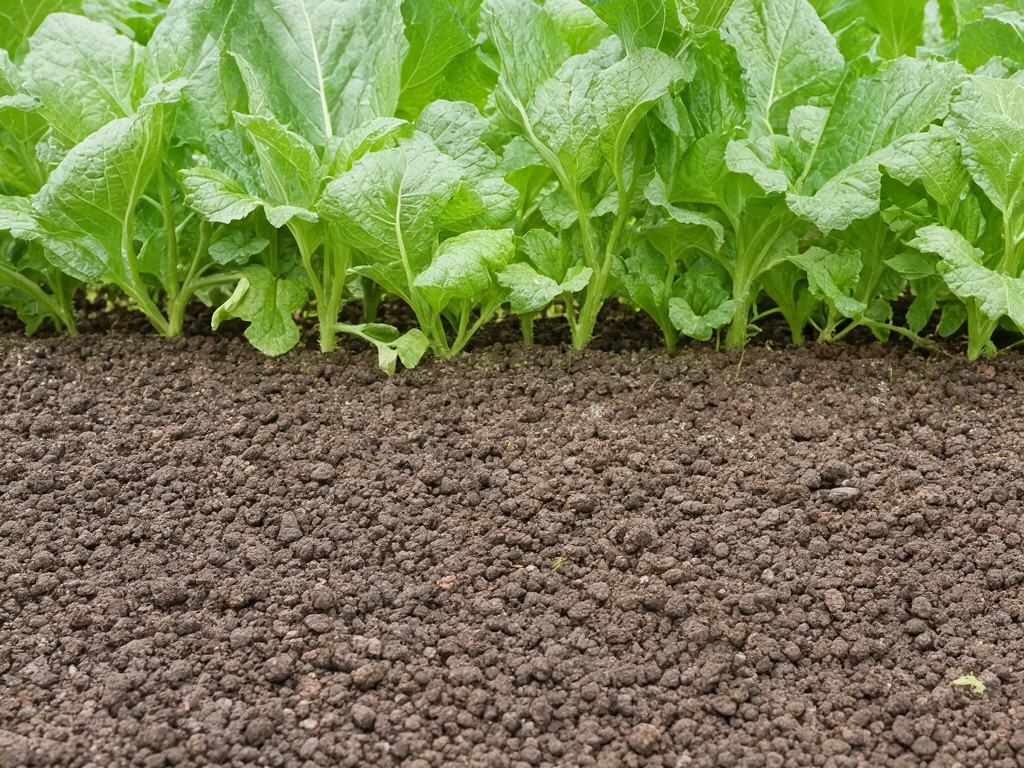
Specifying oem fruit and vegetable planting microbial inoculant supplier for Wholesale and OEM Orders
The critical trade-off in private-label microbial inoculants is carrier stability versus field viability. Peat-based carriers buffer pH and extend shelf life to 18-24 months at 4-25°C but add freight weight and dust. Liquid concentrates cut shipping cost per hectare 60-70% yet demand cold-chain discipline — temperatures above 30°C for 72 hours can drop viable counts 1-2 log CFU/mL. Granular clay carriers sit in between: 12-15 month shelf life at ambient, low dust, but require calibrated spreaders for even distribution. Choose the carrier that matches your distributor's warehousing reality, not just the label claim.
What This Product Is and Where It Fits
Microbial inoculants for fruit and vegetable planting are concentrated populations of beneficial bacteria and fungi — primarily Bacillus, Pseudomonas, Trichoderma, and Rhizobium species — formulated onto a carrier that keeps them viable from factory to furrow. They are not fertilizers; they colonize the rhizosphere, solubilize phosphate, produce siderophores and phytohormones, and compete with soil-borne pathogens like Fusarium, Pythium, and Rhizoctonia. Wholesale buyers specify them by target crop (solanaceous, cucurbit, leafy greens, berries), application window (seed treatment, transplant drench, drip injection), and required CFU guarantee at point of use.
Private-label programs typically lock in a strain consortium — say, B. subtilis GB03 + T. harzianum T22 + P. fluorescens Pf-5 — at a minimum 1×10⁹ CFU/g (granular) or 1×10⁸ CFU/mL (liquid). The OEM supplier maintains master seed lots, runs fermentation in 50-200 m3 bioreactors, and formulates to the buyer's carrier spec. Batch records trace back to seed lot, fermentation run, and formulation tank — essential when a grower questions field performance six months later.
How It Performs in Use
On a club programme that reorders twice a season, the tomato greenhouse in Almería applies a liquid Bacillus + Trichoderma blend at 2 L/ha through drip irrigation every 14 days from transplant. The product survives 40°C reservoir temperatures for 6 hours because the formulation includes 2% trehalose and 0.5% xanthan gum — osmoprotectants that preserve membrane integrity during heat spikes. Without them, viable counts drop 90% in 4 hours at 35°C, and the grower sees no reduction in crown rot incidence.
In open-field strawberry on the Central Coast, a granular peat carrier at 25 kg/ha banded at planting delivers 1×10⁶ CFU/g root zone at 30 days post-application. The same strains on a clay granule at 20 kg/ha achieve 3×10⁵ CFU/g — lower colonization but the clay buffers soil pH swings from 5.8 to 7.2, keeping the Rhizobium component viable longer in calcareous soils. The trade-off: peat gives higher initial pop; clay gives wider pH tolerance. Your grower's soil test decides.
Size and Weight Range
| Packaging Format | Net Weight | CFU Guarantee (at mfg) | Typical Use Rate | Shelf Life (4-25°C) |
|---|---|---|---|---|
| Liquid concentrate (HDPE drum) | 20 L / 200 L / 1000 L IBC | 1×10⁸ CFU/mL | 1-3 L/ha per application | 12 months |
| Peat granule (poly woven bag) | 10 kg / 25 kg / 500 kg bulk bag | 1×10⁹ CFU/g | 15-30 kg/ha banded | 18-24 months |
| Clay granule (poly woven bag) | 10 kg / 25 kg / 500 kg bulk bag | 5×10⁸ CFU/g | 10-20 kg/ha banded or broadcast | 12-15 months |
| Wettable powder (foil-lined pouch) | 1 kg / 5 kg / 20 kg case | 1×10¹⁰ CFU/g | 200-500 g/ha foliar or drench | 24 months |
Measured Performance in Real Use
Field efficacy hinges on three measurable parameters: rhizosphere colonization density at 14 and 30 days, disease incidence reduction versus untreated control, and yield delta at harvest. A 2023 replicated trial on processing tomato in California's San Joaquin Valley compared four carrier formats of the same B. amyloliquefaciens + T. harzianum consortium at equivalent CFU/ha. Peat granule delivered 4.2×10⁶ CFU/g root at 30 days, 38% reduction in Fusarium crown rot, and +5.3 t/ha yield. Liquid drip achieved 1.8×10⁶ CFU/g root, 22% disease reduction, +2.1 t/ha. Clay granule: 2.5×10⁶ CFU/g root, 29% reduction, +3.4 t/ha. Wettable powder foliar: negligible root colonization but 15% foliar Botrytis reduction.
The data pattern is consistent: soil-applied carriers that place spores near the seed or root zone outperform foliar or drip for root disease. Drip-applied liquid works when the target is nutrient solubilization (phosphate, iron) rather than pathogen exclusion — the microbes don't need to colonize roots, just persist in the wetted zone. Private-label specs should state the intended mode of action so the OEM formulates for colonization (peat/clay) or metabolic activity in solution (liquid with carbon source).
Carrier Material and Formulation Comparison
| Parameter | Peat Granule | Clay Granule | Liquid Concentrate | Wettable Powder |
|---|---|---|---|---|
| Moisture content at packaging | 35-45% | 8-12% | N/A (aqueous) | 4-6% |
| pH buffering capacity | High (pH 5.5-6.5) | Moderate (pH 6.0-7.5) | Low (depends on buffer) | Low |
| UV resistance (field surface) | Low — incorporate within 4 h | Moderate — 24 h window | N/A (subsurface) | Low — apply evening/low light |
| Compatibility: tank-mix with copper fungicides | Incompatible — 7 day interval | Incompatible — 7 day interval | Test jar compatibility required | Test jar compatibility required |
| Freight cost per treated hectare (est.) | $18-25 | $14-18 | $5-8 | $3-5 |
| Application equipment | Granular spreader / planter box | Granular spreader / planter box | Drip injection / boom sprayer | Boom sprayer / chemigation |
Care, Storage and Service Life
Shelf life claims are only valid under specified storage conditions. Peat and clay granules tolerate 4-25°C ambient warehousing; exposure to 35°C for 14 days accelerates metabolic activity, depleting endogenous reserves and dropping viable counts 0.5-1.0 log. Liquid concentrates require 4-10°C cold chain — a single 48-hour excursion to 28°C during transshipment can invalidate the CFU guarantee. Wettable powders are the most forgiving: 24 months at 4-30°C in foil-laminate pouches with <15% RH headspace.
Once opened, peat granules absorb ambient moisture — above 60% RH they can mold within 10 days, producing off-odors and reducing viable counts. Reseal bulk bags with zip-ties and store on pallets off concrete. Liquid drums: purge headspace with nitrogen after partial use, reseal, and use within 30 days. Wettable powder pouches: fold and clip after opening; do not transfer to open containers. Every carrier format carries a "use within X days of opening" statement on the private label — typically 7 days for liquids, 30 days for granules, 60 days for powders.
Ordering, Tooling and Lead-Time Questions
What is the minimum order quantity for a private-label run? 5,000 L for liquid concentrate (one 200 m3 fermentation batch), 10,000 kg for peat or clay granule (one formulation line day), 2,000 kg for wettable powder. Smaller runs are possible but incur a $3,500-$5,000 changeover fee for cleaning, strain switch, and QC hold.
How long from purchase order to first pallet shipment? 6-8 weeks for existing strain consortium and carrier: 2 weeks raw material procurement, 10-14 days fermentation and harvest, 5 days formulation and fill, 7 days QC hold (sterility, CFU, contaminant screen), 5 days label application and palletizing. New strain or carrier adds 3-4 weeks for pilot fermentation and stability protocol.
Can we supply our own artwork and label spec? Yes. Provide print-ready PDF at 300 dpi, CMYK, with 3 mm bleed. Label dimensions per container: 20 L drum 180×120 mm, 25 kg bag 200×300 mm, 1 kg pouch 100×150 mm. Regulatory text blocks (signal word, PPE, REI, crop use rates) must match the registered label — we review proofs against the master registration before print release.
What QC data ships with each lot? Certificate of Analysis: lot number, manufacture date, CFU/g or CFU/mL (plate count method), purity (% target organism), moisture, pH, heavy metals (As, Cd, Pb, Hg < 10 ppm each), Salmonella/E. coli absence, and 14-day accelerated stability (35°C) projection. Full batch record available on request under NDA.
Ready to review artwork and finalize your private-label spec?
Send your label draft, target crop list, and preferred carrier format. We'll return a formulation confirmation sheet with CFU guarantees, shelf-life data, and a 6-week lead-time quote.



