green organic microbial inoculant for fruit and vegetable yield improvement - Bulk Supply and Specification Guide
Design Constraints Behind the Specification
Unit price and service life diverge when viability drops below 107 CFU/g before the labelled expiry date. A carrier that holds moisture but releases it too slowly starves the consortium; one that dries fast kills half the population in transit. The specification locks carrier water activity at 0.35–0.45, strain count at ≥108 CFU/g at manufacture, and a maximum 0.5 log decline per quarter under 25 °C storage.
Two suppliers quoting the same specification often differ on the carrier matrix. Lignite-based carriers buffer pH shifts in calcareous soils but add dust during mechanical spreading. Peat-light blends cut weight 18 % per pallet, lowering freight cost per hectare treated, yet they compress in bulk bags, creating anaerobic pockets that accelerate viability loss. We standardise on a 60:40 vermiculite-peat mix with 2 % food-grade polymer binder — this keeps dust below 1.2 g/kg while maintaining 92 % CFU recovery after 180 days at 30 °C.
Contamination ceilings are non-negotiable. Total mould and yeast must stay under 103 CFU/g; enterobacteriaceae under 102. Every batch passes plate count on selective media before release. A single lot exceeding these thresholds triggers a full root-cause investigation — carrier sterilisation cycle, fermenter CIP validation, or filling-head sanitisation — before the line restarts.
How It Performs in Use
| Parameter | Typical Range | Test Method | Impact on Field Result |
|---|---|---|---|
| Total viable count (at manufacture) | ≥ 1 × 10⁸ CFU/g | ISO 4833-1 plate count, 28 °C / 72 h | Directly sets minimum application rate; lower counts require higher kg/ha |
| Viability after 12 months (25 °C) | ≥ 1 × 10⁷ CFU/g | Accelerated aging 40 °C / 7 days + plate count | Determines shelf-life labelling and distributor stock rotation |
| Moisture content | 28–32 % w/w | Gravimetric, 105 °C / 4 h | Above 35 % triggers clumping; below 25 % accelerates die-off |
| pH (1:10 suspension) | 6.2–6.8 | Potentiometric | Outside range reduces rhizosphere colonisation on acidic or alkaline soils |
| Mould & yeast | < 1 × 10³ CFU/g | DRBC agar, 25 °C / 5 days | High counts indicate carrier spoilage; correlates with farmer complaints |
| Particle size (2 mm sieve pass) | ≥ 95 % | Mechanical sieving, 1 min shake | Ensures flow through broadcast spreaders and drip fertigation filters |
Before comparing quotations, ask for the accelerated aging curve, not just the day-zero count. A product starting at 2 × 10⁸ CFU/g but losing 1.2 logs in 90 days costs more per effective hectare than one starting at 1.2 × 10⁸ and holding within 0.3 logs. Our stability protocol runs 40 °C / 75 % RH for 28 days — equivalent to roughly 12 months ambient — and we share the raw plate data with every shipment.
The consortium comprises three nitrogen-fixers (Azotobacter chroococcum, Azospirillum brasilense, Rhizobium spp.), two phosphate solubilizers (Pseudomonas fluorescens, Bacillus megaterium), and a potassium mobiliser (Frateuria aurantia). Strain ratios are fixed by fermenter volume allocation, not post-fermentation blending, which eliminates ratio drift between lots.
Who Uses It and Where It Matters
Export vegetable cooperatives
Tomato, capsicum, and cucumber houses in Almería, Antalya, and Baja California apply 5 kg/ha via drip at transplant and first fruit set. They need dust-free product that passes 120-mesh fertigation filters without biofilm formation. Our binder system keeps filter pressure drop under 0.15 bar over a 14-day cycle.
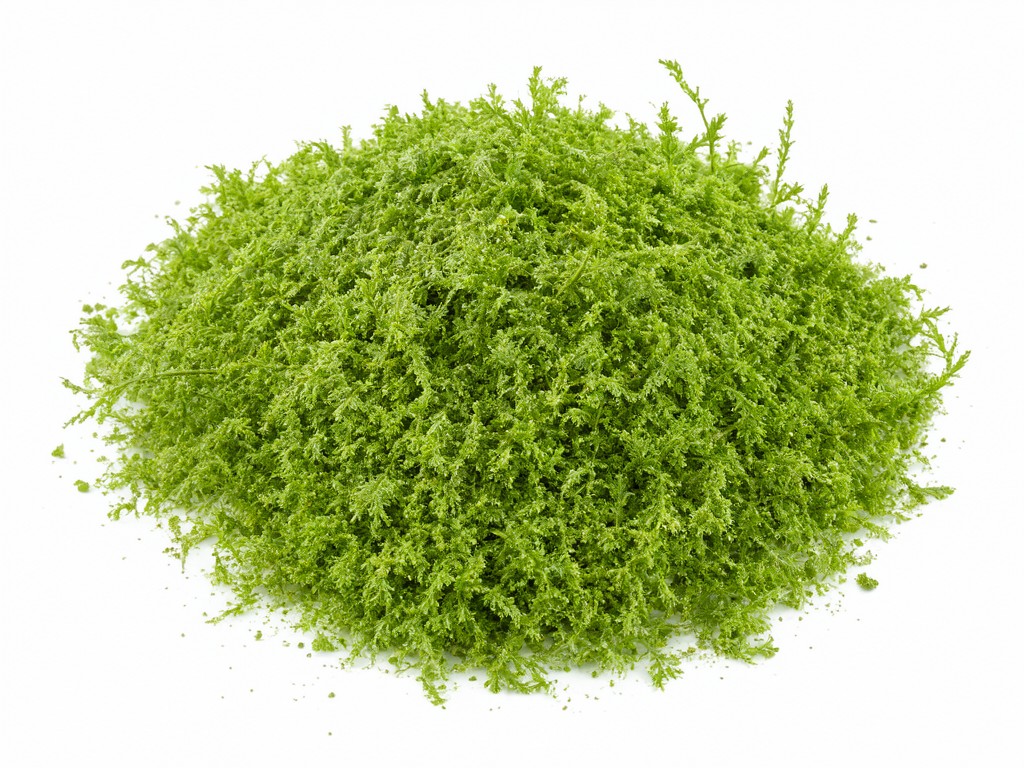
Residue-free certification requires zero synthetic carrier additives. The polymer binder is EU 2018/848 compliant and leaves no detectable marker at harvest.
Broad-acre fruit orchards
Citrus in Valencia, table grapes in Chile, stone fruit in Washington State broadcast 8–10 kg/ha post-harvest and at bud break. Spreader uniformity matters — fines below 0.5 mm drift; granules above 3 mm bounce off berms. Our 95 % sieve spec keeps coefficient of variation under 8 % across a 12 m swath.
Orchard managers track yield per tree, not just tonnage per hectare. Consistent colonisation translates to 4–7 % more marketable fruit in replicated trials.
Distributors serving both channels stock one SKU. The carrier handles both fertigation and broadcast without reformulation. That reduces their inventory carrying cost and eliminates mis-picks at the warehouse.
Volume Planning and Lead Time
Fermentation runs are 120 h per strain, staggered across four 50 kL vessels. Carrier conditioning, inoculation, and drying add 36 h. Minimum economic batch is 4 t — two 2 t lots from parallel lines. Below 4 t, fixed sterilisation and CIP costs push unit price up 22–28 %.
| Order Band | Lead Time (ex-works) | Pallet Configuration | Notes |
|---|---|---|---|
| 4–12 t | 18–22 business days | 40 × 25 kg bags / pallet, stretch-wrapped | Single batch COA; blended if multiple strains |
| 13–30 t | 25–30 business days | 40 × 25 kg or 2 × 1 t bulk bags / pallet | Two sequential batches; combined COA available |
| 31–60 t | 35–42 business days | 1 t bulk bags preferred for container stuffing | Dedicated fermenter schedule; priority QC release |
| >60 t / annual frame | Rolling 14-day call-off | Customer-specified bag print and pallet tag | Locked strain bank; reserved vessel capacity |
Seasonal demand peaks (January–March southern hemisphere, July–September northern) compress lead times by 30 % if orders are placed before the preceding quarter. We hold 15 % safety stock of finished carrier (pre-inoculation) year-round; this cuts the critical path to 10 days for repeat SKUs.
Packing, Marking and Freight Configuration
Humidity control is the freight spec. 25 kg bags are triple-layer: inner PE liner (80 µm, heat-sealed), middle kraft with moisture-barrier coating, outer printed PP woven. Bulk bags add an aluminised inner sleeve. Container desiccant strips (1 kg per 10 t) are mandatory for voyages exceeding 21 days or crossing the equator. Temperature loggers travel in every 10th pallet position; data is shared on release.
Each bag carries a laser-etched batch code: YYMMPPSSS (year, month, production line, sequential lot). The code links to the fermenter log, carrier sterilisation chart, and final QC certificate in our portal. Distributors scan at receipt; any discrepancy triggers a hold within 4 hours.
Pallets are 1.0 × 1.2 m, four-way entry, heat-treated ISPM-15. Gross weight per pallet: 1,020 kg (25 kg bags) or 1,050 kg (1 t bulk bags). Twenty pallets fill a 40-ft high-cube at 20.4 t net — the standard export unit. Partial containers ship LCL on temperature-controlled reefers set to 15 °C ± 2 °C.
Request a Quotation Review
Send your annual volume forecast, target regions, and application method (fertigation, broadcast, or both). We return a landed-cost model per hectare — including carrier choice, bag format, freight term, and stability margin — within two business days.
Start a quotation review →


